
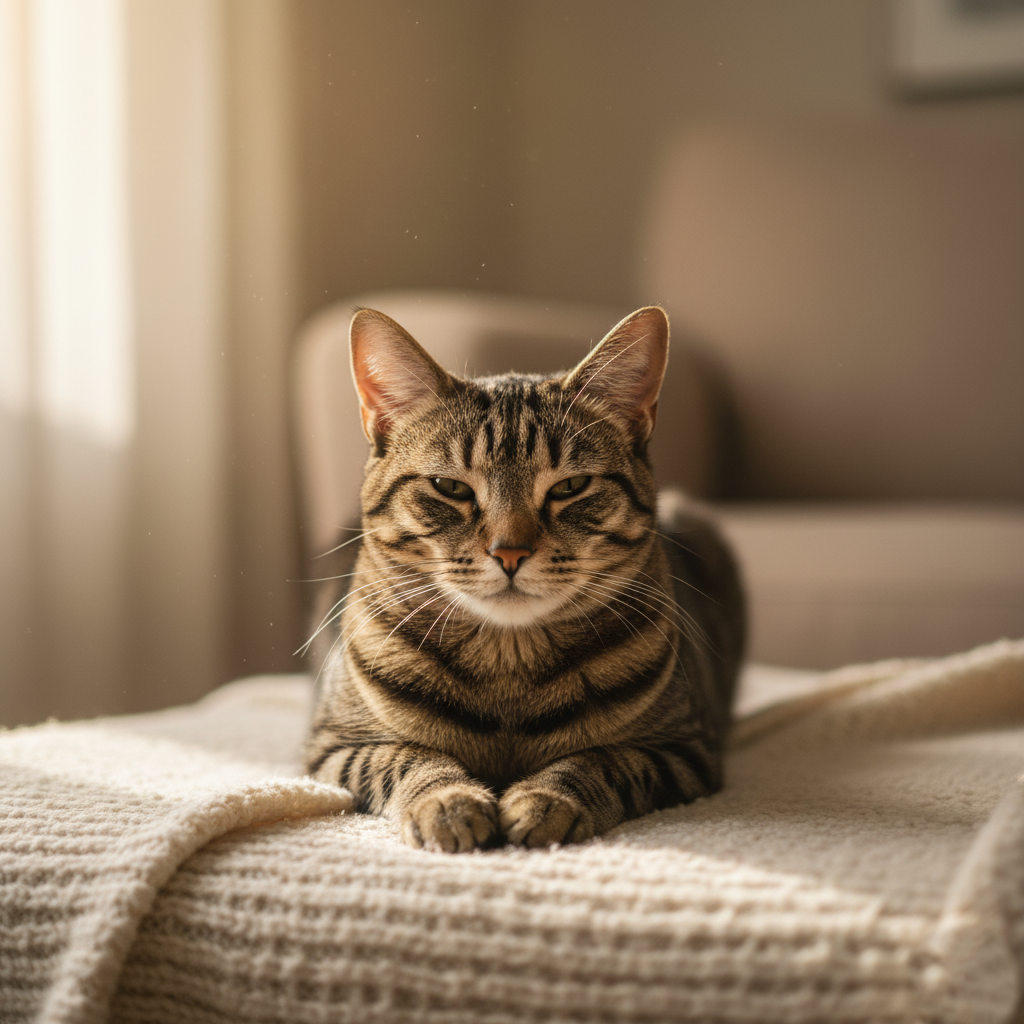
Photographing cats is an art that combines patience, observation, and tenderness. These animals, as independent as they are expressive, offer countless unique moments that can become memorable portraits. However, capturing their essence isn’t always easy. Their curiosity, quick movements, and constant desire to explore mean that getting a good shot requires more than just a camera: it requires sensitivity, time, and a deep understanding of their behavior.
Cat photos not only aim to showcase their feline beauty but also to reflect their personality: that balance between elegance and mischief, calmness and energy, distance and closeness. Through different poses, it’s possible to highlight their most distinctive features, from their penetrating gaze to the flexibility of their bodies or the delicacy of their movements. In addition, well-executed photographs can convey human emotions: the serenity, curiosity, mystery, or affection that these animals evoke in those who observe them.
This article presents five posing ideas designed to capture cats at their best, both indoors and outdoors. Each pose offers a different angle to highlight the cat’s personality, its surroundings, and its connection with the camera. The key is not to force the situation, but to capture the natural way they move, stretch, or rest. The best images emerge when the cat feels free, confident, and relaxed, allowing its essence to shine through.
1. The stretch moment
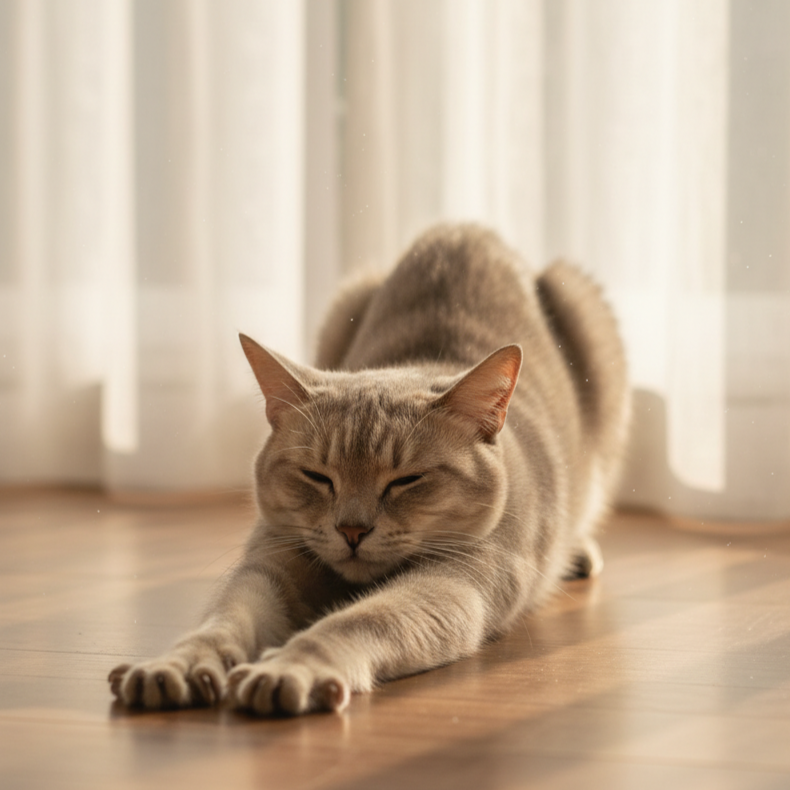
One of the most elegant and expressive moments to photograph a cat is when it stretches. This everyday gesture, which it performs upon waking or after moving, reveals the harmony and flexibility of its body. In stretching, the cat combines strength and softness: its back arches, its legs lengthen, and its tail curls naturally. Capturing this moment conveys vitality, balance, and the feline essence in its purest form.
To get a good shot, it’s important to anticipate the moment. Cats usually stretch after a period of rest, especially after sleeping in the sun or in a warm place. The photographer should have the camera ready and position themselves at a distance that doesn’t interrupt the movement. Using natural light, preferably from the side, helps to highlight the body’s lines and the soft shadows that form on the fur. Besides, photographing from a low angle emphasizes the elongation and fluidity of the gesture, giving it an almost sculptural feel.
Stretching also has symbolic value: it expresses freedom, pleasure, and well-being. In a single image, it can convey the idea of an animal living unhurriedly, confidently enjoying its surroundings. It’s not just about an aesthetic pose, but an opportunity to portray the calm that characterizes cats when they feel safe.
2. The curious look
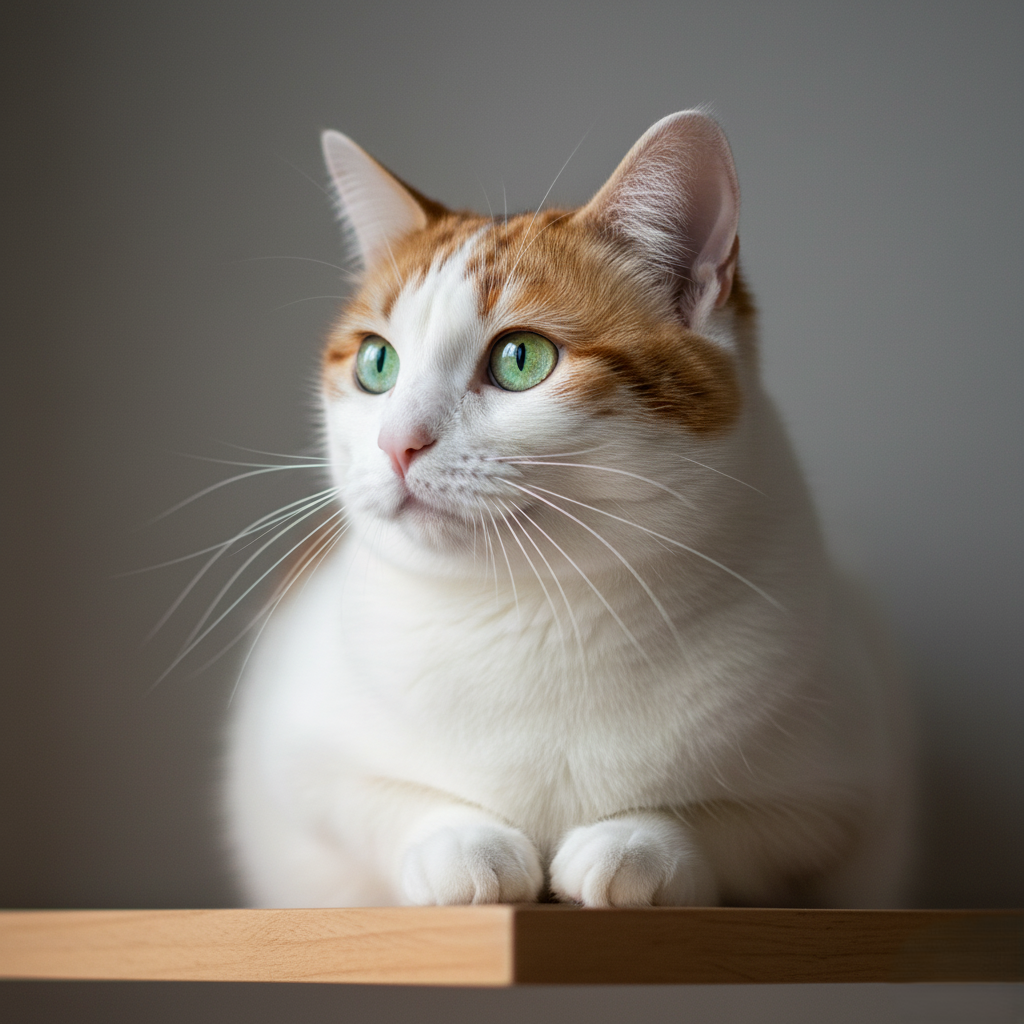
The curiosity is one of the most lovely features of cats, and also one of the most photogenic poses. Capturing a curious look means photographing that instant when the cat stops, fixes its look on something that catches its attention, and remains completely still, ears perked and eyes shining with interest. It’s a pose that combines concentration and tenderness, showcasing the animal’s intelligence and sensitivity.
To achieve this type of photo, the ideal is to create a calm environment and offer the cat a visual or auditory stimulus that awakens its attention without scaring it. It could be the movement of a feather, the sound of a toy, or even a reflection of light on the wall. The secret lies in provoking curiosity without interfering with its natural behavior. In that instant, the look becomes intense, almost hypnotic, and the photograph acquires emotional depth.
The photographer must pay special attention to focus: the eyes must be sharp, as they are the center of the image. Soft, natural light, coming from a window or the sunset, enhances the shadows of the fur and brings the expression to life. This pose works both indoors and outdoors, as long as the surroundings are clean and free of distractions.
The curious look represents that moment of discovery that defines the feline personality: observant, attentive, and mysterious. Capturing it is like stopping time just before the movement.
3. The fancy rest
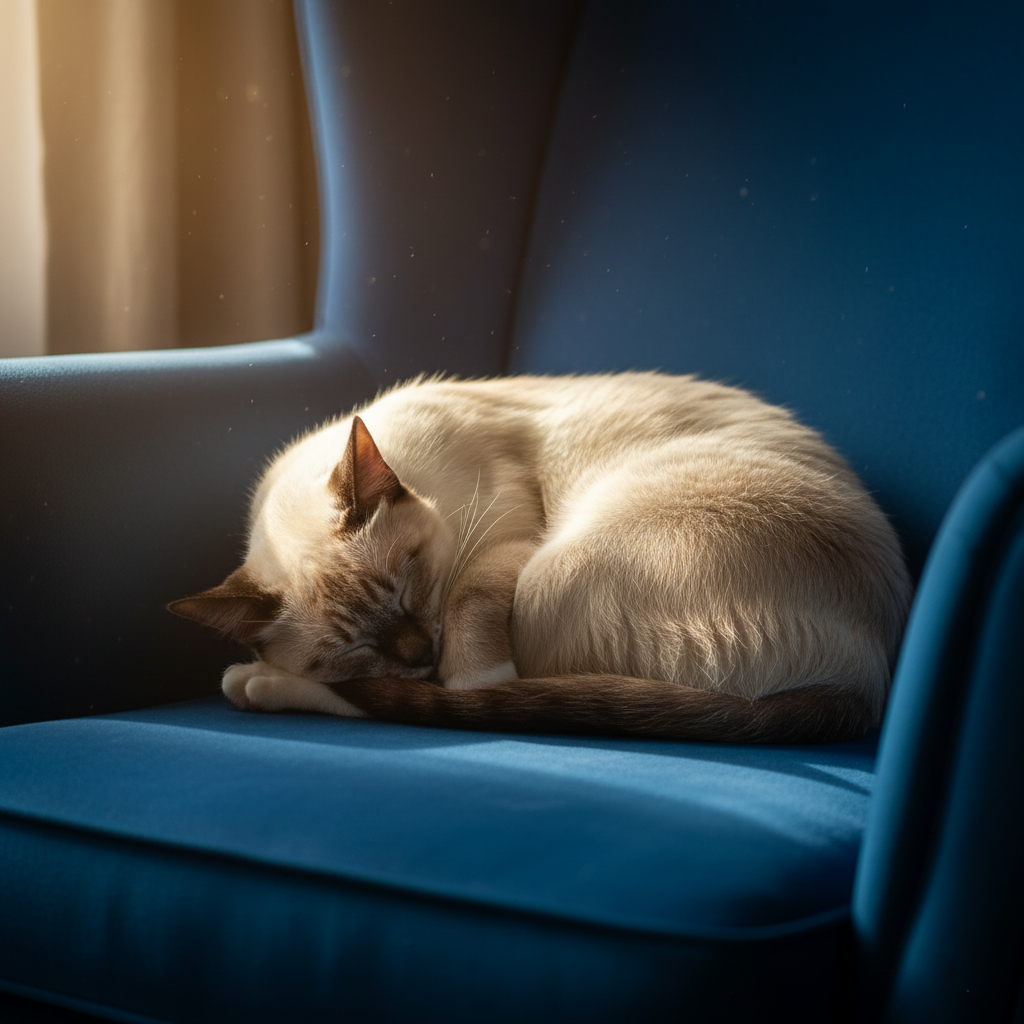
Few images convey as much serenity and charm as that of a resting cat. Whether curled up on a cushion, reclining on an armchair, or dozing in the sunlight, their posture reflects a unique combination of elegance and tranquility. Cats don’t just sleep: they pose unconsciously, finding the perfect harmony between form, texture, and light. Photographing this type of scene allows you to capture their natural beauty and the calming atmosphere they radiate.
To achieve an elegant resting photo, it’s important to respect the moment. Cats are sensitive to interruptions, so approaching them gently and without sudden movements is essential. Ideally, take advantage of ambient light, especially that which enters through a window, as it adds warmth and depth. Soft shadows help accentuate the curves of the body and the volume of the fur, creating a more aesthetically pleasing and immersive composition.
The camera angle also influences the result. A side shot highlights the cat’s silhouette, while a view from above allows you to appreciate the pattern of the fur and the surrounding environment. It’s not necessary to direct the animal; Simply observe it and let the moment to be revealed. The magic lies in that stillness: the feeling of peace, trust, and balance that only a sleeping cat can convey.
4. The Jump in Movement
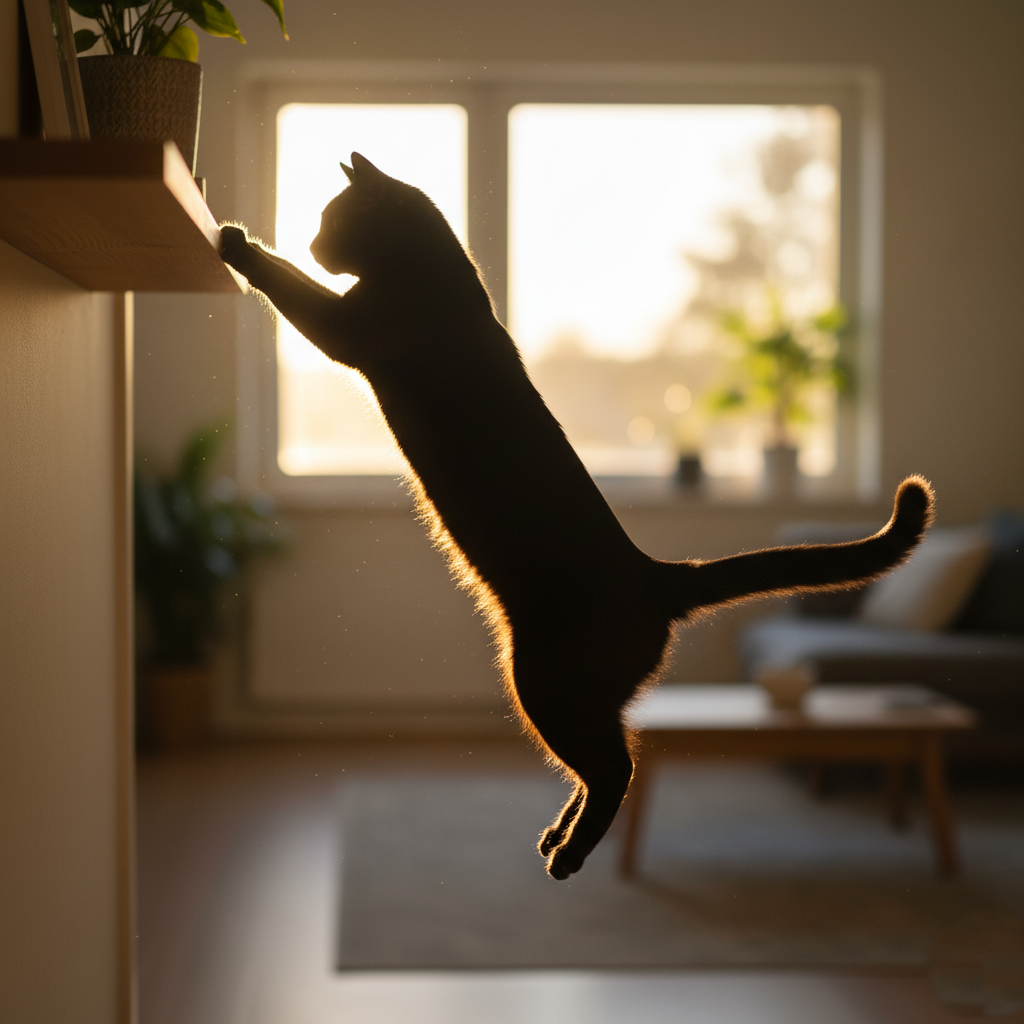
Photographing a cat in mid-leap captures the essence of its agility, strength, and playful spirit. This pose represents the feline at its physical peak, when its body seems to float between earth and air. The taut muscles, focused look, and graceful movement reveal the animal’s athletic nature, but also its freedom and energy. Achieving this image requires patience, timing, and a good understanding of its behavior.
The best time to capture a dynamic leaping photograph is during play. A dangling toy, a rope, or a moving object can motivate the cat to take flight. The key is to anticipate the moment: press the shutter just before it takes off or at the highest point of the jump. Using a fast shutter speed will freeze the motion sharply, highlighting the body’s tension and focused expression.
The background should be clean and contrast with the cat’s fur color to avoid visual distractions. Natural light, from a window or from outside, will help capture the details of the movement. In this type of pose, each photograph tells a story: the story of the impulsiveness, precision, and lightness of an animal that masters the balance between control and spontaneity.
Photographing a cat jumping is not only visually stunning, but it also conveys a deep emotion: the feeling of pure freedom, the beauty of a fleeting moment that seems suspended in mid-air.
5. The reflect on the mirror or window
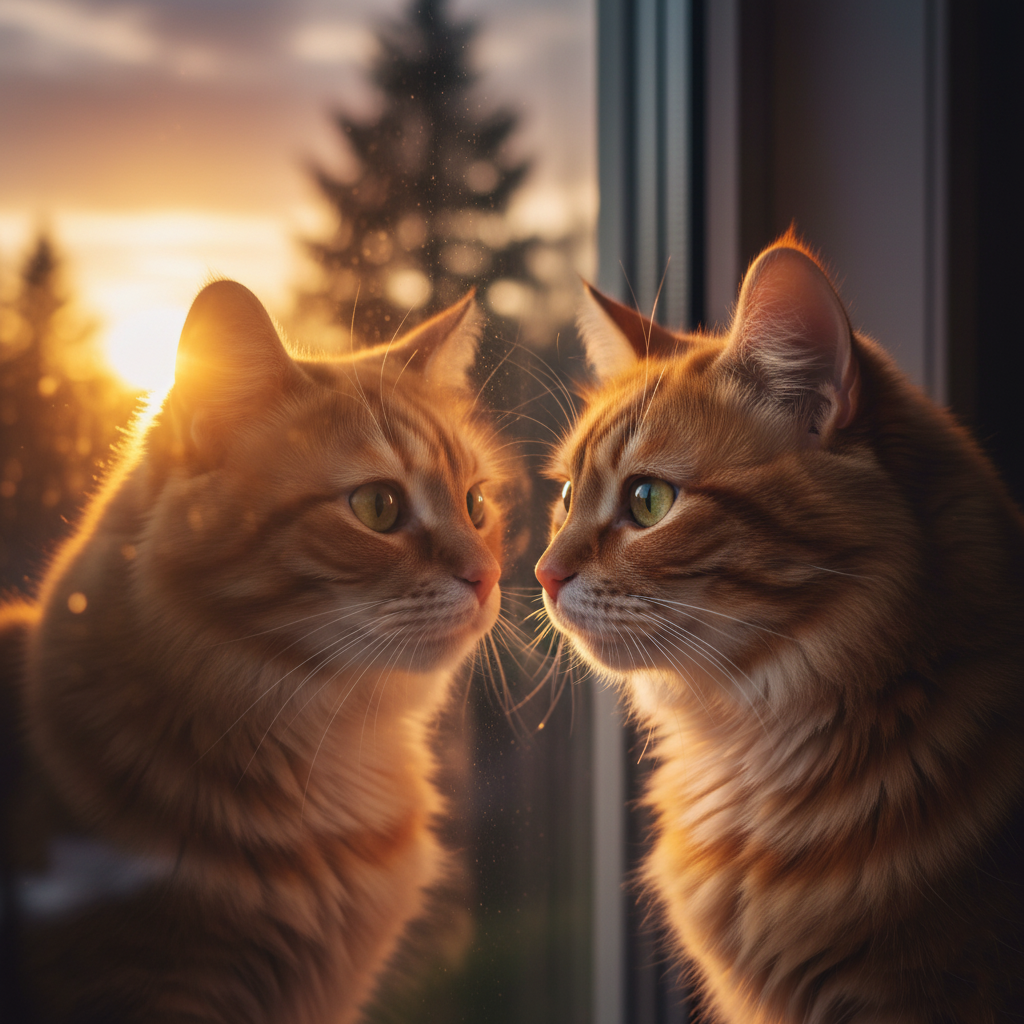
One of the most artistic and evocative poses to photoshoot a cat is when its reflection apears in a mirror or on a glass surface. This image has a special symbolic power: it shows the cat observing itself or interacting with its reflection, as if it were a silent conversation between two versions of the same being. Capturing this moment not only highlights the animal’s physical beauty but also its mystery and its ability to create poetic scenes without even trying.
To achieve this type of photo, soft lighting and a clean surface are required. Natural light, preferably from the side or backlighting, allows both the cat and its reflection to blend harmoniously into the composition. It’s important that the background be neutral or diffused so as not to detract from the visual effect. An effective trick is to place the cat in front of a window on a cloudy day, when the light is soft but constant. This way, the details of the face, the sparkle in the eyes, and the shadows of the reflection are naturally balanced.
The key is patience: cats are often intrigued by their own reflection and adopt spontaneous poses, from a fixed look to a slight tilt of the head. At that moment, the photographer must keep the focus on the eyes or on the point where both figures, real and reflected, meet visually.
Conclusion
Photographing cats is an experience that goes beyond technique: it’s an exercise in observation, respect, and connection with the nature of a profoundly expressive being. Each pose, from an elegant stretch to a reflection in the mirror, reveals a different aspect of their personality: agility, calmness, curiosity, or introspection. The fascinating thing about photographing a cat is that, unlike other models, they will never pose out of obligation. Their gestures and movements are authentic, and it is precisely this spontaneity that transforms each photograph into a unique work of art.
The secret to getting good photos lies not in forcing them, but in accompanying them. Patience becomes your best ally: observe how they behave, how they respond to light or sounds, and be ready to capture the exact moment something happens. A cat can go from absolute stillness to the most agile movement in a second, and therein lies the magic of feline portraiture: in its unpredictability.
Each pose also invites reflection on the relationship between the photographer and the animal. When photographing a cat, you enter its world, its silence, and its body language. It’s a wordless dialogue where look, distance, and trust set the rhythm of the session. When the cat feels free, the photos not only reveal its beauty, but also the serenity and the bond that develops behind the lens.


