
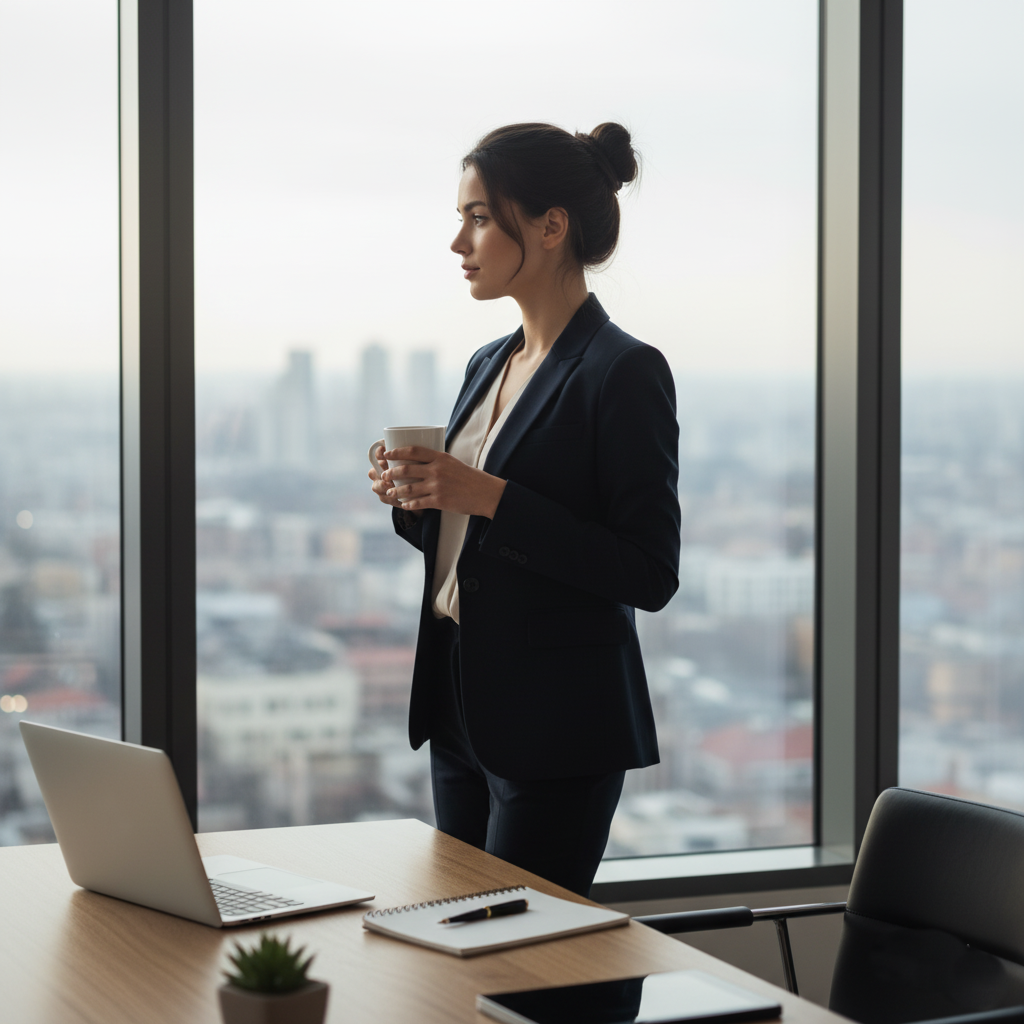
Offices have become modern backdrops for photo shoots that combine professionalism and style. It’s no longer just about formal portraits at a desk, but about capturing the essence of work, attitude, and personality within a professional environment. Office photo poses offer an opportunity to project confidence, dynamism, and authenticity, whether for a corporate profile, a personal brand, or visual content for professional networks like LinkedIn.
The office environment, with its clean lines, artificial lighting, and everyday elements—computers, coffee mugs, notebooks, and minimalist furniture—becomes the perfect context for conveying different visual messages. A relaxed pose can reflect approachability and accessibility, while an upright and decisive posture communicates leadership and determination. The key is to maintain a natural look, connect with the surroundings, and reflect an attitude consistent with the purpose of the photograph.
Furthermore, lighting plays a fundamental role. Natural light streaming through a window or the glow of a screen can be allies in creating atmospheres that reinforce the visual narrative. Every gesture, from a glance at the camera to a slight smile, can completely change the tone of an image, making it a powerful tool for projecting a professional image.
Office poses not only serve to showcase a formal appearance but also to reveal the human side behind the work. A well-utilized work environment can convey motivation, creativity, and balance, demonstrating that professionalism and warmth can coexist in a single image.
1. Standing next to the desk, showing leadership
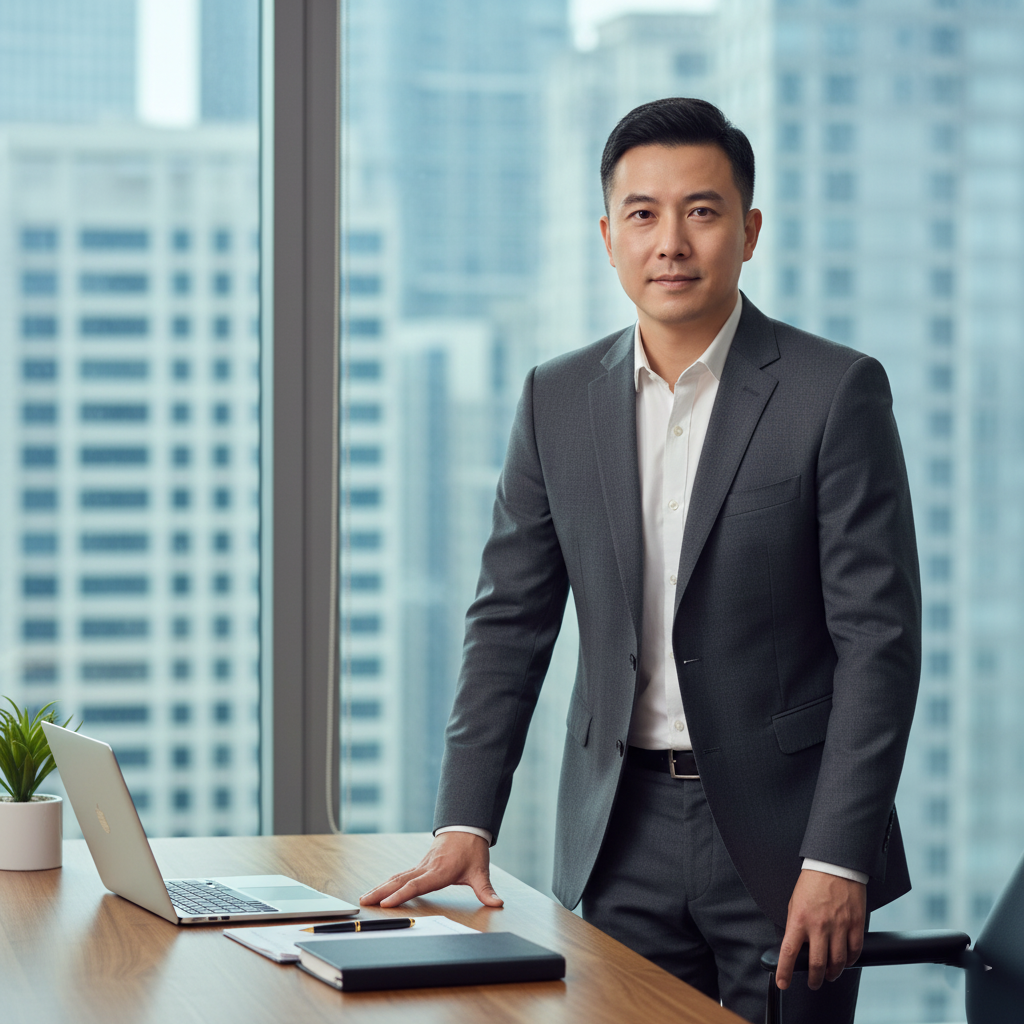
One of the most effective poses for office photos is standing at your desk, conveying authority and confidence. This pose combines elegance with professionalism and is ideal for corporate portraits or for those who want to project a solid and trustworthy image. The body is upright, shoulders relaxed, and gaze steady, either directed at the camera or slightly to the side, to create an air of naturalness.
The key is finding a balance between posture and expression. The arms can be crossed in front of the chest to reinforce a sense of leadership, or rest gently on the desk to give a more approachable and friendly impression. It’s important to pay attention to body alignment: a straight, yet relaxed posture communicates confidence and control. The face, for its part, should reflect calmness, determination, and professionalism, avoiding overly serious or forced expressions.
The surroundings also play an essential role. A tidy desk with a few items—an open laptop, documents, an elegant pen, or a cup of coffee—provides context without distracting from the subject. The lighting should ideally come from a side window or a desk lamp, highlighting facial features and creating a soft contrast that adds depth.
This pose is perfect for photos used in presentations, professional profiles, or company websites. It conveys leadership, organization, and a proactive attitude—three qualities that any professional image should reflect.
2. Sitting in the spining chair, looking natural
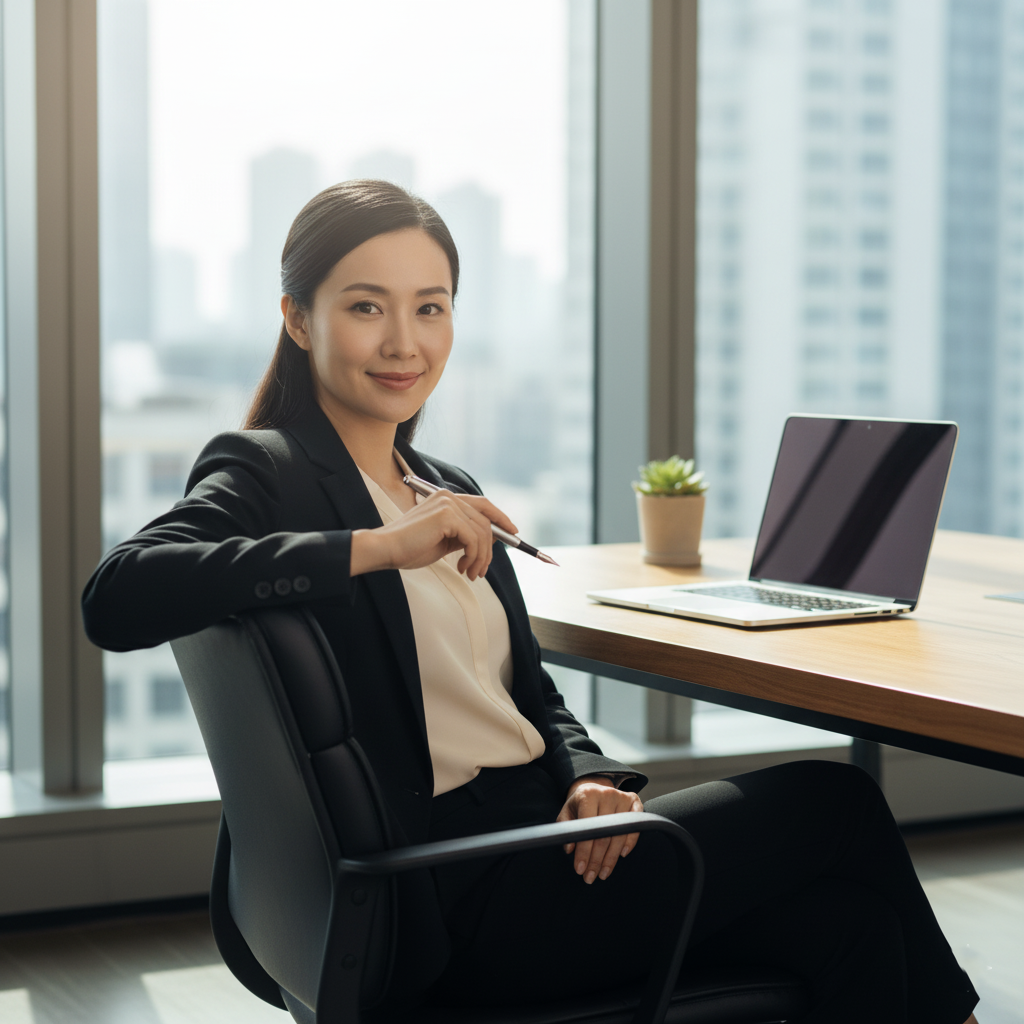
Sitting in a spining chair is one of the most versatile and authentic poses for office photos. It allows you to play with different emotions and attitudes, from focused work to relaxed during a break. This position is ideal for those looking to project a professional image without rigidity, showing both approachability and confidence. The key is naturalness: the body should move comfortably, avoiding forced or overly formal postures.
The subject can sit sideways, with a slight turn towards the camera, resting an arm on the back of the chair or on the desk. This slight tilt creates dynamism in the image and breaks the symmetry, giving a sense of subtle movement. The gaze can be directed towards the camera if you’re seeking a direct connection with the viewer, or towards a point to the side if you want to convey introspection or a work-oriented focus. A slight smile helps reinforce the feeling of confidence and approachability.
Lighting plays an important role: a side light source, whether natural or artificial, will highlight the contours of the face and lend a professional air without being too harsh. Neutral colors in the background, combined with details like a plant, a shelf, or a computer, complement the composition and provide visual context.
This pose is especially effective for personal portraits or photoshoots for corporate profiles, business magazines, or institutional materials. It conveys a balance between professionalism and authenticity, a highly valued combination today.
3. Laying on the wall, showing relaxed confidence
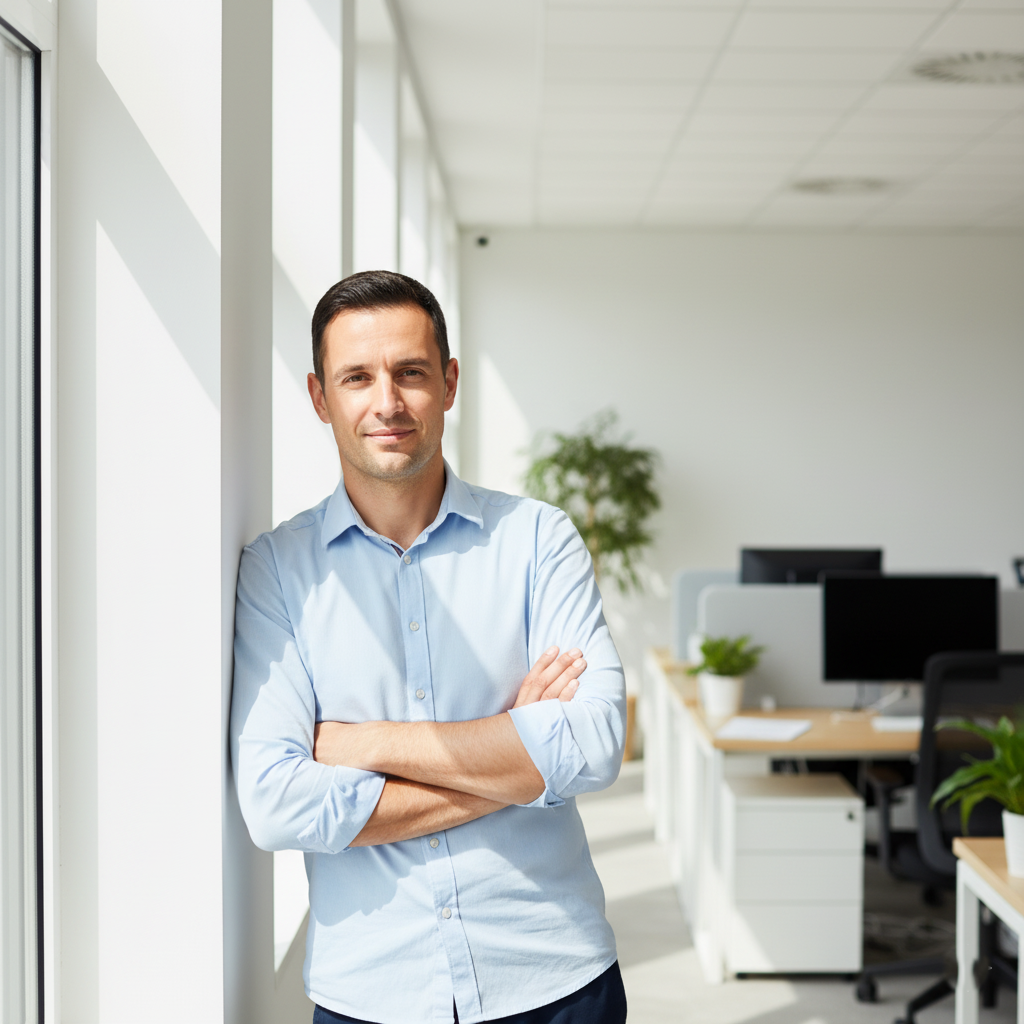
Leaning slightly against a wall in the office is one of the most effective poses for projecting a professional image with a touch of freshness and naturalness. This position conveys confidence without rigidity, showing the subject as self-assured, approachable, and modern. It’s perfect for photos intended for professional networks, personal branding campaigns, or corporate materials that aim to reflect approachability and style.
The body should lean slightly back, with one shoulder or the back resting against the wall. The legs can be gently crossed or kept in a natural position, with the weight resting on one leg to avoid strain. The hands offer various possibilities: they can be in pockets, hold an accessory (such as a briefcase, tablet, or coffee), or gently crossed in front of the body. The gaze can be directed at the camera or away from it, depending on the intention of the photo: direct connection or a thoughtful expression.
This pose works very well in hallways, break rooms, or against walls with clean textures, where light can play a key role. Side lighting creates soft shadows that enhance the body’s shape and add depth to the portrait. It’s advisable to use neutral colors for clothing—such as blue, gray, beige, or black—to maintain visual harmony and highlight facial expressions.
The combination of a relaxed posture and a corporate setting creates a sense of balance between professionalism and authenticity, ideal for conveying approachable leadership.
4. Sitting on the desk, showing leadership
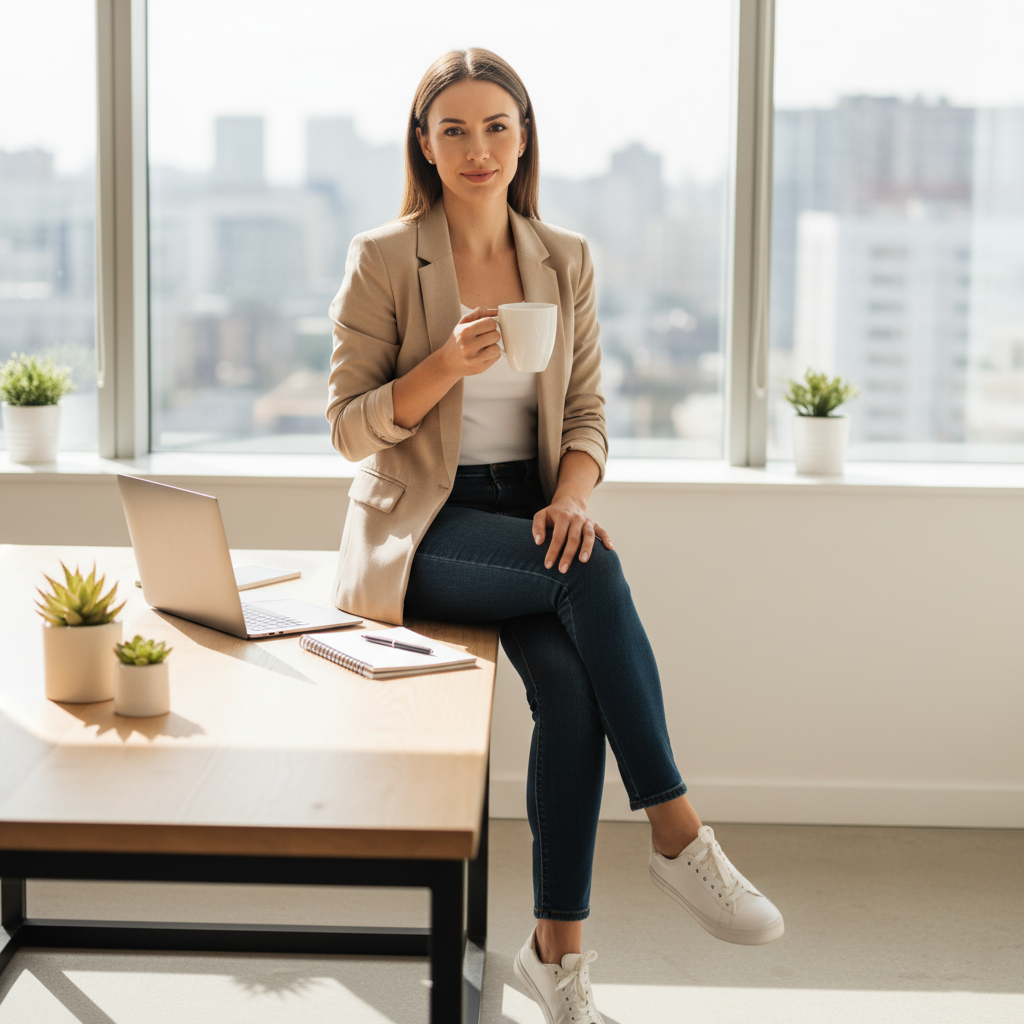
Sitting on the edge of a desk is one of the most popular poses for portraying modern leadership and natural confidence in the workplace. This posture breaks with the rigidity of the classic corporate portrait and communicates approachability, authority, and comfort in the workspace. It’s ideal for managers, entrepreneurs, or professionals who want to demonstrate their command of the environment without appearing distant or inaccessible.
The trick is to maintain an upright yet relaxed posture. The subject should position themselves on the edge of the desk, with their legs slightly apart or crossed at the ankles, avoiding any tension in the body. Their hands can rest on their legs, be clasped together, or hold a representative object—such as a pen, a folder, or a closed laptop—to add visual context. Looking directly at the camera reinforces a message of determination, while a sideways glance can convey a more reflective or aspirational tone.
The surroundings also play a crucial role. The desk should look tidy but include a few personal items, such as an open laptop, a coffee mug, a notebook, or a small plant, to add a touch of warmth. Natural light, coming from a side window or the background, helps soften contours and highlight the face, especially if you’re aiming for a warm and modern feel.
This pose not only shows the professional in action, but also suggests command of space and control of their surroundings—qualities that inspire confidence in any audience.
5. Walking among desks with a professional attitud
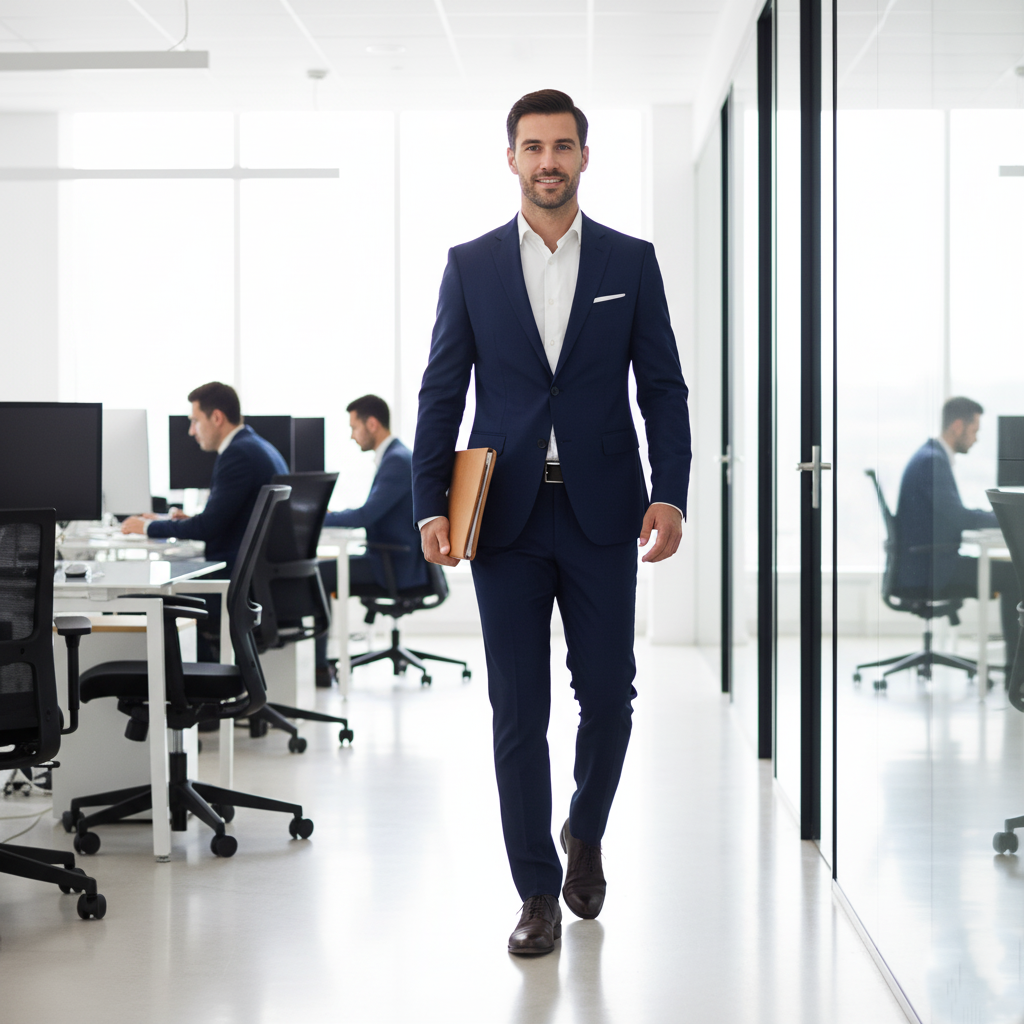
Capturing movement within the workplace can bring life and dynamism to office photos. One of the most effective poses for achieving this is one in which the subject walks between desks or hallways, projecting confidence and professional energy. This type of pose breaks with the rigidity of static photos and conveys a sense of action, purpose, and leadership—ideal for portraying people who want to show they are constantly on the move, managing, creating, or leading projects.
The body should be upright, with relaxed shoulders and the gaze directed forward or slightly toward the camera, depending on the intention of the portrait. A natural stride, with one leg forward and a slight swing of the arms, helps the image look fluid and authentic. The key is not to force the walk; it’s about capturing that moment when the person moves forward with determination, reflecting their professional character.
Clothing also plays an essential role. A well-tailored suit, a blouse with dress pants, or a modern office ensemble reinforces the feeling of professionalism. The background can include desks, chairs, or bookshelves, always maintaining a clean and balanced composition. If you can take advantage of natural light coming in through the windows or use soft side lighting, the image will gain depth and contrast, highlighting the details of movement.
This pose is ideal for professional headshots, corporate campaigns, or even personal branding content. It projects dynamism and confidence, showing the person as someone constantly evolving within their professional environment.
Conclusion
Office photos have evolved from simple corporate portraits into visual representations of style, attitude, and professional identity. The five posing ideas presented here demonstrate how a work environment can become a stage brimming with creative possibilities, where posture, lighting, and composition communicate as much as facial expression. From serene concentration at a computer to the energy of movement in the hallways, each pose is an opportunity to project confidence and authenticity.
The workspace becomes an extension of personality: a tidy desk reflects focus; a relaxed gaze by a window conveys thoughtfulness; a purposeful walk between desks symbolizes leadership. These images not only capture moments but also tell stories about who we are within our professional environment. The balance between formality and naturalness is key to achieving portraits that don’t appear forced, but rather real, dynamic, and consistent with the image each person wishes to project.
Furthermore, the proper use of light—whether natural or artificial—can enhance textures, the colors of the outfit, and the depth of the surroundings, transforming an ordinary scene into a powerful photograph. What matters is not just the pose itself, but the intention behind it: to project professionalism without losing approachability, to convey leadership without rigidity, and to reflect confidence without artifice.
Every pose in the office is an opportunity to redefine how we see ourselves and how others perceive us. A good photo can communicate what words sometimes fail to express: passion for work, discipline, and the certainty of building something meaningful.


