
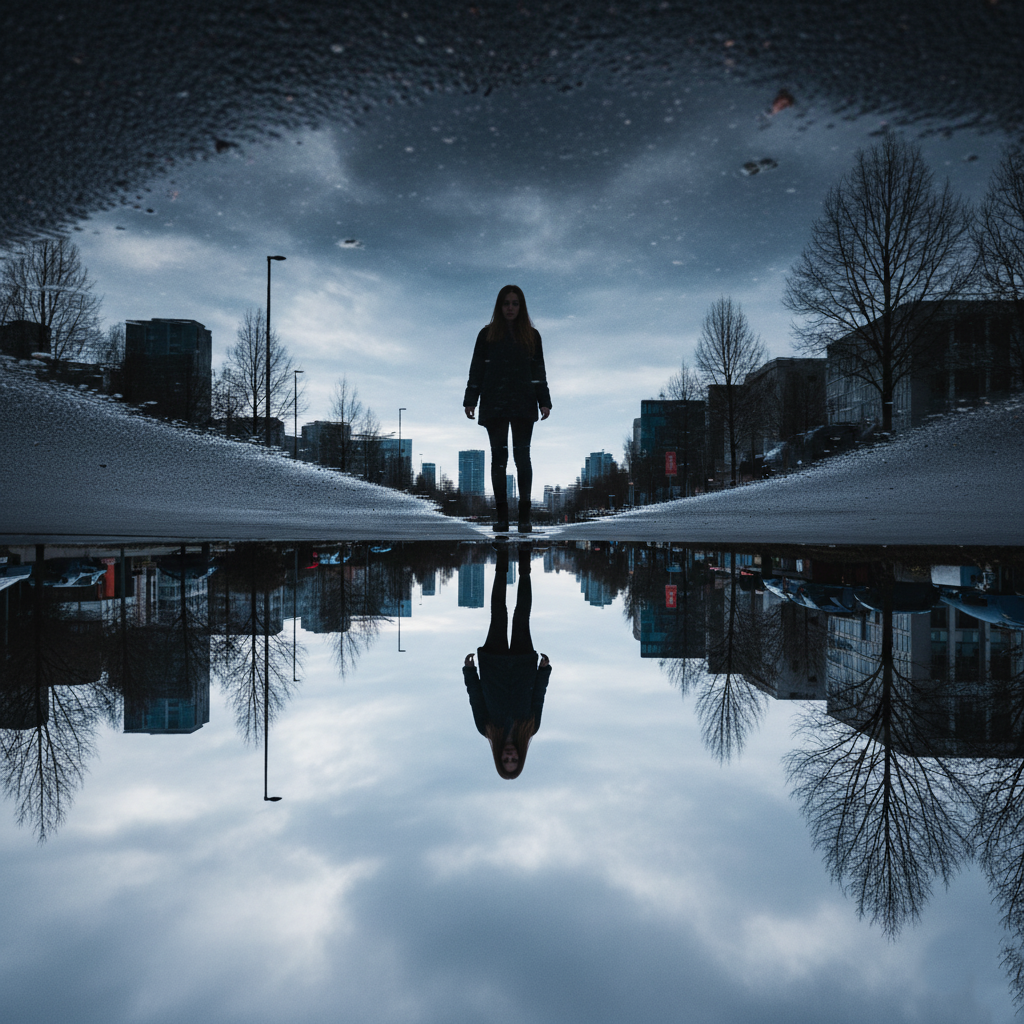
Photographs with reflections possess a special magic. They have the power to duplicate reality, transform the everyday into art, and play with the viewer’s perception. In these images, the camera captures not only the person but also their visual mirror: an inverted, poetic, and symbolic version of themselves. Reflections can be found on a multitude of surfaces—mirrors, puddles, glass, windows, polished metals, or even screens—opening up a universe of creative possibilities for those seeking a unique and profound composition.
Poses for photos with reflections invite you to explore the relationship between the subject and their surroundings. Unlike a traditional photograph, here the focus is divided between the main figure and its reflection, requiring a balance of power and harmony. The key lies in finding the right angle, where light and position complement each other, creating a coherent yet surprising image. It’s not just about duplication, but about telling a story through reflection: introspection, duality, or simply a touch of visual beauty.
Spontaneity also plays an important role. Sometimes, the best reflections appear in unexpected places: a shop window as you walk by, a fogged-up window, or a wet floor after the rain. Knowing how to recognize these moments is part of the art of reflective photography. With a good pose and a creative eye, a reflection can become a key element capable of elevating any photo shoot.
In this article, we’ll explore five pose ideas for photos with reflections that will help you play with light, angle, and emotion, creating unique images that combine aesthetics and meaning.
1. Look straight into the reflection
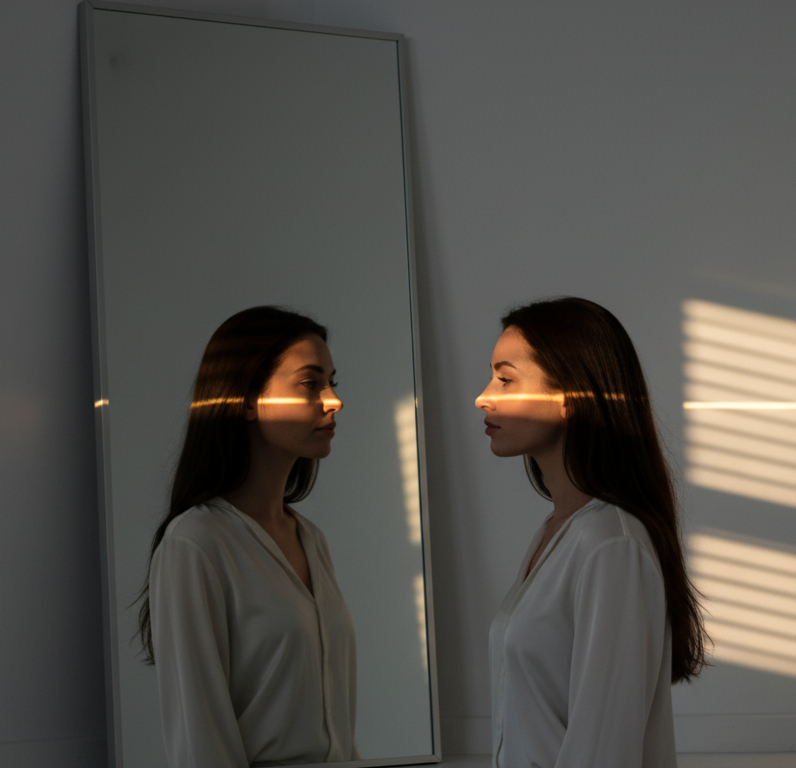
One of the most powerful poses in reflection photography involves looking directly at the surface reflecting the image. This pose creates a sense of introspection and inner dialogue, as if the person were connecting with themselves through the reflection. Instead of looking at the camera, attention is focused on that other “self” that appears before them, giving the image an intimate and emotional feel. It’s an excellent choice for conveying calm, melancholy, or self-awareness.
Body positioning is fundamental for achieving visual balance. Ideally, the subject should be slightly in profile or at a three-quarter angle, allowing both the face and the reflection to be visible simultaneously. This creates a harmonious composition where both elements—person and reflection—have equal prominence. The gaze should be soft, not forced, and accompanied by a relaxed expression. The surroundings also play a significant role: a clean mirror, a windowpane, or even a metallic surface can offer different nuances depending on the available light.
Natural lighting is usually the best ally for this type of photography. A side or backlighting source helps to highlight contours and avoid shadows that obscure the reflection. If using a mirror, you can play with the angle to capture part of the surroundings, adding depth and context. Indoors, this pose is especially aesthetically pleasing when combined with neutral tones and soft reflections that evoke serenity.
2. Touch the reflection with the hand
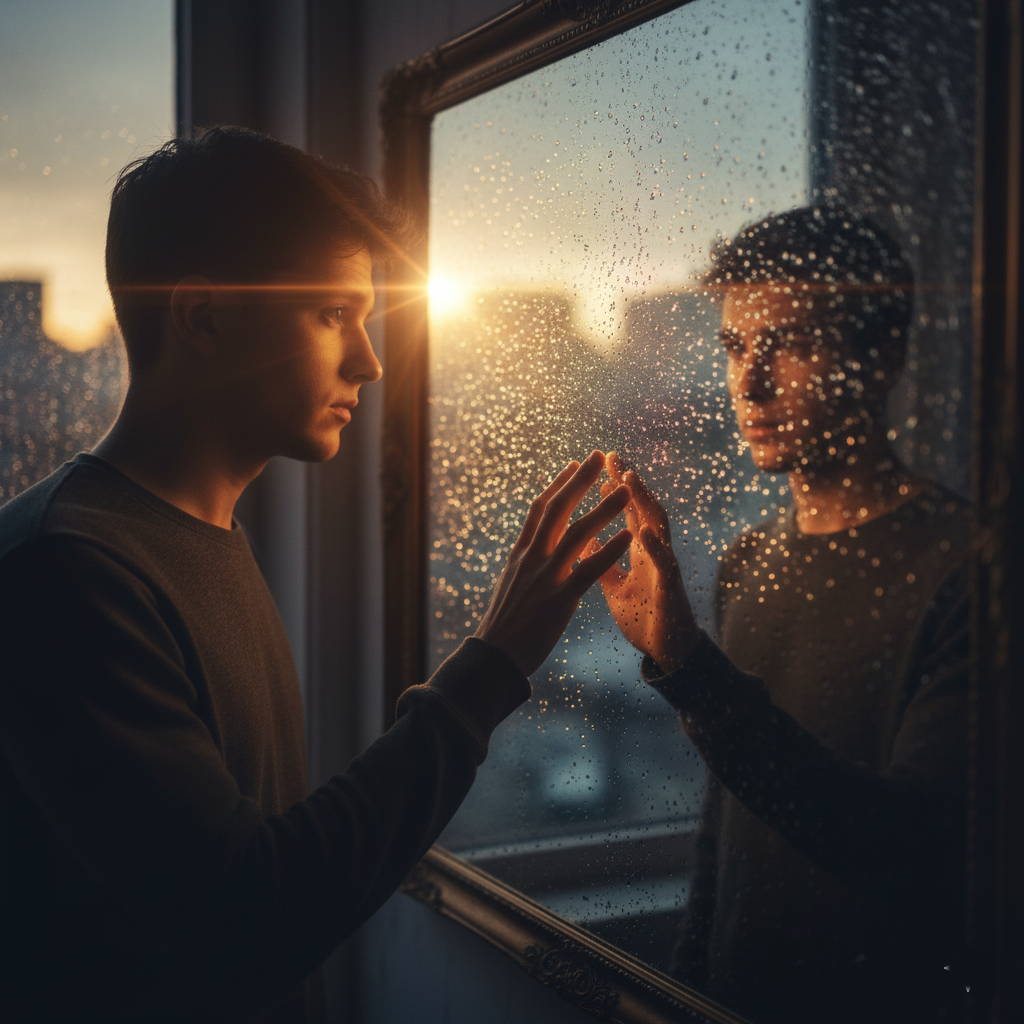
A highly expressive pose for reflection photography is one in which the person extends their hand toward the reflective surface, as if trying to touch or reach their own image. This gesture has great symbolic power, suggesting connection, a quest, and a sense of duality between the tangible and the intangible. Visually, the hand serves as a point of connection between the two worlds: the real and the reflected. Therefore, this pose is especially effective when seeking to convey emotion, curiosity, or a sense of poetic introspection.
The secret to making this pose work is paying attention to the overall posture. The body can lean slightly toward the reflection, with the face turned toward the hand or the projection. This natural inclination adds depth to the composition and gives a sense of subtle movement. The photographer must pay attention to the details: the position of the fingers, the direction of the gaze, and the facial expression should feel authentic, not posed. The softer and more natural the gesture, the more powerful the image.
Lighting is key to highlighting eye contact and touch. Using side lighting or backlighting can create sharper reflections and an immersive atmosphere. Outdoors, a puddle or a window can work just as well as a mirror, especially if the light of dawn or dusk bathes the scene in warm tones. This pose also lends itself to artistic or narrative interpretations, exploring the link between identity and projection.
3. Reflection on the wet floor
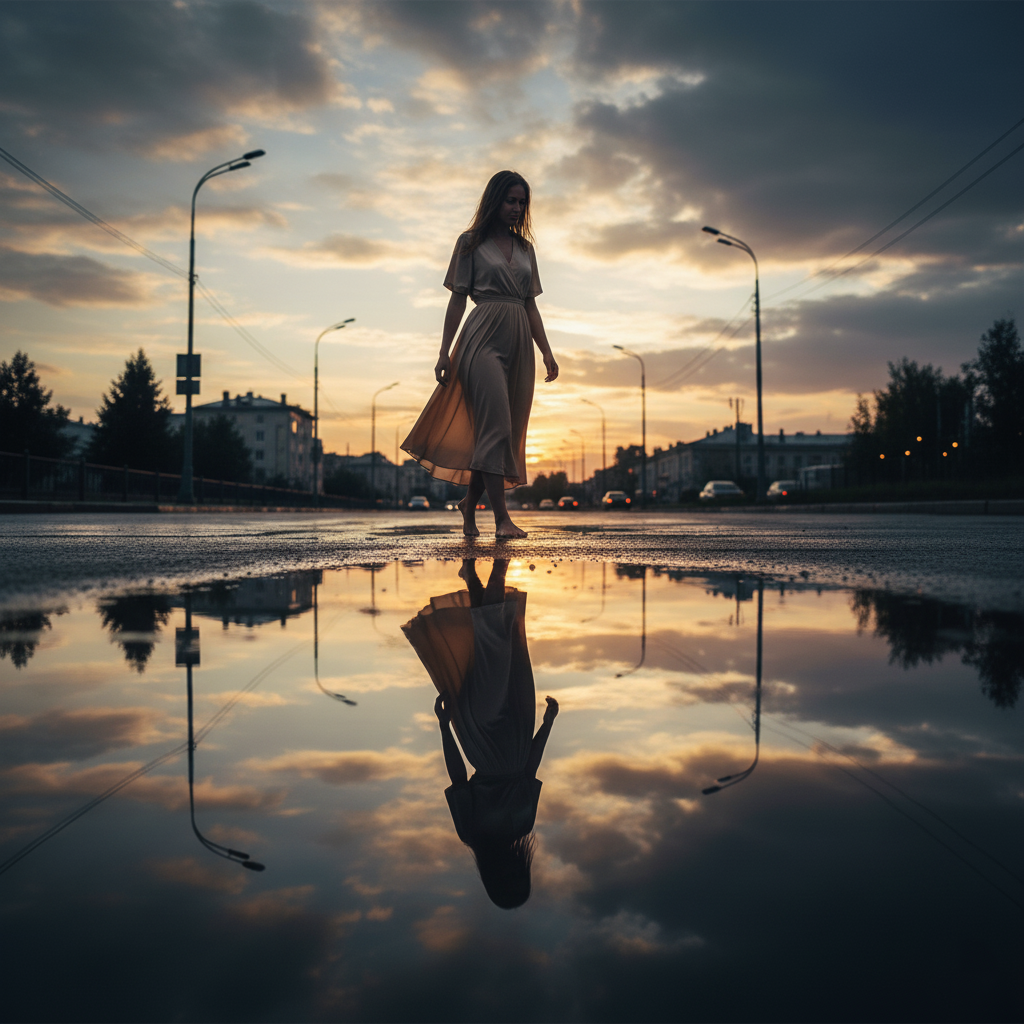
When rain leaves behind puddles or wet surfaces, the ground becomes a natural mirror full of visual possibilities. Taking advantage of this scenario to capture a reflection is a creative and poetic way to transform the everyday into art. This pose is based on the idea of using the reflection in the water as the main subject, so the person doesn’t necessarily have to look at the camera, but rather interact with the surroundings. It’s a pose that conveys calm, introspection, and a special connection with the present moment.
The trick to achieving a good composition lies in perspective. If the photographer crouches or positions themselves at ground level, they can capture both the figure and its reflection in a balanced way. It’s important to maintain the proportion between both elements so that the image retains harmony and doesn’t feel cluttered. The ideal pose involves standing with the body slightly inclined or looking down, as if observing one’s own reflection in the water. Walking slowly or holding an object that enhances the atmosphere, such as an umbrella or a garment that moves in the wind, can also work.
Natural light plays a fundamental role. The golden hour or the soft light after a rain creates more defined reflections and richer tones that enhance the scene. If the urban or natural environment is reflected alongside the subject, the photograph gains an extra dimension: the fusion between person and landscape.
4. Reflection on glass and display cases
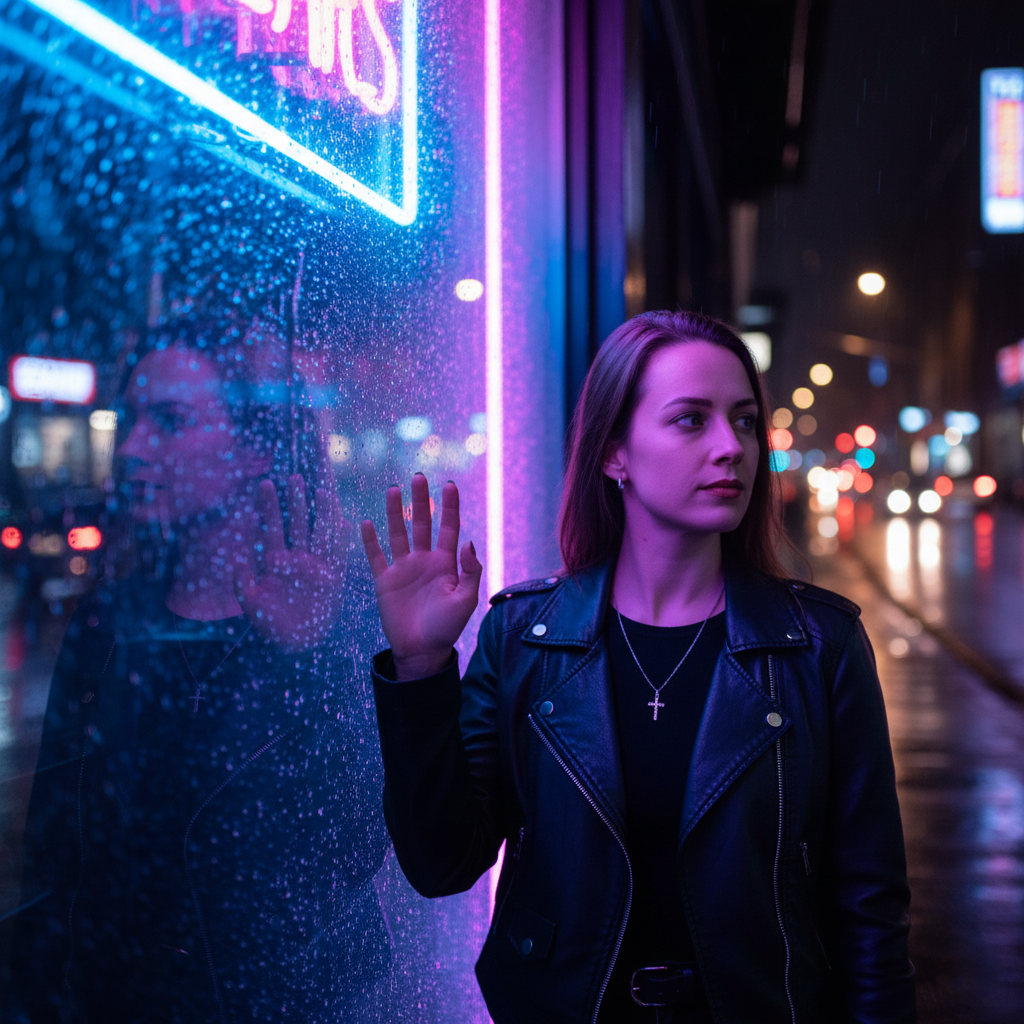
Glass and display cases offer a more subtle and sophisticated type of reflection, ideal for portraits with an artistic or urban touch. This pose focuses on playing with the transparency of the glass and the overlap between the face and its reflection, creating a sense of depth and visual duality. It’s a technique widely used in fashion shoots, street portraits, or nighttime photography, as it allows for the conveyance of emotions such as melancholy, introspection, or mystery.
To achieve an attractive effect, the person can position themselves very close to the glass, so that their reflection partially blends with the surroundings on the other side. A classic pose involves gently resting the forehead or hand on the surface, looking towards a point outside the frame. You can also experiment with angles where the reflection appears to duplicate the face or create an illusion of two perspectives simultaneously.
Lighting plays a key role: the difference between the exterior and interior light can enhance the reflection. For example, if it’s dim inside and brighter outside, the reflection becomes sharper and more defined. If you’re looking for an emotional or cinematic touch, neon lights, shop windows, or urban signs add color and atmosphere.
The photographer can play with focus, alternating between the real figure and its reflection, to create a dreamlike or doubling effect. This type of pose invites interpretation, allowing the image to tell more than one story at once.
5. Reflection on the water at the sunset
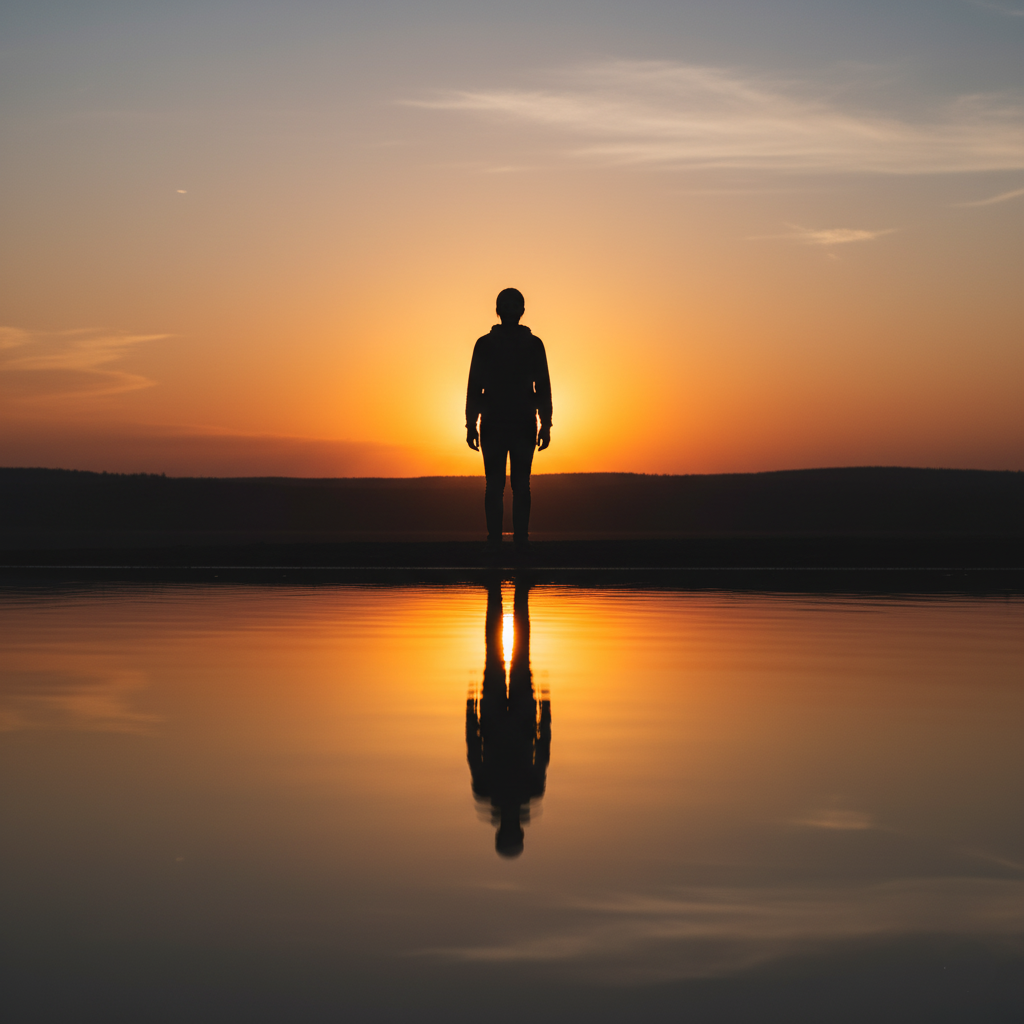
The reflection in the water at sunset is one of the most poetic and visually appealing poses you can capture. The golden or orange light of dusk combines with the soft tones of the water, creating a warm and magical atmosphere. This idea works for individual portraits as well as couple or group photos, especially at lakes, ponds, or even the seashore.
To achieve a charming effect, the person can stand or sit near the water so that their silhouette or face is clearly reflected. A simple yet effective pose is to gaze toward the horizon as the reflection spreads across the surface. For a more artistic feel, you can play with the movement of the water: walking slowly or touching it with your hand creates ripples that distort the reflection, adding dynamism to the composition.
Using the golden hour is essential for this pose. The low sunlight highlights the contours of the body and gives a natural glow to the hair and skin. Furthermore, the sky’s hues—pinks, golds, and blues—are reflected in the water, adding a vibrant color palette that brings the scene to life without the need for extensive editing.
From a technical standpoint, it’s best to use a medium aperture to keep the reflection in focus without losing detail in the surroundings. If photographed from a low angle, the reflection becomes almost symmetrical, creating a visually powerful composition.
Conclusion
Exploring the possibilities of reflections in photography is an experience that is both creative and introspective. Every surface that reflects an image—be it a mirror, glass, a window, or water—opens a door to new forms of visual expression. These five posing ideas demonstrate that reflections not only duplicate a figure but also amplify emotions, capture contrasts, and tell stories that go beyond what a direct gaze can reveal.
Photographing with reflections invites you to experiment with light, angles, and composition in a more conscious way. It allows you to play with symmetry or distortion, generate mystery or serenity, and transform an ordinary scene into a work laden with symbolism. Furthermore, the technique is not limited to any particular environment: it can be applied indoors with mirrors, in the city with shop windows, or outdoors where water and nature become visual allies.
Beyond the technique, poses in front of a reflection also carry a profound emotional weight. They represent duality, introspection, and self-discovery. They can symbolize how we see ourselves or how we wish to be perceived. In each photograph, the reflection becomes a visual metaphor for the self and its surroundings, merging the real world with its most imagined or ideal version.
The key lies in observing, in letting the environment converse with the camera, and in allowing spontaneity to express itself. A slight variation in posture or lighting can completely change the story the image conveys. Thus, each reflection ceases to be a mere copy and becomes a mirror of the soul and the moment.


