
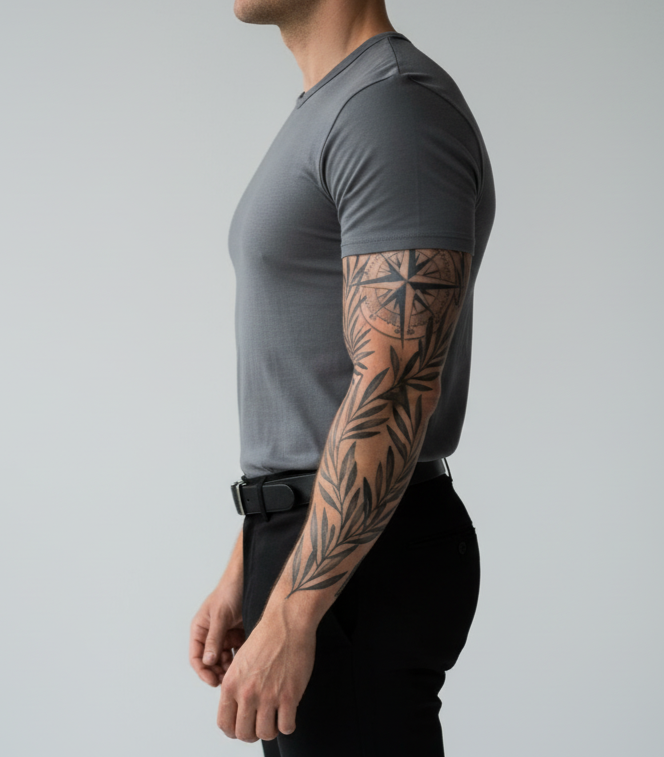
Tattoos are an art form and a means of personal expression that deserves to be captured in a special way. Each line, color, and design tells a unique story, and photographs become a window that allows us to share that visual narrative with the world. But it’s not enough to simply show the ink on the skin; the key is finding the right pose that highlights the tattoo and, at the same time, reflects the essence of the person wearing it. Poses for photos with tattoos must balance attitude, light, and composition so that each image feels alive, authentic, and full of intention.
The body becomes the canvas, and every movement can transform how the tattoo is perceived. That’s why it’s important to consider posture, angle, and lighting. A tattoo can come alive when light caresses its texture or when the pose guides the eye to its most striking feature. In these images, skin and art merge, creating portraits that transcend aesthetics and become a form of visual identity.
Whether your tattoo is on your arm, back, chest, or leg, each body part offers unique opportunities to showcase its design. This article brings together five posing ideas designed to highlight tattoos in creative, elegant, and expressive ways. From minimalist approaches to bolder compositions, each idea aims to capture not only the beauty of the tattoo but also the personality behind it.
1. The close up on details
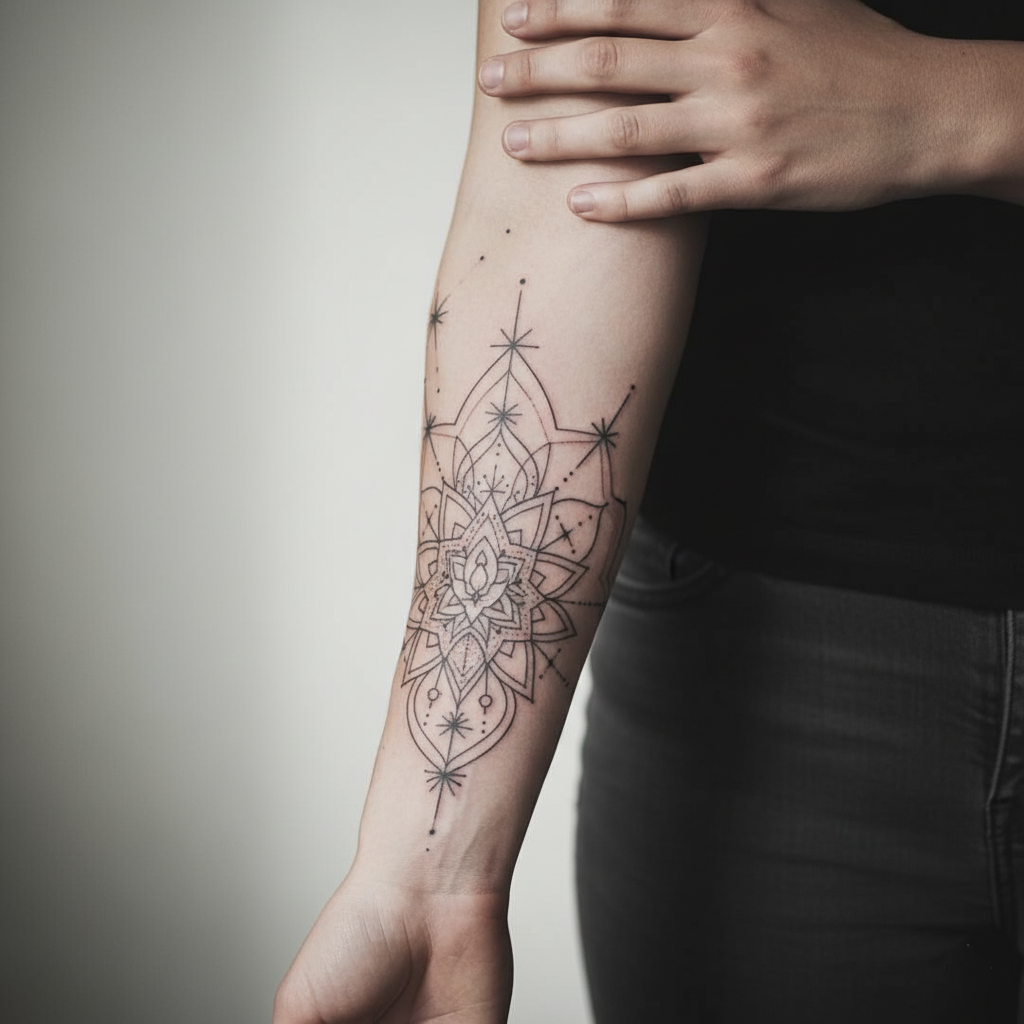
One of the most powerful ways to photograph a tattoo is to focus solely on it, letting the skin become the main canvas. This pose aims to highlight the details of the design, the texture of the ink, and how the tattoo interacts with the light. The person can adopt a natural yet strategic posture, where the body guides attention to the tattooed area. For example, if the tattoo is on the forearm, a slight bend of the arm or an everyday gesture, such as adjusting clothing or touching one’s hair, can draw the eye directly to the desired area without appearing forced.
Lighting is essential to this approach. Side or grazing light enhances shadows and contrasts, allowing the colors and lines of the tattoo to be perceived with clarity. A neutral background helps ensure nothing competes with the design, but it’s also possible to play with soft textures such as curtains, smooth walls, or backgrounds in warm tones that complement the skin tone. The key is to allow the tattoo to breathe within the frame, without overloading the image with unnecessary elements.
This pose also works perfectly for intimate or artistic portraits, as it conveys a sense of closeness. The hands can play an important role: placing them near the tattoo, touching it, or following the shape of the body adds dynamism and connection.
2. The Body on Motion
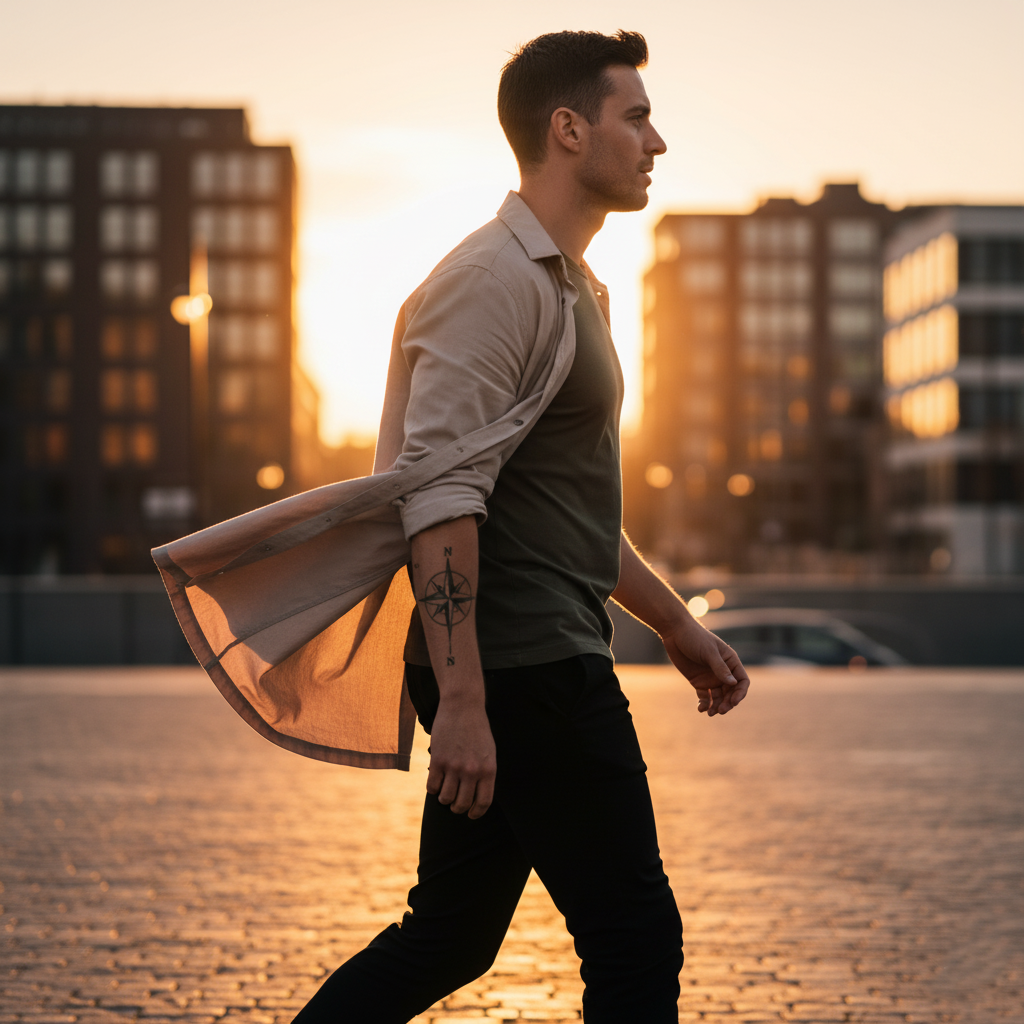
An excellent way to capture the essence of a tattoo is through movement. When the body is in motion, the muscles tense and the skin stretches, revealing new dimensions of the design. This idea proposes leaving behind static poses in favor of fluidity: walking, turning, raising an arm, or simply changing posture can be enough gestures to bring the tattoo to life. The key is to show how the body art adapts and transforms along with the body, demonstrating that it is not just a drawing on the skin, but an integral part of the person.
Photographs in motion also convey energy and naturalness. A slight blur or capturing a fraction of the gesture can add drama and authenticity. For example, if the tattoo is on the back, a pose in which the person turns slightly toward the camera can create a mysterious and sensual effect. If it’s on the leg or thigh, a slow walk or a mid-step captured in mid-air can highlight the shape and placement of the design.
As for lighting, the ideal is that which complements the movement. The natural light of sunset or urban reflections at night can add depth and drama. The important thing is that the tattoo doesn’t get lost in the action, but rather becomes the point of balance between the body and the expression.
3. Contrast between light and shadows
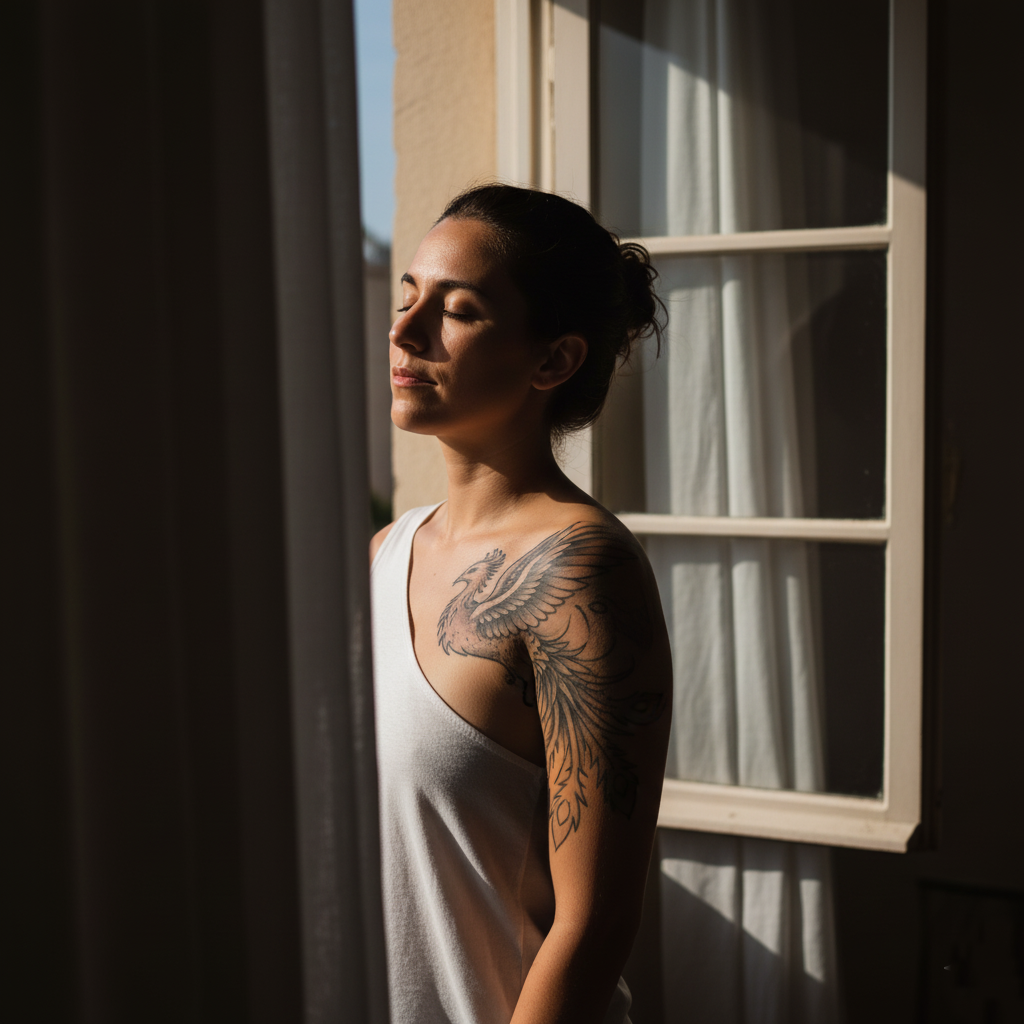
Tattoos have a unique relationship with light. Each line and each color reacts differently depending on how the light hits them. This pose is based precisely on taking advantage of the contrasts between light and shadow to highlight the design and give the photograph an artistic and emotional feel. The person can position themselves near a natural light source, such as a window or a warm lamp, allowing the light to fall on the tattooed area while the rest of the body is partially submerged in shadow. This duality creates a powerful visual effect, full of depth and mystery.
In this type of pose, the body language should be calm, almost introspective. The goal is not to show the tattoo in its entirety, but to suggest it, to hint at it. An arm extended toward the light, a back slightly turned, or a gaze lowered can create a visual narrative where the tattoo becomes the silent protagonist of the scene. The contrast also helps to highlight the texture of the skin, making the design look more real, almost tangible.
This style works especially well for tattoos on large areas of the body, such as the chest, back, or thighs, where the interplay of light can accentuate the natural shapes. If using artificial lighting, a side light or one directed from above can achieve an effect similar to natural light at sunset.
4. Portrait with attitude
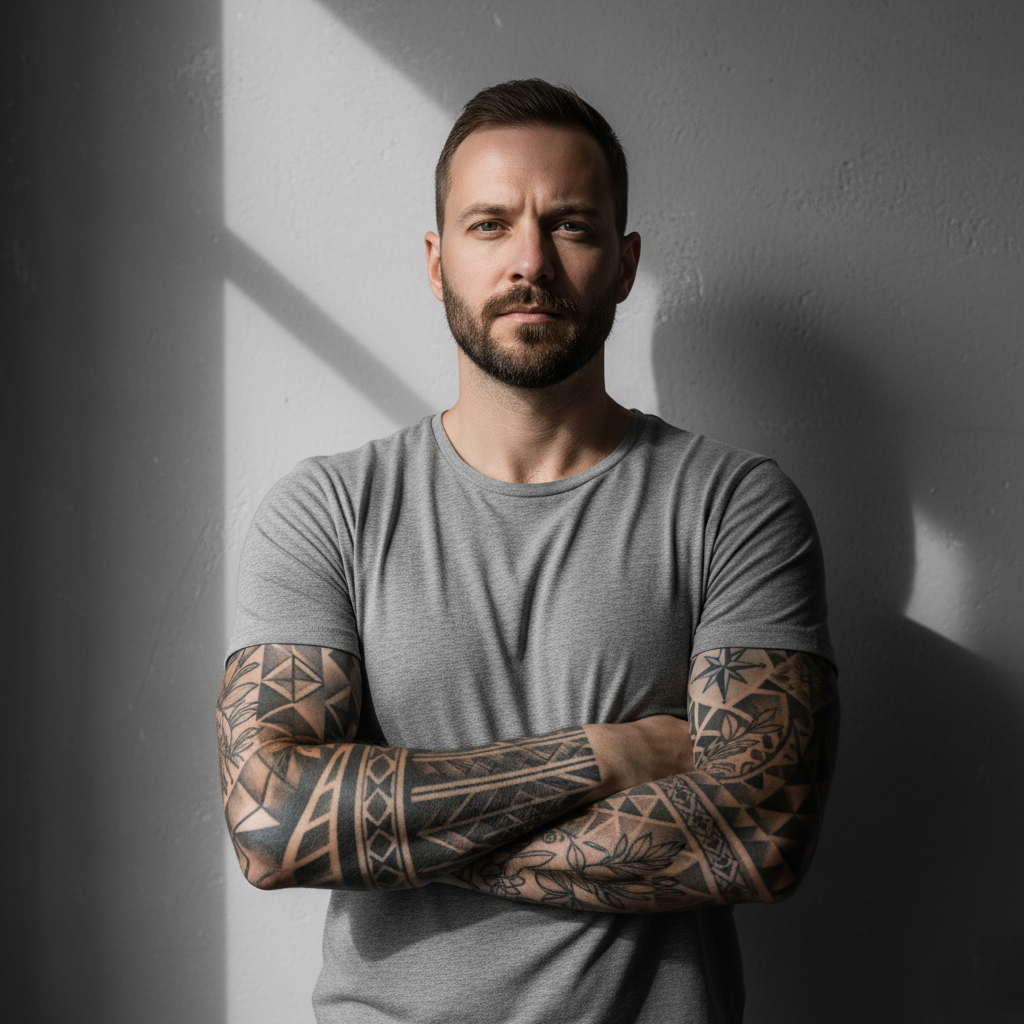
Tattoos are more than just art on the skin: they’re an extension of personality. That’s why one of the most striking poses for showing them off is one that exudes attitude. In this approach, the pose not only highlights the design but also reflects the essence and energy of the person wearing it. It could be a direct gaze at the camera, a firm stance, or a relaxed yet confident expression; the important thing is that the pose conveys character and authenticity.
A portrait with attitude can play with body posture: leaning slightly forward, crossing the arms, or standing upright with the head held high. If the tattoo is in a visible area, like the arms or neck, simply position the body so that it blends naturally into the composition. On the other hand, if the tattoo is in a less exposed area, a pose that suggests its presence—like a hand holding a garment or a twist of the torso—can spark curiosity without revealing it completely.
The lighting can be more contrasting, with hard or directional lights that emphasize the lines of the face and the tattoo. It is also an opportunity to include backgrounds with textures or colors that reinforce the style of the tattoo: a brick wall, an industrial environment, or even a monochromatic wall can add visual strength to the portrait.
5. The art of reflection
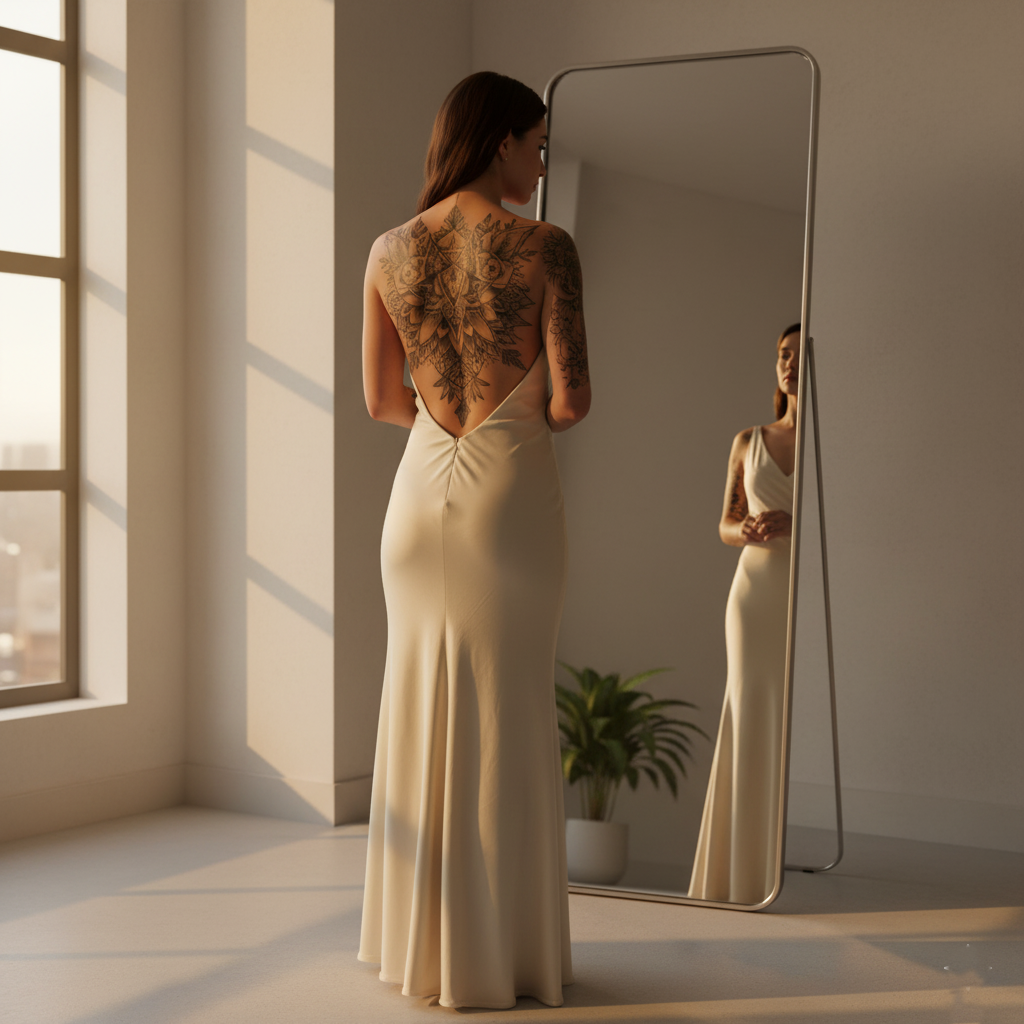
Mirrors offer a unique opportunity to capture tattoos from a different perspective. This approach focuses on using reflections—whether in a mirror, a window, or even metallic surfaces—to create a double composition where the body and its reflected image engage in a dialogue. This technique adds depth, symbolism, and a poetic touch to the photograph, especially when the tattoo holds personal significance. The pose should be carefully considered so that the reflection not only showcases the tattoo but also the emotional connection to it.
One of the most effective ways to achieve this is to stand in front of the mirror with a relaxed yet controlled posture. Slightly turning your body to the side or looking at the reflection instead of the camera can create a sense of intimacy and self-exploration. If the tattoo is on the back or neck, this idea is ideal, as the mirror allows you to reveal what would normally remain hidden. Furthermore, playing with light can enhance the composition: natural light coming from the side or soft artificial light can create gentle reflections that lend an artistic air.
The setting also influences the final result. A mirror with an antique frame, a minimalist room, or a space with warm tones can transform the scene into something more cinematic. The important thing is to maintain a natural expression, allowing the reflection to be an extension of the moment and not a mere duplication.
Conclusion
Photographing tattoos is much more than capturing ink on skin; it’s portraying a part of the soul, a story written on the body. The right poses not only highlight the art but also reveal the connection between the person and the meaning behind the design. Throughout these five ideas, we’ve explored how posture, light, movement, and attitude can completely transform how a tattoo is perceived on camera. From intimate detail to the power of a characterful portrait, each approach offers a distinct opportunity to showcase the beauty and symbolism that resides on the skin.
The secret lies in authenticity. It’s not about forcing a pose or striving for technical perfection, but about allowing the tattoo to breathe along with the body, letting the photograph reflect who you are and what that design represents to you. Every tattoo tells a story—of courage, love, growth, or art—and the best way to portray it is with honesty and sensitivity. Playing with light, harnessing reflections, or letting movement speak for itself can transform a simple image into a work brimming with emotion.
Taking the time to plan the pose and lighting also helps immortalize the tattoo with the respect and power it deserves. The camera becomes an ally, amplifying the expression and making visible the art that is usually hidden beneath clothing or within everyday gestures.


