

Have you ever stood before a breathtaking rural landscape, camera in hand, unsure where to start? While the countryside offers beautiful and authentic scenes, it can often be challenging to find fresh ideas that truly add visual and narrative value to your photos. As photographers, we know that creativity doesn’t always come on its own, and even in the most photogenic settings, it’s easy to feel stuck without clear guidance. That’s why, in this article, we want to share five concrete and creative ideas to help your field sessions flow smoothly and, most importantly, become memorable.
These ideas are designed not only to make the most of natural light and rural surroundings but also to help you tell stories, experiment with compositions, and connect emotionally with your audience. Whether your focus is portrait, landscape, or lifestyle photography, you’ll find practical inspiration you can apply immediately. Get ready to break free from routine, rediscover the beauty of the countryside, and take your portfolio to the next level.
1. Natural portraits in golden light


One of the most effective and visually striking ideas for countryside photography is to take advantage of the golden light at sunrise or sunset for natural portraits. This soft, warm light enhances skin tones, creates gentle shadows, and adds a magical touch to any scene. In rural settings, where artificial elements are minimal, natural light becomes the star of the show, and using it strategically can elevate your photographs to a whole new level. If you’re working with models, encourage them to interact with the environment, walking barefoot on the grass or facing the sun, to capture authentic expressions.
The ideal moment for this type of image is the so called golden hour, which occurs just after sunrise or shortly before sunset. In the countryside, free from tall buildings or streetlights, you can make the most of this timeframe. Experiment with backlighting to create striking silhouettes or luminous halos around your subject. You can also play with warm reflections on surfaces such as water or fields of wheat if you’re shooting in agricultural areas. This lighting doesn’t require complicated gear, but it does demand careful attention to the exact moment when the light is at its best.
A key tip is to use wide apertures (like f/1.8 or f/2.8) to achieve that beautiful background blur, or bokeh. This not only emphasizes your subject but also allows you to work with natural light without a flash. It’s also helpful for isolating the model from distracting background elements. Additionally, consider composing your images using the rule of thirds, placing the subject at strategic points for visually balanced and appealing shots.
These types of rural portraits are perfect for lifestyle photography, professional portfolios, or even engagement sessions. You can incorporate wildflowers, hats, blankets, or any props that complement the rural aesthetic. The key is to capture genuine emotions in an environment that conveys calm, freedom, and connection with nature. When combined with golden hour light, your images will radiate warmth and nostalgia, ideal for social media, portfolios, or editorial projects.

2. Compositions featuring rural elements


The countryside is full of elements that can enrich your photographic compositions: wooden fences, old houses, bales of hay, farming tools, dirt roads, and even rusted carts. These objects not only tell stories but also add texture, contrast, and depth to your images. A great approach is to use these elements as natural backgrounds or frames for portraits or editorial style shots. For example, a person sitting on a hay bale, gazing at the horizon, can evoke feelings of tranquility, nostalgia, or freedom.
To create more compelling compositions, think carefully about how to arrange these elements within the frame. Use leading lines, like fences or paths, to guide the viewer’s eye toward the main subject. You can also play with the symmetry offered by structures such as barns or sheds. Another effective technique is “framing within the frame,” for instance, shooting through a wooden window toward the outside or vice versa. This adds context to the photo and reinforces the sense of place.
The colors of rural elements are equally important. Earthy tones, deep greens, weathered whites, or rusty reds can create highly appealing color palettes. Try to coordinate your model’s wardrobe with the surrounding environment to achieve visual harmony. Texture matters too: the roughness of wood, the softness of grass, or the rustic quality of aged metal adds character to your images, especially when captured in side or low angle light that highlights the details.
Shooting in the countryside gives you the chance to tell authentic stories, and rural elements act as witnesses to those narratives. In a portrait session, for example, encourage the model to interact with the environment: leaning against a barn door, holding an antique tool, or simply walking along a dusty path. These gestures, combined with thoughtful composition, can produce images that are not only visually beautiful but also emotionally powerful. Remember, in photography, small details can make the difference between a good photo and a truly memorable one.

3. Photographing details in nature


When you think of countryside photography, expansive landscapes or portraits in natural settings usually come to mind. But there’s a whole universe of possibilities if you take a closer look and explore the tiny details your surroundings offer. Wildflowers, dew drops on a leaf, the texture of bark, insects, feathers, or wheat spikes, all of these elements can become the focal point of a powerful image if you know how to capture them. This is a great way to practice macro or close-up photography, even if you don’t have a dedicated lens.
Focusing on natural details in the field helps develop a more observant and patient eye. This type of photography requires attention, calm, and sensitivity, but the results can be astonishing. Ideally, use wide apertures (like f/2.8 or f/4) to achieve a blurred background and make the subject stand out. Composition is also key: apply basic principles such as negative space or the rule of thirds. If you find an interesting flower or insect, try surrounding it, changing your angle, and observing how the light shifts depending on your position.
Timing and lighting are also important. Early morning not only provides better light but also more activity in the natural world, bugs on petals, dew, or butterflies still sluggish from the cold. Using a reflector or handheld light can add targeted illumination to certain details, creating striking highlights. Overcast days are perfect for this kind of photography as well, since the diffuse light reduces harsh shadows and enhances texture.
This type of countryside photography has many applications: it can serve personal projects, social media content, stock photography, or even as the foundation for editorial series. Training your eye to notice small details also improves your overall composition, teaching you to see beyond the obvious. So next time you venture into the countryside, don’t just take in the full landscape, pause, crouch, and look closely. Every corner holds a story waiting to be captured.

4. Playing with perspectives using roads and paths


One of the most visually compelling elements you can encounter in the countryside is the presence of dirt roads, rural trails, or footpaths cutting through grasslands, wooded areas, or cultivated fields. These spaces function not only as natural settings but also as powerful compositional tools that allow you to explore perspective within your photographs. The natural lines formed by these paths guide the viewer’s eye toward a vanishing point, creating a sense of depth and visual dynamism. This effect is particularly effective for conveying emotions such as adventure, freedom, or a deep connection with the environment.
When incorporating a road or trail into your composition, consider carefully how you position it within the frame. Placing it centrally can establish a strong sense of symmetry, while using it diagonally introduces movement and energy. Including a subject, walking away from the camera or captured in profile, can strengthen the narrative, suggesting a journey or a moment of introspection. This approach works beautifully for lifestyle portraits, family sessions, or even editorial shoots with a more cinematic aesthetic. The key lies in waiting for the right light and guiding your subject to interact naturally with the surroundings.
Golden hour plays a crucial role in this context. As the sun dips low, shadows stretch and the landscape’s colors become richer, creating a warm, nostalgic atmosphere. Shooting into the light allows you to capture striking silhouettes or emphasize the path as it glows from behind. Aerial perspectives can also elevate your imagery, if you have access to a drone, you’ll find that from above, paths form intriguing shapes and reveal patterns and textures in the terrain that often go unnoticed at ground level.
Experimenting with perspective is an excellent way to break out of routine and refine your photographic voice. By incorporating roads and trails into your countryside images, you invite the viewer to step into the scene, creating a more immersive visual experience. So on your next outing, keep an eye out for those dusty paths that seem to lead nowhere, more often than not, that’s exactly where the most compelling images begin.

5. Improvised scenes featuring farm animals
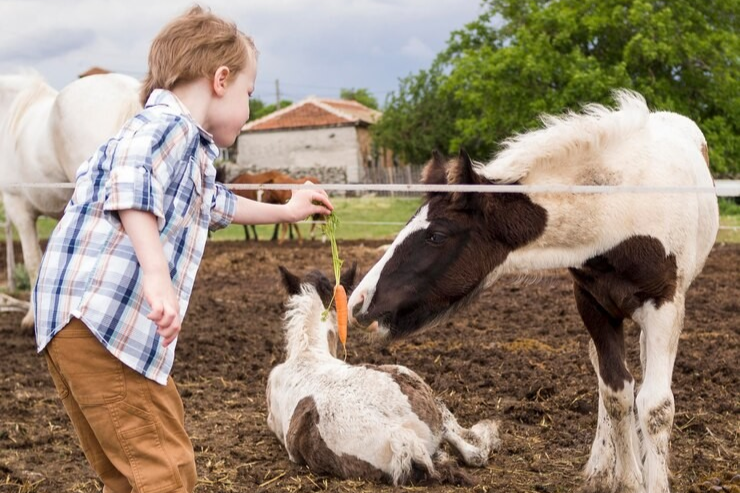
If there’s one element that brings life and authenticity to a countryside photoshoot, it’s the animals that inhabit these spaces. Whether horses, cattle, sheep, chickens, or even ranch dogs, their presence introduces movement, spontaneity, and a genuine connection to the rural environment. Including animals in your images not only enriches the visual narrative but also adds an emotional layer that resonates instantly with the viewer. Best of all, they are unpredictable subjects, meaning you have the opportunity to capture fleeting, unrepeatable moments.
That said, working with animals demands patience and careful observation. Unlike human subjects, they won’t follow direction, but you can learn to anticipate their behavior. Pay attention to how they move, where they tend to go, what captures their attention, and when they are most at ease. Use these moments to compose thoughtfully and explore compelling angles. Interactions between people and animals, such as a child gently petting a sheep or a cowboy walking alongside his horse, convey warmth and humanity, qualities that are highly valued in contemporary photography.
From a technical standpoint, using fast shutter speeds (1/500 or higher) is recommended to freeze motion when animals are active. You may also want to use continuous autofocus (AF-C) to maintain sharpness as they move. In terms of framing, aim to include both the animal and elements of the surrounding landscape to provide context. If you’re shooting portraits, ensure the background remains clean enough to avoid distractions, while still telling something about the setting. Working with natural light—especially during early morning or late afternoon—can help you create a rich, atmospheric look without relying heavily on post processing.
Incorporating farm animals into your photography not only enhances visual appeal but also adds a human dimension to your work. These types of images are particularly effective for documentary projects, family sessions, or rural themed visual storytelling. They also perform exceptionally well on social media, where animal imagery tends to drive higher engagement. In short, if you find yourself in the countryside and have the chance to encounter these companions of rural life, don’t hesitate: have your camera ready, stay attentive, and be prepared to capture moments that are as genuine as they are evocative.
Invest in your growth as a photographer with high quality training
Exploring the countryside with your camera opens up a wide range of creative possibilities, from portraits bathed in golden light to compositions that capture the essence of rural life. Every corner presents an opportunity to create unique images and tell authentic stories. However, to truly elevate your craft, it’s essential to keep learning and experimenting with new techniques.
At Master Class Photographers, you’ll find courses designed to perfectly complement your passion for shooting in natural environments. For instance, Aprende Fotografía de 0 a 100 provides a solid foundation in essential photographic techniques. If your focus leans toward portraiture, Domina la fotografía de Retrato will teach you how to capture the true essence of your subjects in any setting. And if you’re looking to refine your editing workflow, Aprende Revelado en Lightroom de 0 a 100 offers a step by step guide to mastering post production. Dive into these resources and continue expanding your photographic vision.


