
Did you know you can offer professional photo sessions without needing a studio? More and more people value the comfort of a session at home, where they feel relaxed, authentic, and at ease. This presents a fantastic opportunity for you as a photographer, allowing you to provide a personalized, intimate, and high quality service tailored to your clients’ lifestyle. Additionally, working in real environments, like a well lit living room, a kitchen with unique details, or even a bedroom with soft natural light, can yield results that feel far more natural and emotive than any artificial backdrop.
In this article, we share 10 ideas for at home photography that will help you make the most of any living space. From taking advantage of natural light at different times of day to creating improvised backgrounds with everyday objects, these tips are designed to help you offer versatile, creative, and highly professional sessions. Whether your clients are looking for family portraits, social media content, lifestyle images, or simply want to capture a special moment without leaving home, you’ll find inspiration here to transform any space into a unique photographic experience.
1. Portraits with natural light by the window


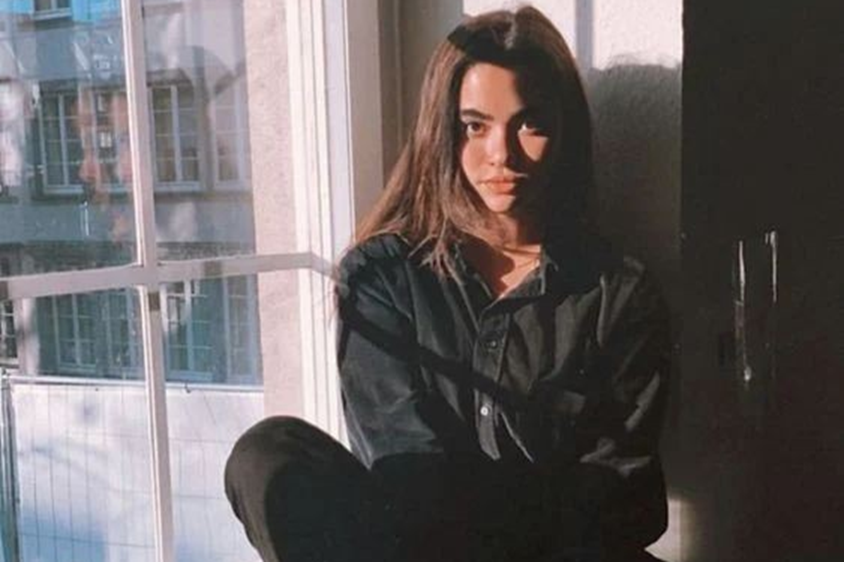
One of the most powerful tools you have when shooting in your clients’ homes is natural light. Windows become key allies for creating soft, dimensional portraits with a natural atmosphere that conveys genuine emotion. A window positioned to the side or slightly in front of the subject, without harsh direct sunlight, produces gentle shadows and flattering illumination. If the light is too strong, you can diffuse it with a thin curtain or a white cloth, achieving a softbox effect without any extra equipment.
Using window light also gives you the opportunity to play with different times of day. Morning light tends to be softer and cooler, while afternoon light is warmer and more dramatic. These shifts allow you to create varied moods without moving your client. This setup is ideal for personal portraits, lifestyle sessions, or more intimate photography, such as maternity, newborn, or couple portraits.
Another advantage of working near a window is incorporating the frame or the curtain into your composition. Playing with depth of field, keeping the subject sharp while letting the background gently fade, adds a professional and artistic touch to your images. You can also experiment with angles, profile, three quarter, or backlit, to achieve variety without changing rooms.
As a practical tip, ask your clients to prepare the window area before the session: a simple chair, a clean wall, or a subtle accessory like a plant or a blanket can enhance the composition without stealing focus. This type of session feels natural and allows clients to be comfortable in their own space. Not only will you deliver beautiful images, but also a relaxed, professional experience that they’ll likely recommend to others.

2. Lifestyle photos in the kitchen or dining room


The kitchen and dining room are ideal settings for capturing everyday moments that convey warmth, authenticity, and connection. These types of lifestyle sessions are highly valued by families, couples, and even content creators who want to present their daily lives with a refined, professional touch. As a photographer, you can use these spaces to tell genuine visual stories by working with available light, the color palette of the environment, and decorative elements that reflect your client’s personality.
In the kitchen, you might capture scenes such as preparing breakfast, a steaming cup of coffee, or the interaction between parents and children cooking together. Though seemingly simple, these moments carry strong visual emotion. The dining room, on the other hand, offers a more structured atmosphere, ideal for seated portraits, exchanged glances, or images where the subject interacts with their surroundings: a set table, a casual conversation, or a toast among friends. These details add context and a human dimension to the photographs.
From a technical standpoint, working with wide apertures (f/2.8 or wider) is key to isolating the subject from a visually busy background. You can also use architectural lines—such as the edge of a table, shelving, or pendant lighting—to guide the viewer’s eye toward the focal point. Make the most of window light, and combine it with light-colored or reflective surfaces to maintain soft, natural illumination. If harsh shadows appear, a portable reflector or even a simple white board can help fill them in.
Before starting the session, talk with your clients about the type of images they envision. You can suggest preparing the space with a few aesthetic elements, fresh fruit, wooden utensils, neutral table linens, or flowers. The goal is not to stage an artificial scene, but to enhance what is already there with photographic intention. Kitchen and dining room sessions don’t just produce beautiful images, they document real, everyday moments. In the end, that’s what clients value most: photographs that feel alive, personal, and truly memorable.

3. Intimate portraits in the bedroom


The bedroom is one of the most personal and intimate spaces within a home, making it an ideal setting for sessions aimed at capturing authentic emotion, vulnerability, and connection. These portraits don’t necessarily imply nudity or boudoir (though those are valid options), but rather a sense of closeness, where the subject can present themselves as they truly are, without pretense. For many people, being in their bedroom creates a sense of comfort and security, which is essential for achieving natural, relaxed expressions in front of the camera.
As a photographer, it’s important to study the layout of the room: how does the light enter? Are there neutral tones you can take advantage of? Is the bed positioned near a window, or are there curtains that can serve as a backdrop? With soft side lighting from a window, you can create portraits with beautiful depth and dimension. You might also experiment with subtle backlighting to produce delicate silhouettes or a more introspective mood. Elements like sheets, blankets, pillows, and headboards can help you compose the frame while adding layers of visual texture.
A highly effective approach in this type of session is to capture your subject in moments of apparent rest: lying on the bed gazing at the ceiling, sitting at the edge with a cup of coffee, or reclining against a pillow while looking out the window. These everyday gestures, when thoughtfully directed, evolve into portraits with emotional depth. When working with a couple, you can suggest playful interaction, gentle touch, or even a quiet conversation, moments that often lead to spontaneous, meaningful expressions.
Clear and empathetic communication with your client is essential from the very beginning. Explain your creative approach, build trust, and always respect personal boundaries. The bedroom is an intimate environment, and treating it with professionalism and sensitivity will help your client feel at ease, something that will directly translate into the quality of the images. These sessions are ideal for those seeking authentic portraits, editorial style imagery, or even more personal visual storytelling. When executed well, the photographs created in this space stand out not only for their aesthetic, but for their ability to convey what words often cannot.

4. Living room sessions featuring decorative elements


The living room is typically the most spacious and thoughtfully decorated area of a home. It’s where people welcome guests, unwind, and spend time with family, so it often reflects the personality of those who live there. This makes it an ideal setting for photographic sessions that blend portraiture, lifestyle, and a subtle editorial touch. As a photographer, you can take full advantage of existing decorative elements—artwork, books, plants, sofas, rugs, and lamps—to support your composition and visually enrich each frame.
When working in a living room, the key is to identify which elements add visual value and which may become distractions. Pay close attention to the color palette, the quality and direction of natural light (often more abundant here than in other rooms), and the textures available. A well lit sofa, for instance, can become the perfect setting for seated portraits, while a striking rug might serve as an interesting background for overhead shots. Your eye as a photographer is what ultimately transforms an ordinary scene into a carefully crafted image.
You can also experiment with different levels and poses, ask your subject to sit, recline, or interact with objects such as books, mugs, or even a pet. These actions introduce a sense of naturalness and allow you to capture spontaneous, emotionally resonant moments. When working with families or small groups, the living room is especially well suited for group portraits with good lighting and minimal need to rearrange furniture. Don’t overlook mirrors or reflective surfaces, which can add depth and creative reflections to your compositions.
Before starting the session, it’s a good idea to ask your client to lightly declutter the space, keeping only items with aesthetic or emotional significance. The goal isn’t to completely redesign the room, but to create visual clarity. You might also bring a few neutral accessories (such as throws, cushions, or flowers) to have additional styling options if the environment allows. In the end, images captured in the living room can become standout pieces in your in home photography portfolio, combining technical precision, sensitivity, and creativity within a space that is as unique as each client.

5. Close-ups and detailed shots featuring personal items
In an in home session, personal objects can become silent protagonists, subtle elements that reveal a great deal about your client’s story. Photographing details and close-up frames is a powerful way to capture the essence of a home and enrich the visual narrative beyond traditional portraits. From hands holding a cup, to an annotated book, a guitar resting against a wall, or an old framed family photograph, each object can carry deep meaning and add both aesthetic and emotional value to your images.
As a photographer, you need to stay attentive to those small details that often go unnoticed. The key lies in observing and asking the right questions: which objects hold significance for your client? Are there items with sentimental or symbolic value? These details can help you craft intimate, evocative compositions. Use lenses with wide apertures (such as a 50mm f/1.8 or 85mm f/1.4) to achieve a shallow depth of field and create a soft bokeh, isolating the subject and drawing full attention to that small yet meaningful fragment of the environment.
This approach also works beautifully as part of a broader visual narrative. You might begin with a wide shot of the space, then gradually tighten the frame until you reach a detail: a hand brushing against fabric, a lit candle, flowers resting on a table. These transitions not only add variety to your gallery, but also introduce rhythm and emotional depth. They are especially effective for albums, portfolios, or online galleries that aim to tell stories beyond straightforward portraiture.
Personal objects also bring authenticity to the session. You’re not photographing generic items, but rather the elements that make each client’s environment unique. This approach is highly valued, particularly by those seeking images with meaning or wanting to document everyday moments through a more artistic lens. For you as a photographer, it also presents a creative challenge: to find beauty in the ordinary, to frame with intention, and to tell a story without relying on a face. In the end, it’s often these small details that resonate most deeply, images that linger in memory and connect on a more intimate level.

6. Get creative with mirrors and reflections
Mirrors and reflective surfaces within the home offer an exceptionally creative and versatile visual resource that you can fully leverage at in home photography sessions. Beyond their decorative function, mirrors allow you to experiment with composition, framing, and perspective, producing images with depth, symmetry, and a conceptual edge. When used intentionally, they can transform a simple photograph into a striking, artistic piece that immediately captures attention.
One of the most common—and effective—approaches is to photograph your subject through their reflection. This technique allows you to present two perspectives within a single frame: the person and their reflection, the environment and its background. You can capture anything from a close-up portrait to a wider scene that incorporates the room, building a layered and visually rich narrative. Focus also becomes a creative tool, keep the subject out of focus while the reflection remains sharp, or reverse it, depending on the story you want to convey.
Mirrors aren’t the only reflective tools at your disposal. Any surface that catches light—windows, glass tables, dark screens, or even water in a glass—can enhance your composition. These elements can introduce subtle duplications, soft highlights, luminous accents, and even dreamlike atmospheres. If you’re working in a modern home with glossy finishes, you’ll find an ideal playground for this kind of visual exploration.
To achieve the best results, pay close attention to light sources and shooting angles. Soft or side lighting typically works best to avoid harsh reflections or visual distractions. It’s also essential to carefully check your framing to ensure the photographer or equipment isn’t unintentionally reflected, unless, of course, that’s a deliberate creative choice. Finally, encourage your client to interact naturally with the mirror: touching it, looking at themselves, laughing, or even avoiding eye contact. These spontaneous gestures often result in unique, expressive images that resonate on a more personal level with the viewer.

7. Neutral backgrounds with fabric or plain walls
One of the simplest yet most effective techniques when shooting at home is the use of neutral backgrounds, whether it’s a clean wall or a carefully arranged piece of fabric. This type of backdrop directs all attention to the subject, eliminates visual distractions, and lends a more polished, professional finish to the image. It’s especially well suited for formal sessions, corporate portraits, social media content, or even product photography done at home. When used thoughtfully, it allows you to achieve studio quality results without ever leaving your client’s space.
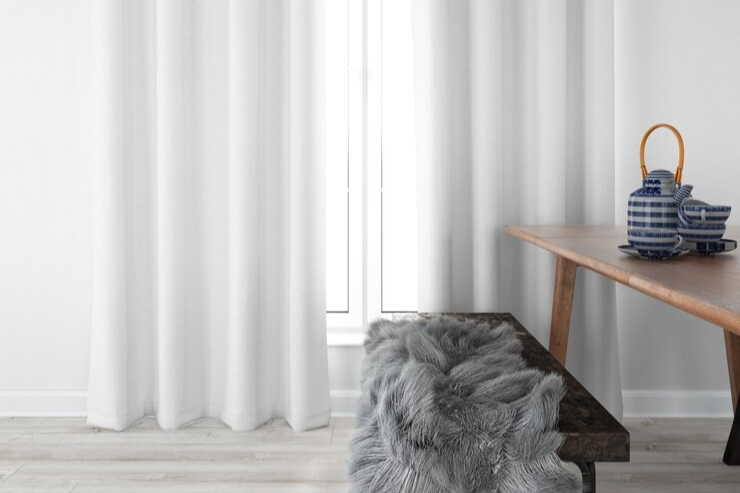
Most homes offer at least one white or light colored wall that can serve as a backdrop. If the surface isn’t perfectly uniform, you can hang a smooth fabric or a well stretched sheet, ideally in neutral tones such as white, beige, gray, or black, depending on the aesthetic you’re aiming for. These colors don’t compete with the subject and help light distribute evenly across the frame. For a more dramatic effect, a darker backdrop combined with side lighting can produce striking, high impact portraits.
In terms of lighting, it’s best for the background to receive light indirectly to avoid harsh shadows or unwanted contrast. You can work with soft natural window light or enhance it with a portable softbox. Having a white or gold reflector on hand is also useful for controlling how light bounces onto the subject’s face. With a neutral background, any variation in lighting, wardrobe, or facial expression becomes immediately more noticeable, allowing you to create clean, visually compelling images.
This setup is also ideal when you need versatility. You can photograph multiple outfits, styles, or props without constantly changing locations. With subtle adjustments in pose, framing, and light direction, you can produce a consistent yet varied set of portraits suitable for different purposes. This approach is particularly valued by professionals, entrepreneurs, and content creators who need a refined visual identity without unnecessary complexity. For you as a photographer, it means efficiency, control, and high quality results with minimal setup.
8. Photoshoots with pets at home
Pets are an essential part of many people’s lives, and for your clients, including them in a photo session is more than a detail, it’s a way of portraying their world as it truly is. Photographing animals at home allows you to capture a unique bond that’s difficult to replicate in a controlled studio environment. From a dog jumping onto the couch to a cat curling up beside its owner, these natural moments create images that feel genuine, emotional, and full of warmth.
Working with pets means adapting to their rhythm. Unlike human subjects, you can’t ask them to hold a pose or look directly at the camera. Instead, the key is to observe their behavior and anticipate their reactions. A great approach is to begin the session by letting them explore, interact with their surroundings, or settle into their favorite spot. In the meantime, you can capture close-up shots of their expressions, details like their paws, fur, or the way they look at their owners.
When pets are included alongside the family, the result is often deeply meaningful imagery. Simple gestures, petting, playing, or everyday interactions, become memorable scenes when captured with intention. For these sessions, it’s important to work with faster shutter speeds (at least 1/250) and wide apertures to create a soft background blur that highlights the subject. With good natural light, especially in a living room or near a window, you can achieve soft, clean, and well lit images without the need for additional equipment.
Before the session, talk with your client about their pet’s behavior, favorite toys or treats, and the areas of the home where they feel most comfortable. This will help you plan the flow of the shoot more effectively. Above all, aim to maintain a calm, relaxed atmosphere without forcing situations. When both the pet and the owner feel at ease, the most authentic moments naturally unfold, and those are the images that ultimately become truly meaningful, lasting memories.

9. Daily routine photography (spontaneous moments)
There is beauty in the everyday. Capturing the daily routine of an individual or family within their home is a form of documentary photography approached with intimacy and artistic intent. These sessions are rooted in observation, anticipation, and the honest recording of real moments, free from posing or direction. For your clients, this can be deeply meaningful: having professional images of their daily life allows them to preserve a part of their story that often goes unnoticed.
As a photographer, your role is to remain attentive to small gestures, a glance between mother and child over breakfast, someone reading in their favorite chair, a person working on a laptop with coffee nearby, or a couple preparing a meal together. These seemingly ordinary moments are rich with subtle emotion and authenticity. The goal is not to capture perfection, but truth. The key is to become almost invisible, fostering trust so that everything unfolds naturally.
From a technical perspective, this approach benefits from flexibility. Use natural light whenever possible, and keep your camera in manual mode or aperture priority to adapt quickly to changing light conditions within the home. Don’t hesitate to work with medium to high ISO levels in low light situations, and consider embracing grain as an aesthetic choice if you’re aiming for a more intimate atmosphere. Lenses like a 35mm or 50mm are ideal, allowing you to stay close without distorting the scene.
Before the session, speak with your client to identify which parts of their day are worth documenting. You might plan around simple activities, making breakfast, playing with the kids, working from home, or simply relaxing in a favorite space. Your presence should feel light, like that of a quiet observer there to capture what naturally unfolds. This approach results in genuine, emotionally resonant images that move away from the rigidity of traditional sessions and create a deeper connection with those who receive them.

10. Editorial Style in Limited Space
A powerful idea, fully achievable at home, is to offer editorial style sessions, even when space is limited. This approach is rooted in intentional composition, controlled lighting, and a clear visual narrative, much like you would create for a magazine spread or a fashion campaign. The beauty of it lies in its accessibility: you don’t need a professional studio or a designer home. With a creative eye, any corner can be transformed into a compelling editorial set.
Working in small spaces demands precision in your framing and visual decisions. Look for clean corners, textured surfaces, a well placed chair, or a neutral colored wall. You can create striking contrast through wardrobe choices, incorporate minimal yet impactful props (such as a single flower, a voluminous garment, or a sheer fabric) or experiment with angular, dramatic posing. All of these elements add character and elevate the image without relying on overly complex setups.
Lighting is essential. Ideally, work with natural light entering from the side through a window, or bring a continuous light source that you can shape with intention. Strong shadows or defined beams of light can introduce a sophisticated, cinematic quality. This is a space for experimentation: cast shadows through blinds, bounce light with mirrors, or even introduce warm tones to create a more intimate editorial mood. The goal is to move beyond the typical lifestyle portrait and offer something more stylized, intentional, and visually striking.
These types of sessions appeal to clients looking for something distinctive, content creators, personal brands, models, artists, or anyone with a defined aesthetic seeking images with personality. You can present this as a unique experience: an artistic in home session that elevates their image without requiring them to leave their environment. Ultimately, your portfolio should communicate that it’s not about the size or sophistication of the space, it’s about vision. In the hands of a creative photographer, any corner can become an editorial cover.

Turning your home into a photography studio
These 10 at home photography ideas show that you don’t need a large studio or expensive equipment to create powerful images. What’s essential is vision, creativity, and the ability to make the most of what’s already around you. Every corner of the home, from a well lit window to a simple white wall, can be transformed into a unique photographic set. The key is ensuring that each session reflects your style as a photographer and becomes a meaningful experience for your clients. If you’re looking for ways to offer a more personal, comfortable, and original service, starting at home is an excellent first step.
For those wanting to refine their skills further, we recommend exploring the courses available at Master Class Photographers. Aprende a Iluminar con bajos Recursos is perfect for making the most of the natural light available at home, while Domina la fotografía de Retrato helps you improve your handling of subjects in intimate settings. Looking for creative inspiration? Don’t miss El Proceso Creativo Detrás de la Foto con Salem McBunny. And, of course, continue following our blog for more ideas, techniques, and tips to help you grow as a professional photographer.


