
Winter transforms the world into a visually captivating stage. Snow-covered landscapes, the diffused light of the low sun, and the cool tones of the environment create an atmosphere that invites you to capture moments filled with calm, style, and emotion. Taking photographs in this season is a perfect opportunity to experiment with the texture of clothing, the contrast between human warmth and the cold of the surroundings, and poses that communicate introspection or joy. However, achieving a good winter image goes beyond simply dressing well; it’s about finding harmony between the body, expression, and nature.
Winter demands creativity. Posture, gaze, and the relationship with the elements—like snow, the steam of breath, or a steaming cup—can become the heart of a memorable photograph. Each pose can tell a different story: from the melancholic stillness of a snowy afternoon to the energy of someone laughing in the cold. Furthermore, the interplay of light and shadow intensifies during this season, allowing for softer and more emotional compositions than at any other time of year.
In this article, you’ll discover five winter photo pose ideas that will help you express different emotions while still capturing the season’s charm. Each pose is designed to suit various settings, styles, and moods. Whether you’re looking for natural portraits or more artistic compositions, you’ll find an endless source of visual inspiration in winter.
1. Embracing the cold in style
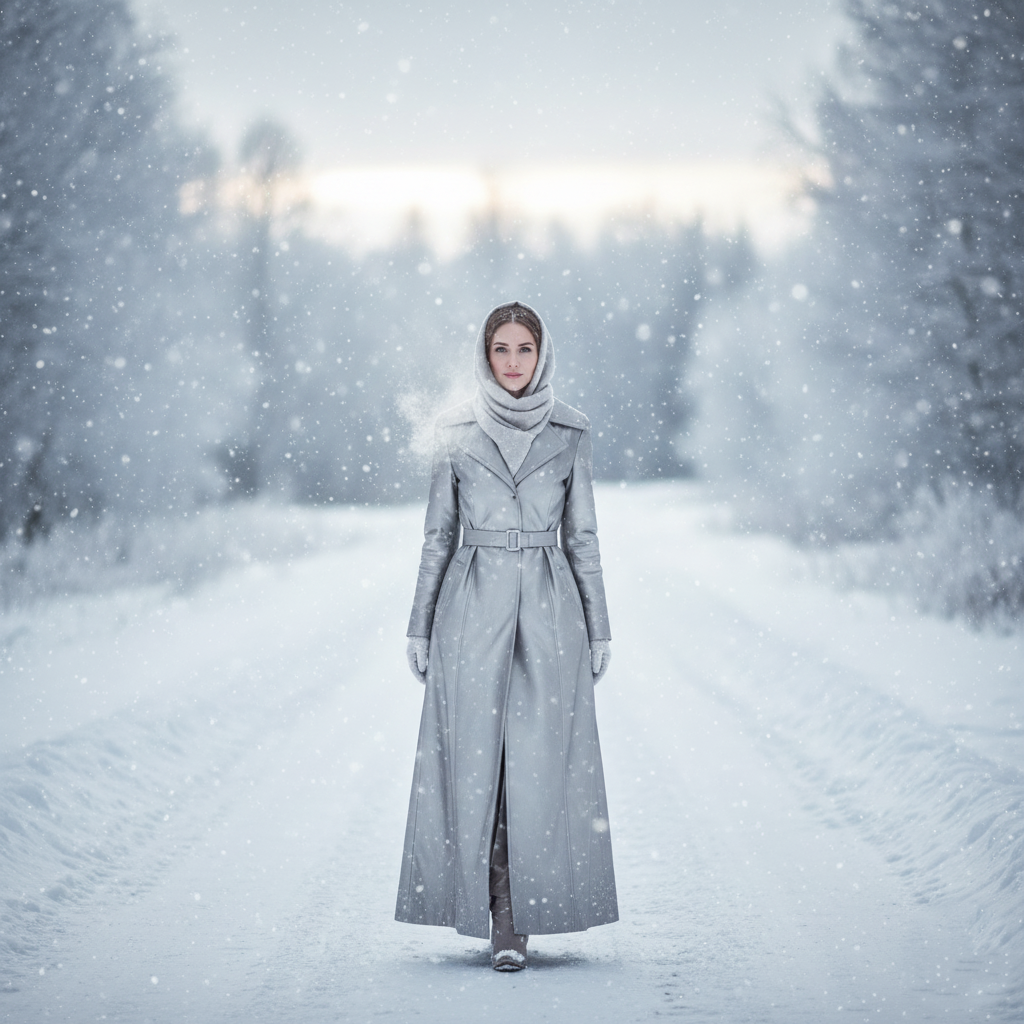
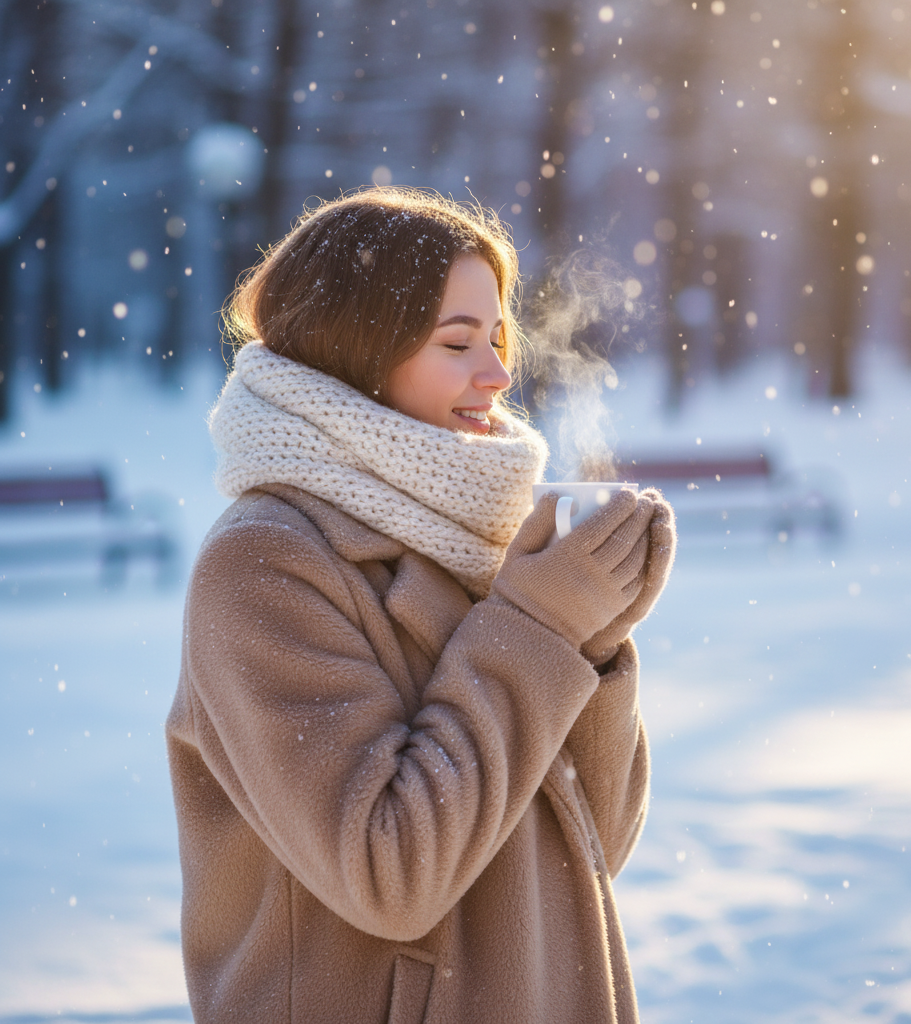
Winter offers a unique atmosphere for photography: soft light, muted colors, and a sense of calm that invites introspection. Posing while embracing the cold with style doesn’t mean enduring the low temperatures, but rather incorporating them into the image as an expressive element. This pose involves wrapping the body in warm clothing—scarves, coats, gloves, or hats—and playing with gestures that convey warmth, such as crossing your arms over your chest, rubbing your hands together, or partially hiding your face in a scarf. The intention is to create a sense of refuge from the elements, where the body and clothing become symbols of comfort and winter beauty.
The secret lies in naturalness: the pose should appear spontaneous, as if the camera had captured a moment of pause during a snowy walk. The facial expression can be gentle, with a slight smile or a thoughtful gaze that contrasts with the icy surroundings. The ideal light is that of dawn or dusk, when the winter sun casts golden tones on the skin and the vapor of breath becomes visible, adding a touch of life to the image.
The background can vary from a snowy landscape to a cobblestone street or even a fogged-up window. The important thing is that the atmosphere evokes both cold and serenity. This pose is perfect for conveying the duality of winter: the harshness of the weather and the warmth of the soul that is stylishly wrapped up in the cold.
2. Walking under the Snow
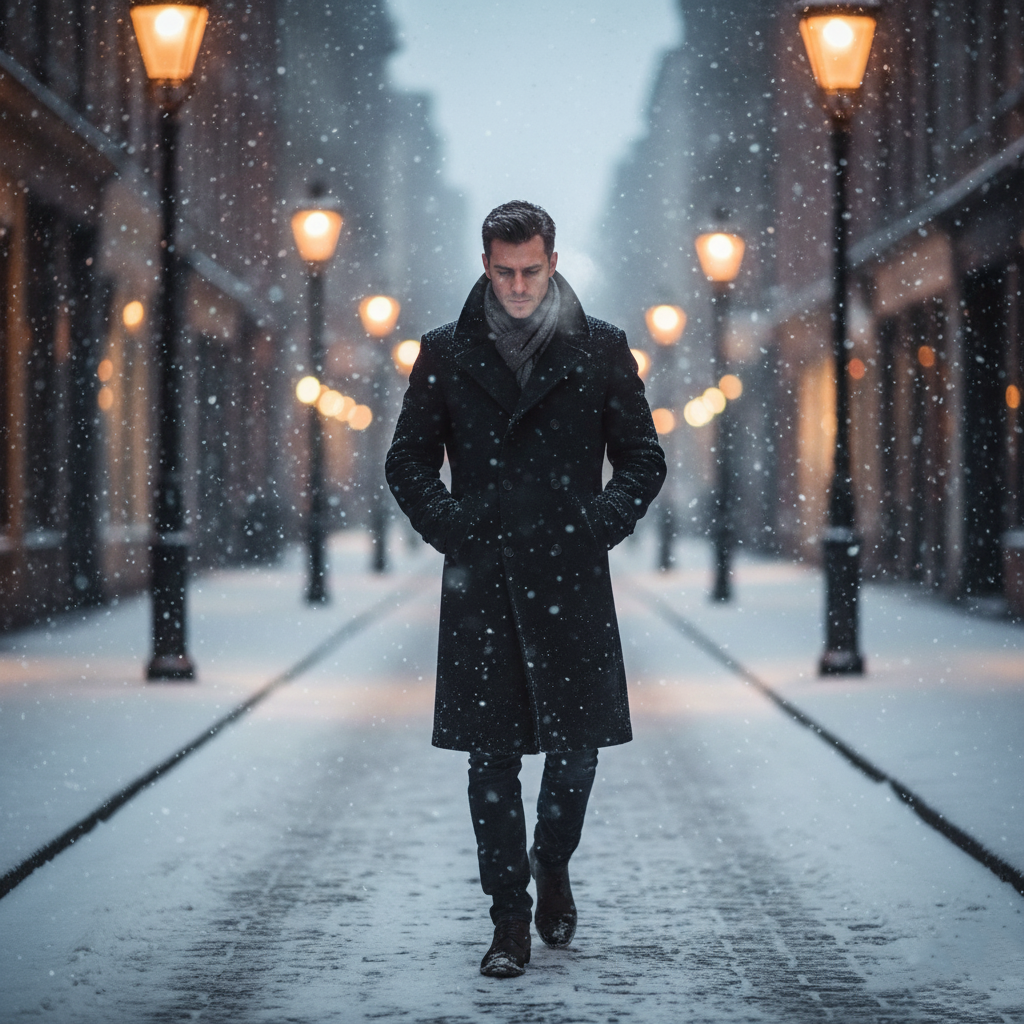
Walking in the snow is one of the most natural and cinematic poses for winter photography. This type of image conveys movement, freedom, and an intimate connection with the environment. There’s no rigidity or imposed posture; the important thing is to capture the fluidity of the stride, the unhurried rhythm of someone enjoying the moment without haste. Each step stirs up tiny snowflakes, each breath mingles with the cold air, and the body becomes part of the winter landscape. This pose allows you to play with different moods: from the joy of a carefree walk to the melancholy of solitary reflection.
The secret lies in the naturalness of the gesture. The subject can look at the ground, at the horizon, or even upwards, letting the snowflakes fall on their face. The movement of the hair or scarf adds dynamism to the image, while the footprints in the snow reinforce the feeling of movement and time standing still. It’s ideal to take advantage of quiet streets, tree-lined paths, or open spaces covered by a blanket of white.
Lighting plays a crucial role: soft, diffused light creates a poetic atmosphere, while backlighting—when the sun filters through the clouds—can generate shimmering highlights on the suspended snowflakes. A transparent umbrella or a colorful coat can also be used to add a touch of visual contrast.
This pose works because it portrays winter in its most human form: an encounter between the individual and nature, between stillness and movement.
3. Playing in the Snow
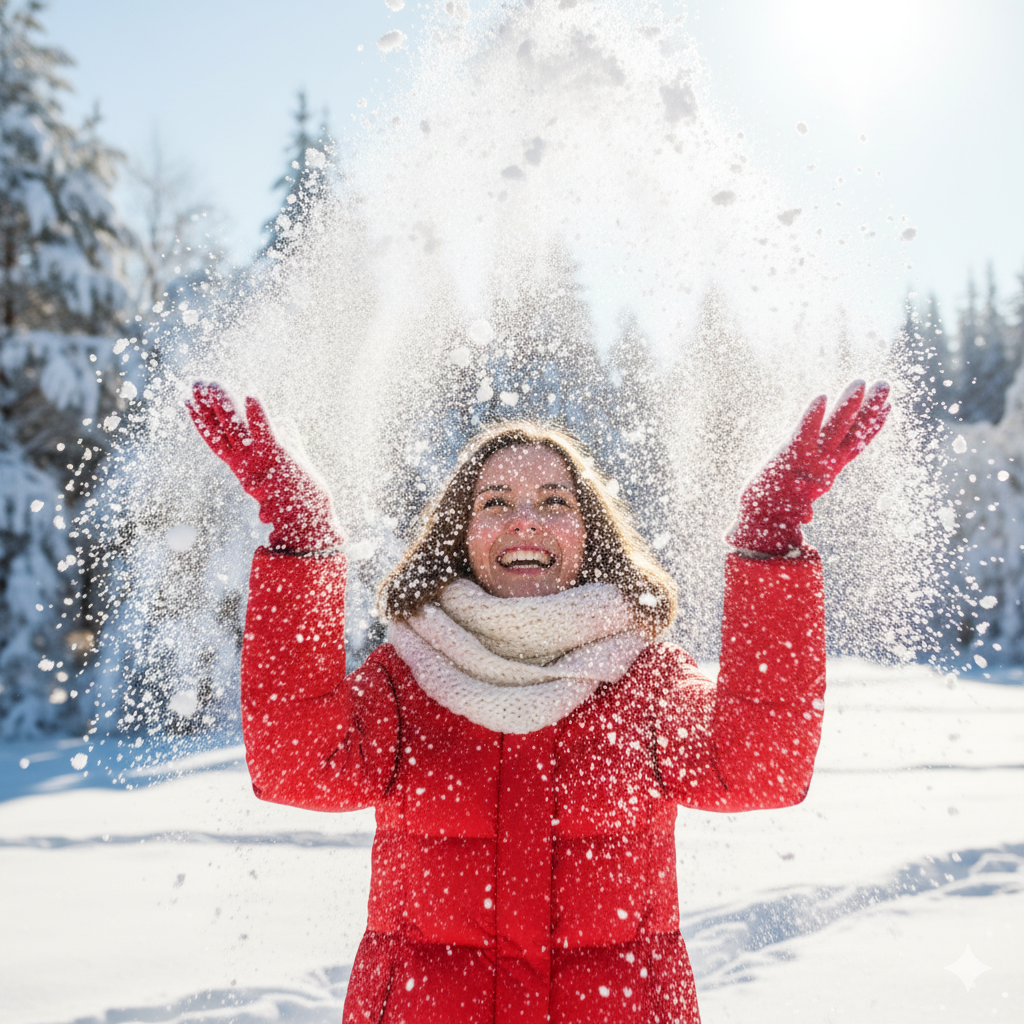
Winter isn’t just about calm and contemplation; it can also be synonymous with joy and movement. Posing while playing in the snow is a delightful way to convey energy, spontaneity, and fun in a photograph. This pose breaks with the rigidity of traditional poses and allows the subject to express themselves naturally, without worrying about the perfection of the gesture. The important thing here is to capture the pure emotion of the moment: laughter as snowflakes fall, the instant a snowball is thrown, or the sparkle in the eyes when gazing at the white-covered landscape.
To achieve an authentic image, the photographer must pay attention to the smallest gestures: hands outstretched toward the sky, hair moving in the wind, or a scarf fluttering during a jump. The trick is to play with frozen motion: a burst of photos can help capture the exact moment where the action becomes magical. It’s not about a static pose, but about creating a moment where joy takes center stage.
The setting should be well-lit, preferably with white or slightly golden light to highlight the brilliance of the snow. The colors of the clothing can contrast with the background: reds, yellows, or blues stand out beautifully against the icy landscape. Elements such as sleds, fun hats, or frost-covered branches can also be included to add a narrative touch to the scene.
This pose connects with the purest essence of winter: the inner child we all carry within us, the one who marvels at the first snowfall.
4. Looking out the window on a cold day
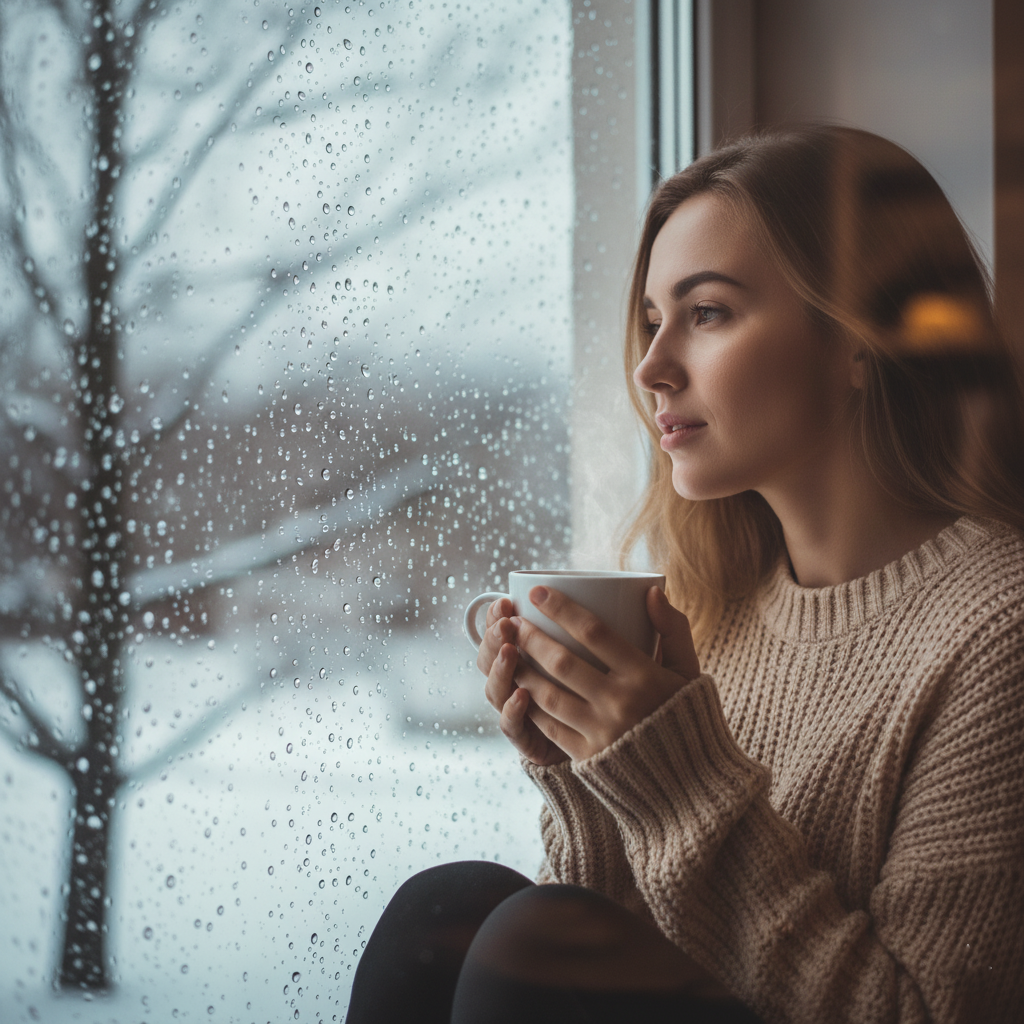
Few images convey as much melancholy and warmth simultaneously as that of someone gazing out a window on a winter’s day. This pose is ideal for capturing moments of introspection, reflection, or calm. No snow or wide-open landscapes are needed; the soft light filtering through the frosted glass and the serene expression of someone observing the world from the warmth of the interior are enough. The window becomes a visual bridge between two climates: the cold outside and the intimate warmth within.
The key is to capture stillness. The subject can rest their forehead or hand lightly against the glass, observing the outside world with a gentle gaze. A thick sweater, a cup of coffee, or a blanket adds context and texture to the image, while condensation or droplets on the glass lend a poetic touch. The posture should be natural, relaxed, as if the camera had caught the subject in a moment of deep thought or nostalgia.
Lighting plays a fundamental role: the light entering from outside should gently bathe the face, creating delicate shadows and highlighting features without harshness. It’s best to take advantage of the gray light of morning or the warm glow of sunset. An interior background with neutral or warm tones—wood, textiles, books—accentuates the feeling of refuge.
This pose works because it reflects the most emotional essence of winter: quiet contemplation and the pleasure of stillness amidst the cold.
5. Enveloped in warm lights
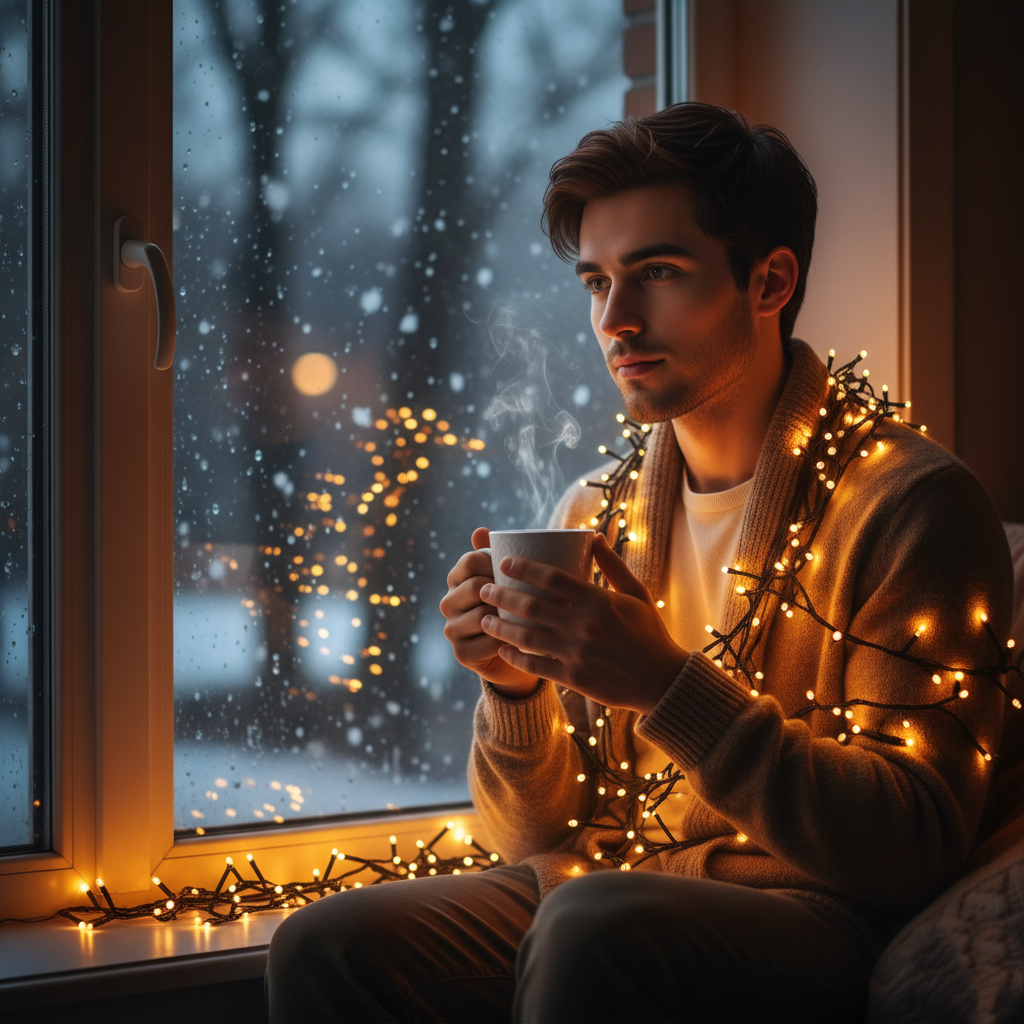
When the winter chill sets in, warm lights become a magical element in photography. Posing enveloped in lights—whether garlands, lanterns, or Christmas decorations—creates a powerful visual contrast between emotional warmth and the ambient temperature. This pose combines the softness of the light with the serenity of winter, resulting in an image that radiates warmth and charm. It’s not just about decorating the scene, but about letting the light tell a story: the story of inner warmth overcoming the cold outside.
The subject can hold the lights in their hands or let them gently entwine around their coat or scarf. Their gaze can be direct, looking straight at the camera, or lost among the twinkling lights, creating a dreamy feeling. Small, golden lights work best, as they produce soft reflections on the skin and eyes. It’s important to maintain a relaxed expression, allowing the lighting to take center stage without overpowering the naturalness of the face.
This pose is ideal for nighttime or indoor sessions with low lighting. A dark background or one with blurred Christmas decorations enhances the visual effect. The lighting should be arranged organically, avoiding any rigidity. Combined with a gentle smile or a thoughtful gaze, the image can convey anything from tenderness to nostalgia.
The beauty of this pose lies in its encapsulation of the essence of winter: the contrast between the cold felt outside and the warmth held within.
Conclusion
Winter, with its serene air and soft light, offers an unparalleled atmosphere for photography. Each of the poses explored—from walking through the snow to being enveloped in warm light—reflects a different facet of this season: stillness, introspection, playfulness, and the emotional warmth hidden beneath layers of winter clothing. Photographing in winter is not just about facing the cold, but about finding beauty in small gestures and the emotions that arise when the world seems to stop for a moment.
The most important thing when capturing these scenes is to maintain naturalness. Winter poses should feel alive, authentic, and connected to the environment. There’s no need for elaborate artifice: the texture of a sweater, the steam from a hot cup, or the glow of the sunset on the snow can convey more than any elaborate set design. Furthermore, the lighting at this time of year becomes an essential ally; its soft tone enhances faces and creates delicate shadows that add depth and emotion.
The best winter photos are those that convey feeling, not just aesthetics. Whether it’s the frozen laughter of a walk in the snow or the peace of gazing through a fogged window, each image can become a tangible reminder of the warmth that lingers even on the coldest days.


