
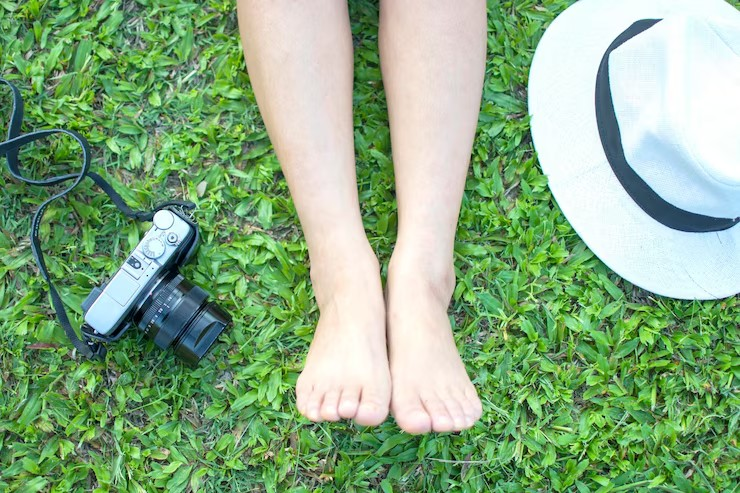
Have you ever considered how to transform something as mundane as human feet into a compelling visual work of art? As professional photographers, we understand that finding beauty in the less obvious details is a true creative challenge. Feet possess a unique capacity to convey emotion, anchor a narrative, and contribute a distinct aesthetic to your sessions, whether in portraiture, editorial, or product photography. Mastering their representation requires both technical precision and a keen eye for imaginative composition, allowing you to capture the viewer’s attention through unconventional and evocative perspectives.
In this article, we share five innovative approaches to foot photography that will infuse your projects with a fresh, artistic perspective. We will explore advanced framing techniques, the nuanced use of light, minimalist compositions, and creative resources that allow you to highlight this subject with professional elegance. If you are looking to integrate expressive and original imagery into your portfolio, read on; these concepts will unlock new possibilities for storytelling and help you refine a unique artistic vision that stands out in an increasingly competitive field.
1. Capture details with close-up shots and textures


One of the most impactful ways to photograph feet is by focusing on details through tight, macro style framing. This compositional approach invites the viewer to appreciate intimate textures, the natural lines of the skin, the structure of the toes, and personal details like jewelry or ink. By using such close proximity, you eliminate background distractions, centering the viewer’s gaze entirely on the form, texture, and nuances of the subject, which creates a sense of profound intimacy and raw realism.
Texture is the cornerstone of this photographic style. Depending on your creative intent, you can highlight either the softness or the ruggedness of the skin. To achieve this, employ lateral lighting to cast shadows across the surface, emphasizing relief and contours. Soft, window-filtered light is perfect for creating gentle shadows that add volume, whereas harder lighting will accentuate every detail for a more dramatic, high contrast effect.
Furthermore, integrating external textures can significantly enhance your narrative. Placing feet against contrasting surfaces like sand, grass, stone, wood, or textured fabric adds visual interest and grounds the image in a specific environment. For instance, feet resting in fine, golden hour sand create a warm, evocative atmosphere that connects deeply with the viewer.
Finally, meticulous preparation is key. Ensure the surface is pristine, remove any unwanted debris, and carefully direct your subject’s posture. Small adjustments in the position of the toes can drastically alter the mood of the photograph. With intentional composition and careful attention to detail, tight framing can elevate a simple subject into a powerful and memorable piece of art.

2. Use natural light and shadows


Natural light is a formidable ally for creating organic foot photography that pulses with emotion. Unlike the controlled environment of a studio, natural light demands adaptability and creative spontaneity. Utilizing the illumination from a window, the dappled light beneath a tree, or the soft glow of sunset allows for the creation of intimate, atmospheric images. Each hour of the day offers a distinct luminous quality; mastering these shifts allows you to align the “mood” of the light with your specific artistic concept.
Shadows are equally essential, providing depth and a sense of drama that anchors the composition. You can use blinds, sheer curtains, or natural elements like branches to project intricate patterns across the skin or the floor, resulting in visually dynamic results. This interplay does more than add visual richness; it suggests deeper narratives, warmth, mystery, or even melancholy. By moving around your subject to find the optimal angle, you can use lateral lighting to accentuate contours or backlighting to create an ethereal, almost magical rim of light around the form.

3. Use elements from the environment to tell stories


Incorporating environmental elements transforms foot photography from a simple capture into a complete visual narrative. Whether it is the tactile sensation of walking barefoot on wet grass, the tranquility of a stream, or the warmth of beach sand, these settings introduce vital textures, colors, and atmospheres that enrich the underlying story. By carefully selecting a location that mirrors the desired mood, you turn the environment into an active participant in your storytelling process.
Your setting serves as an emotional anchor for the photograph. For example, feet resting on an antique sofa might evoke a sense of quiet nostalgia or domestic comfort, while bare feet on city pavement can suggest a spirit of raw freedom or urban rebellion. Carefully choosing a site that harmonizes with your subject ensures that the visual context supports the specific sentiment you intend to project to the viewer.
Beyond the primary location, you can integrate environmental accessories to enhance depth without overwhelming the frame. A towel draped across the sand, scattered autumn leaves in a forest, or a pair of discarded shoes nearby can add significant narrative layers. The objective here is organic integration, these elements should feel like natural parts of the scene rather than staged props, which keeps the image feeling authentic and accessible.
Finally, remember that effective visual storytelling relies on restraint. You do not need to fill the frame with objects to tell a compelling story; instead, strategically place subtle details that reinforce your core message. Keep the composition clean and ensure the feet remain the undeniable center of attention. By balancing the environment and the subject, you imbue your work with a narrative weight that creates a deeper, more lasting connection with your audience.
.

4. Create minimalist compositions in the studio


Minimalism is a potent strategy for achieving visual elegance, cleanliness, and sophistication in foot photography. By stripping away extraneous elements, you compel the viewer to engage exclusively with the form, texture, and inherent nuances of the subject. In a controlled studio environment, you gain the benefit of total mastery over your light, background, and compositional elements, allowing you to produce results that are both precise and aesthetically refined.
To execute this style effectively, prioritize neutral backgrounds such as crisp white, deep black, or muted pastel tones, which allow the subject to stand out without competing for visual attention. Lighting should generally be soft and uniform to prevent distracting shadows; however, a subtle lateral light can be introduced to gently define the contours of the feet without creating harsh contrast. This careful balance ensures that the subject remains the clear, undisturbed focal point of the composition.
When considering posture, embrace the “less is more” philosophy. Subtle movements, such as the graceful arch of a foot, the delicate touch of toes against a surface, or natural intertwining, are far more effective than forced or overly complex poses. You might also experiment with symmetry by placing feet in identical configurations, which adds a structured, harmonious rhythm to your work while maintaining an overall sense of organic beauty.
Remember that in minimalist photography, every element, or the intentional absence thereof, is a deliberate choice. Utilize negative space to give the image room to breathe, thereby enhancing the overall sense of calm and simplicity. Any minor accessory, such as a delicate fabric or a faint, intentional shadow, must be perfectly integrated to maintain the composition’s purity. Mastering minimalism not only sets your portfolio apart but also showcases your technical mastery of form, light, and space.

5. Experiment with unconventional angles and creative perspectives
Exploring unconventional angles is a powerful way to inject innovation into your foot photography. By shifting your perspective, moving away from standard eye-level shots toward extreme low-angle, aerial, or oblique viewpoints, you transform a simple subject into an arresting visual narrative. These unusual vantage points do not just add aesthetic intrigue; they actively challenge the viewer’s traditional perception, forcing them to see form and structure in an entirely new light.
To maximize the impact, consider the relationship between your physical proximity and your equipment. Getting very close allows you to highlight subtle lines and textures that are otherwise overlooked, while your choice of focal length acts as a creative tool to manipulate the viewer’s sense of scale. A wide-angle lens can produce dramatic, surreal proportions, whereas a telephoto lens creates a compressed, intimate focus, allowing you to tailor the technical execution to the specific emotional resonance of your shot.
Further depth can be achieved by integrating these creative angles with light and environmental filters. Experiment with capturing shadows cast against a wall, utilizing reflections in water or glass, or shooting through translucent materials like sheer veils to introduce a layer of mystery. By constantly scanning your environment for these secondary elements, you turn a standard session into a series of opportunities for visual innovation and surprising, high contrast compositions.
Ultimately, finding your artistic voice is a process rooted in experimentation and the willingness to step outside your comfort zone. Each unconventional frame is an opportunity to learn what perspective best serves your narrative concept. As you move beyond the obvious and embrace the vast potential of creative geometry, you will transform your foot photography into pieces that are not only technically proficient but profoundly memorable and artistically unique.

Explore new creative challenges in artistic photography
Photographing feet transcends the boundaries of a mere technical exercise; it is an invaluable opportunity for visual storytelling, evoking sensory experiences, and exploring novel perspectives within creative photography. By applying these five concepts, you can transform an ostensibly simple subject into a series of impactful, highly intentional images. Each distinct framing, texture, shadow, or unconventional angle allows you to impart a unique narrative voice to your work, thereby expanding your portfolio and demonstrating your versatility as a professional photographer.
To further refine your artistic and narrative technique, we recommend the Tutorial de Retrato Conceptual Infantil con Salem McBunny at Master Class Photographers, an ideal resource for learning to construct compelling visual narratives with creativity and sensitivity. You may also elevate your post-production workflow with the Pack de Edición Fine Art en Exteriores con María Presser y Dani Rodríguez, where you will uncover advanced retouching techniques to achieve professional grade finishes. We invite you to explore additional resources on our blog to continue your growth and elevate your skill set to the next level.


