
The desert is one of the most fascinating and challenging settings for a photo shoot. Its vastness, the warm tones of the sand, and the intensity of the light create an almost magical atmosphere, where every image can become a work of art. Photographing in the desert is not only about capturing the beauty of the landscape but also about finding the connection between the person and the environment. Every pose, every gesture, and every glance should reflect the harmony between calm and strength that the desert conveys. The wind that stirs up the dust, the texture of the dunes, and the interplay of shadows make this place a perfect canvas for exploring creativity.
Desert poses have their own language. Here, the body becomes both a contrast to and a complement of nature: it can appear strong against the immensity of the landscape or delicate, blending into the gentle curves of the dunes. The key is to take advantage of the natural light, which changes dramatically throughout the day and offers endless possibilities for expression. At dawn or dusk, golden and orange hues envelop the subject, while at midday, the intense light enhances the shadows and the drama of the forms. In these types of sessions, naturalness and connection with the environment are more important than technical perfection.
Photographing in the desert is an exercise in patience, sensitivity, and observation. Each pose tells a story of introspection, freedom, or adventure, depending on how the model blends into the landscape. There are no fixed rules, only the opportunity to discover how the vastness of the desert can highlight human beauty in a unique way.
1.Silhouette at sunset
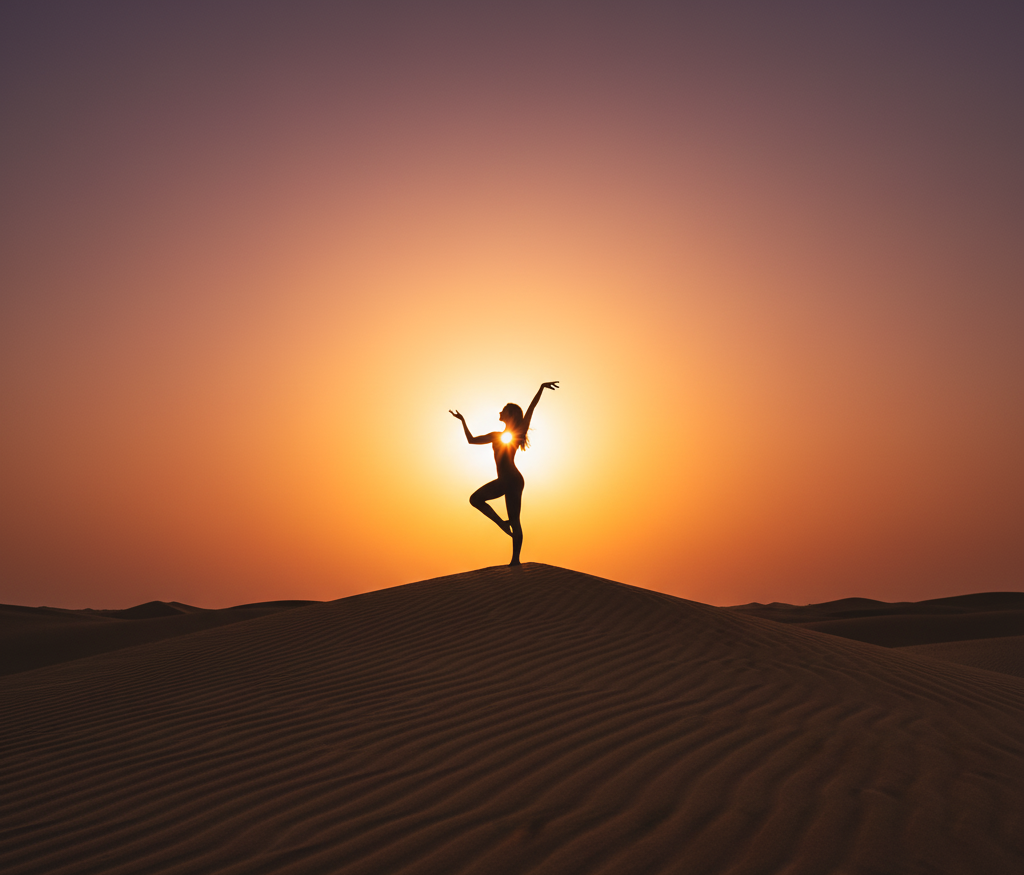
One of the most captivating poses for desert photography is the silhouette at sunset. This idea takes advantage of the golden light of the setting sun, creating a dramatic contrast between the sky and the human figure. In this type of shot, the pose becomes pure body language, independent of facial features or clothing. The body transforms into a shadow that interacts with the landscape, and every movement acquires a poetic meaning. It’s a way to express profound emotions such as freedom, melancholy, or a connection with nature, using only form and posture.
To achieve an effective silhouette pose, it’s important to maintain clean and recognizable lines. An extended leg, a raised arm, or a posture that elongates the body helps the figure stand out elegantly against the sunlight. Visual simplicity is key: it’s not about complicating the pose, but about finding balance between the human form and the curve of the horizon. This type of photography invites introspection, silence, and calm, reflecting the majestic solitude that characterizes the desert. Furthermore, the silhouette can take on different meanings depending on the angle and intensity of the light. Complete backlighting creates a mysterious effect, while side lighting can reveal part of the face, adding drama and emotional depth.
The secret lies in synchronizing the exact moment of sunset with the pose: the sun directly behind the body, the long shadows on the sand, and the warm temperature of the light enveloping the scene. The final image is powerful, evocative, and completely natural, requiring no artifice.
2. Motion with the Wind
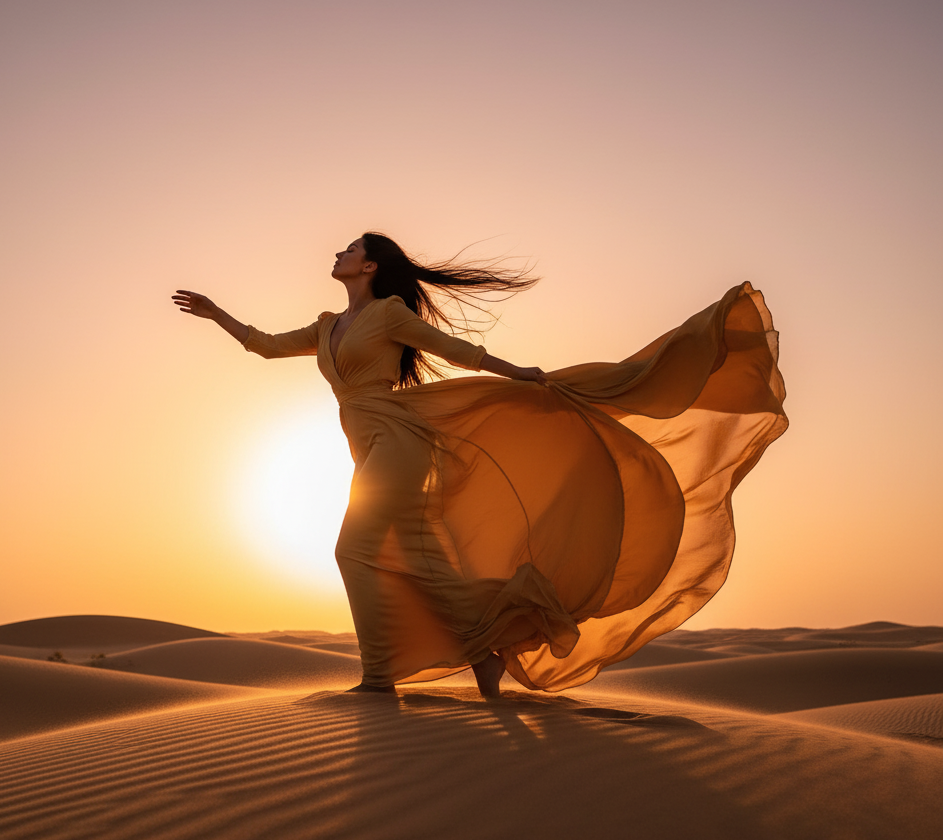
The desert wind can be a perfect ally for creating photographs full of life and dynamism. Instead of fighting against it, this idea proposes integrating it as an essential part of the composition. The “moving with the wind” pose seeks to capture the fluidity of the body and clothing as they interact with the breeze, creating a sense of freedom and energy that contrasts with the stillness of the landscape. The key is to allow the wind to set the rhythm of the moment, letting hair, fabrics, or accessories flow naturally. The result is images that seem alive, where every curve of the fabric or every strand of hair becomes a stroke of movement frozen by the camera.
This pose works best when the model adopts a flexible and spontaneous posture. A step forward, a slight twist of the torso, or a turn of the head can transform a static photo into a visual story. In the desert, the wind often stirs up small clouds of sand that add texture and drama to the background, so moving naturally helps the image retain its authenticity. The wind direction determines the framing: when it blows from the side, a more dynamic composition is achieved; when it blows head-on, it highlights the model’s strength and resilience. It’s also important to wear loose or flowing garments that move easily, as they lend lightness and elegance to the scene.
This idea symbolizes the connection between humankind and the natural elements. Allowing the body to respond to the wind not only enhances the image but also conveys emotion and spontaneity. It’s a way of surrendering to the environment and letting the landscape guide the movement.
3. Sitting on the Dunes
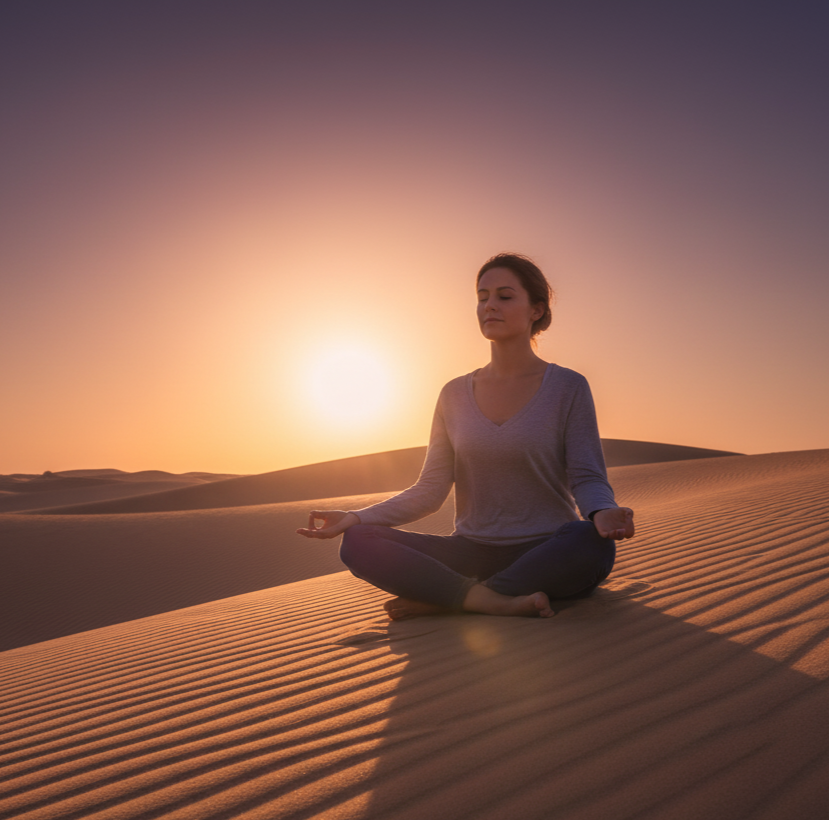
The desert not only invites movement or braving the wind; it also offers moments of stillness and contemplation that can be transformed into profoundly poetic images. The seated pose among the dunes is ideal for conveying serenity, introspection, and a connection with the environment. In this pose, the body adapts to the landscape, finding balance and rest amidst the vastness. Sitting on the sand allows one to play with the curved lines of the terrain and the soft texture surrounding the subject, creating a harmonious and visually appealing composition. This type of pose is associated with a calmer energy, evoking moments of reflection or tranquility after movement.
The position can vary depending on the message you wish to convey. An upright body with its gaze fixed on the horizon suggests hope or a quest; a more relaxed posture, with legs crossed and arms resting on the sand, communicates peace and contemplation. A subtle gesture of interaction with the environment can also be incorporated, such as letting the sand fall through the fingers or gently touching the ground, accentuating the connection with nature. The lighting at dawn or dusk is crucial for this type of pose, as the low light caresses the skin and creates soft shadows that add depth and volume to the scene. The simplicity of the moment becomes the essence of the photograph: there are no artifices, only the person and the desert in silent dialogue.
This pose is perfect for expressing balance and inner connection. Sitting among the dunes symbolizes a pause in the journey, a moment of calm within a vast and imposing environment. Stillness here becomes a form of beauty and authenticity.
4. Shadow projected on the sand
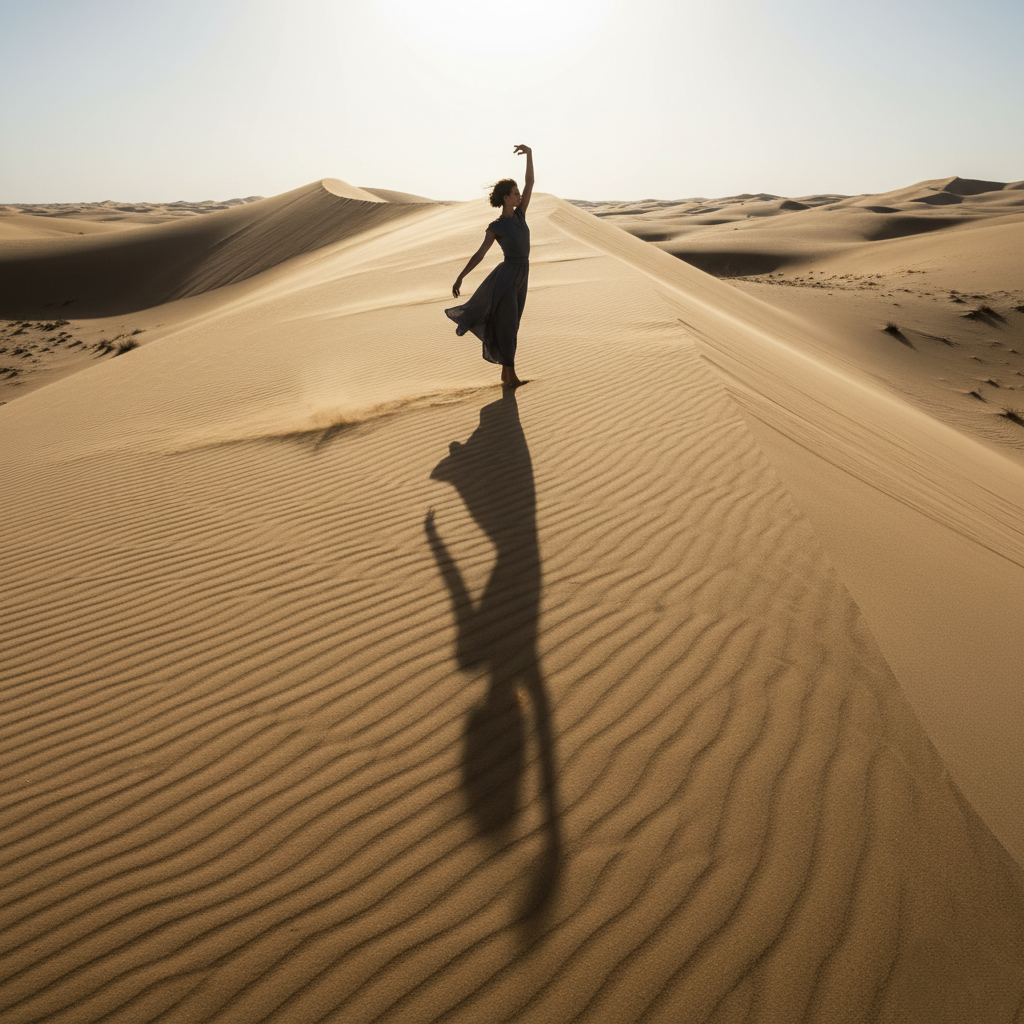
The desert is a setting where light becomes the absolute protagonist. Its intensity, especially during the midday hours, offers a unique opportunity to play with shadows. The “shadow cast on the sand” pose involves using direct sunlight to create visual compositions where the body’s silhouette is clearly reflected on the ground. This type of photography not only highlights the human form but also transforms the shadow into an expressive element, capable of telling a story parallel to that of the model. It’s an ideal way to explore the relationship between light, movement, and the empty space of the desert.
In this pose, the body can adopt positions that emphasize the elegance or geometry of movement. An extended arm, a slightly bent leg, or a diagonal gesture helps the shadow to be projected clearly and attractively. The secret lies in positioning the model where the sun creates a long, defined shadow, generally in the morning or mid-afternoon. The sand acts as a canvas, and every detail—from the texture of the grains to the slope of the terrain—contributes to the visual effect. This type of pose can also be interpreted symbolically: the shadow represents the duality of being, the connection between what is shown and what is hidden.
The result is a minimalist yet powerful image, where the interplay of light and shadow reveals the essence of the moment. The contrast between the brightness of the sand and the darkness of the projected figure creates a clean and modern aesthetic, perfect for artistic or editorial compositions.
5. Explorer looking at the Horizon
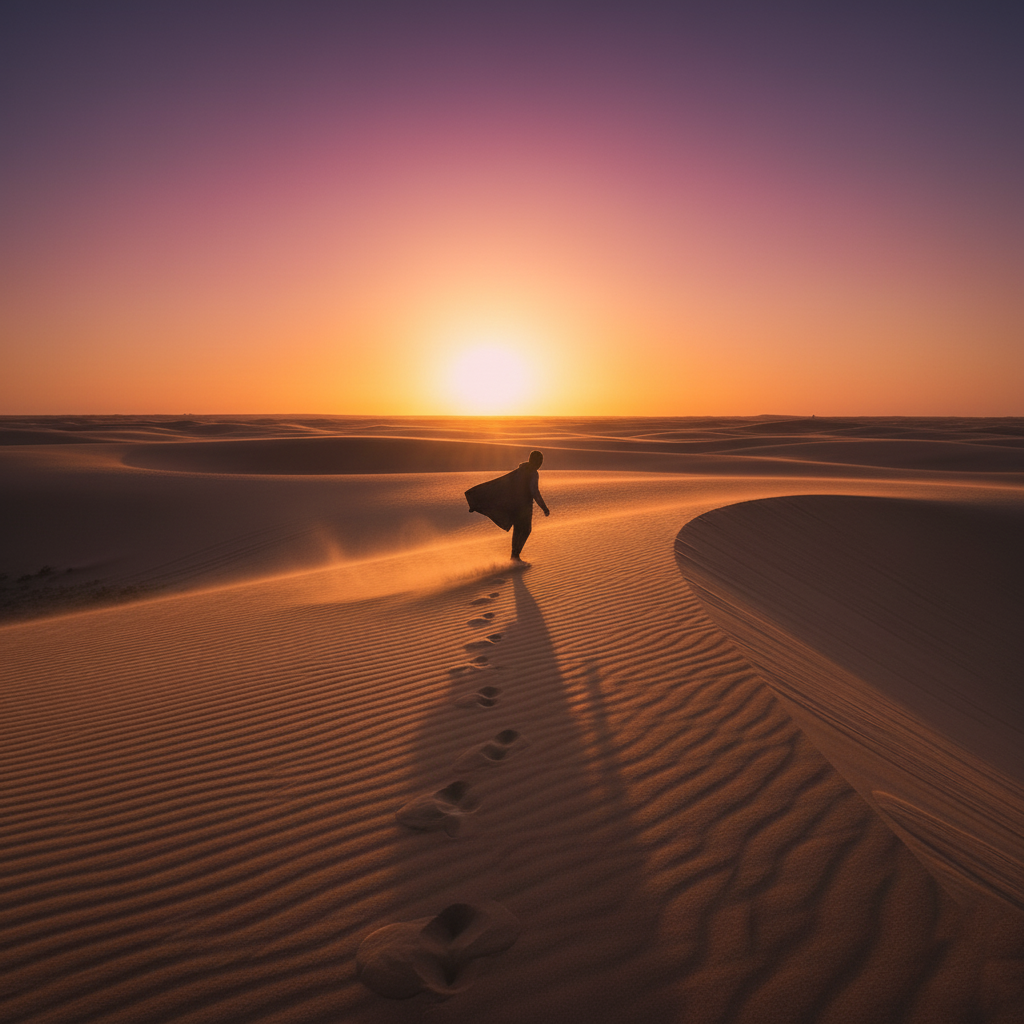
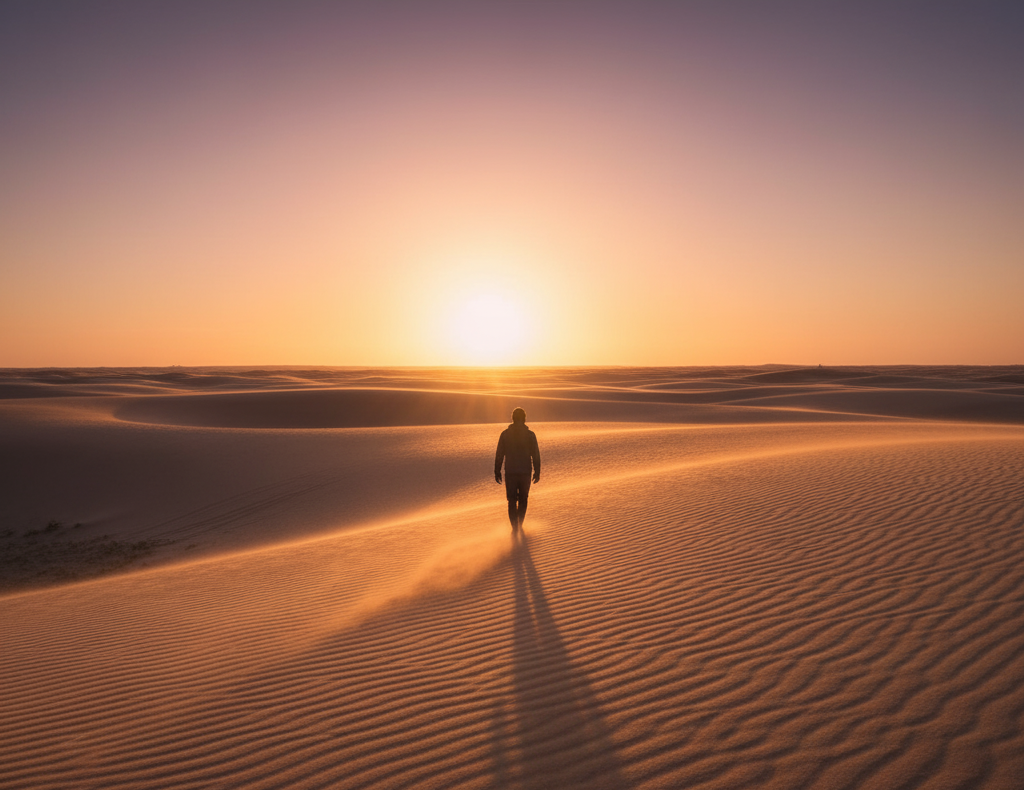
Among the most powerful images that can be captured in the desert is one that shows the subject in motion, walking toward the horizon. The pose of an explorer or hiker symbolizes the search, freedom, and a spiritual connection with the landscape. Unlike static poses, this idea plays with narrative: the body becomes part of a journey, and the photograph acquires a sense of story and direction. The vastness of the desert is heightened when a human figure appears small against the immensity of the environment, reminding us of the relationship between the force of nature and the fragility of humankind.
The ideal pose is one in which the movement seems spontaneous, natural, almost cinematic. The body slightly leaning forward, one leg stepping forward, and the arms accompanying the stride create a sense of fluidity. If the model looks toward the horizon or lets the wind blow their clothes or hair, the image conveys a message of introspection and freedom. The secret lies in not forcing the pose, but in letting the movement become part of the composition. The photographer can capture the scene from behind, reinforcing the sense of journey, or from a side angle to show the body’s movement in balance with the dunes.
The surroundings contribute significantly: the clear sky, the smooth lines of the dunes, and the light of the setting sun accentuate the idea of an endless journey. This type of image connects with universal emotions: curiosity, hope, and inner searching. In the desert, every step leaves an ephemeral trace, and that very fact makes it a powerful visual metaphor.
Conclucion
The desert is much more than an arid landscape: it is a stage of contrasts where light, silence, and immensity become allies of photographic art. Each of the five pose ideas explored—the silhouette at sunset, movement with the wind, stillness among the dunes, the interplay of shadows, and the figure of the walker on the horizon—demonstrates that this environment can be transformed into an inexhaustible source of inspiration. In each pose, the body not only occupies a space but also engages with it, interpreting the strength and serenity that coexist in the desert. The result is images that stand out not only for their aesthetic beauty but also for their emotional and symbolic weight.
Photographing in the desert demands a special sensitivity: one must learn to read the light, listen to the wind, and respect the natural rhythm of the environment. The key lies in the connection between the person and the landscape, in allowing movement, stillness, or expression to emerge authentically. In these kinds of settings, every gesture takes on meaning, and every shadow becomes part of the story the image wants to tell. It’s not just about posing, but about feeling and letting yourself be carried away by the vast, luminous atmosphere of the desert.
Ultimately, these ideas about posing invite us to see photography not as a simple capture, but as an experience. The desert teaches us that less is more, that beauty can be found in simplicity, and that sometimes a single step, a glance, or a shadow is enough to create an image that speaks for itself and remains in our memory.


