
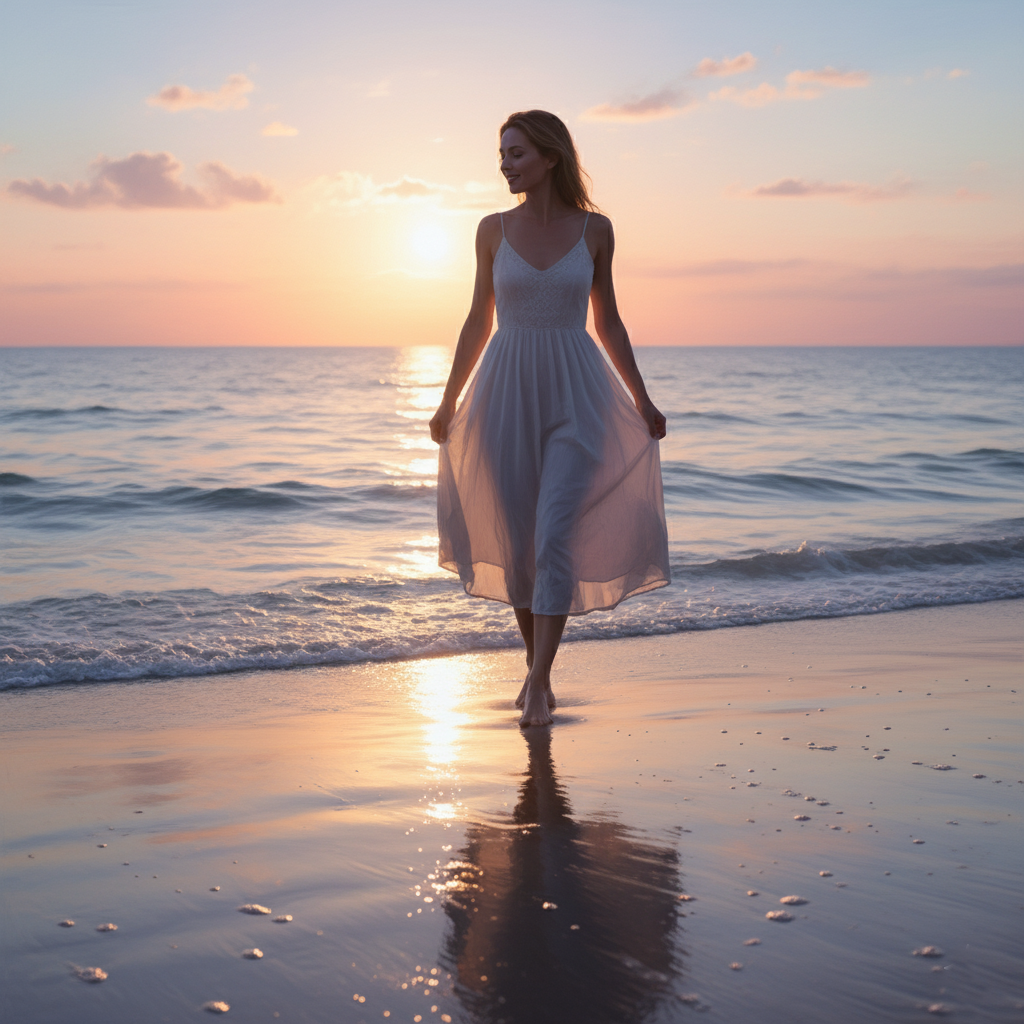
The sea has always been a stage full of magic and movement, a place where light, wind, and water combine to create images that convey freedom, serenity, and a connection with nature. Photographing on the beach or by the sea is not just about taking advantage of a spectacular backdrop, but about becoming one with the environment to capture real emotions and authentic sensations. Poses at sea invite you to move, to feel, to let your body flow with the waves, creating a harmony between the subject and the landscape that results in deeply evocative images.
The sound of the waves, the texture of the sand, and the reflection of the sun on the water provide a natural atmosphere that can be adapted to multiple photographic styles: from romantic portraits to energetic and spontaneous images. Each pose by the sea tells a different story; it can speak of calm, adventure, introspection, or joy. The important thing is to let yourself be carried away by the environment and allow the movement of your body and your gaze to respond to the rhythm of the ocean.
The key to capturing memorable photographs at sea lies in harnessing the light—especially at sunrise or sunset—and maintaining a genuine attitude. Beyond rehearsed poses, what truly stands out is the subject’s emotional connection to the sea: that blend of respect, freedom, and peace that only the ocean can inspire.
1. With her back to the sea and her hair blowing in the wind
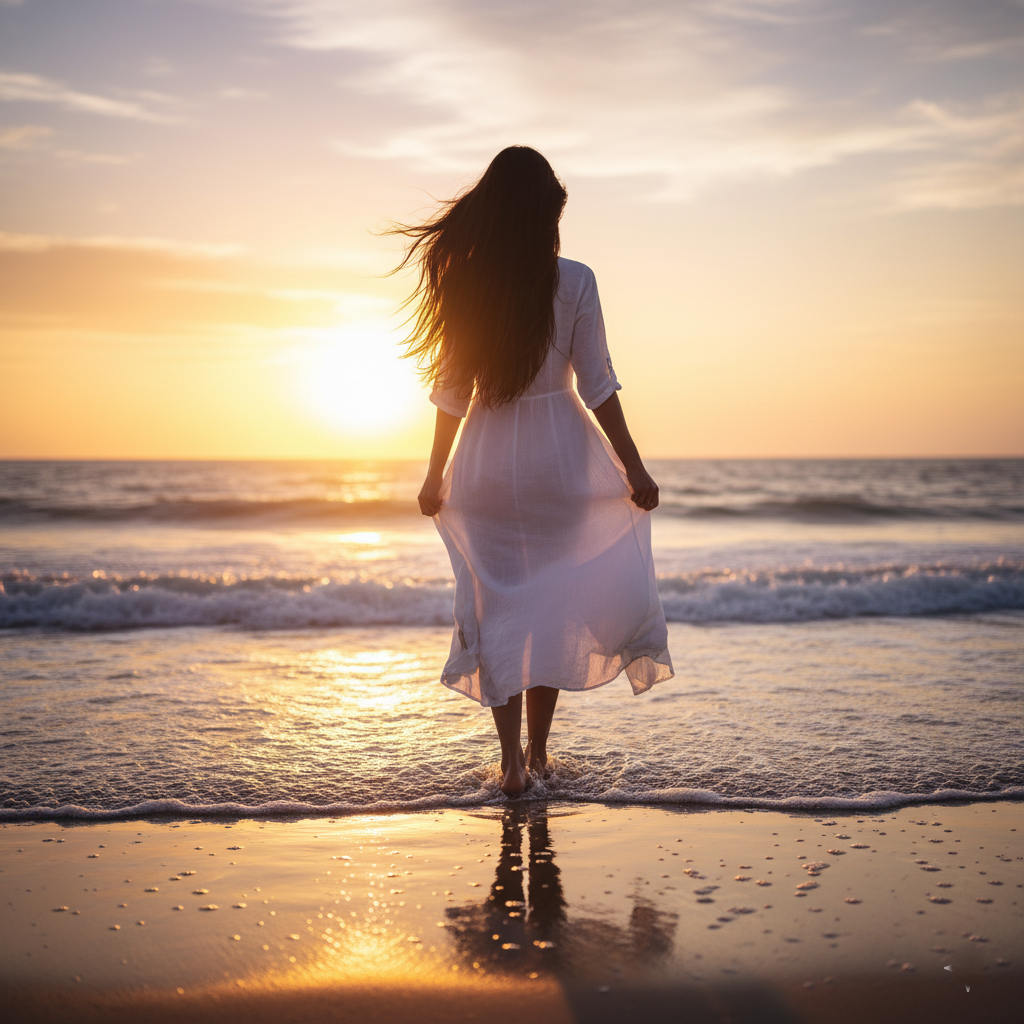
One of the most natural and elegant poses to capture on the beach is to stand with your back to the sea, letting the wind and waves do their work. This pose highlights the freedom and serenity that the ocean conveys, and allows for a balanced composition where the human body blends seamlessly with the vastness of the landscape. It’s not about looking at the camera, but about letting the viewer feel the connection between the person and their surroundings.
In this pose, the movement of hair and clothing plays an essential role. The sea breeze becomes an ally, adding dynamism to the image and creating a visual effect of fluidity and life. The posture can vary slightly: you can maintain a firm stance with your feet in the sand or lean gently forward, as if listening to the sound of the water more closely. The key is to maintain a relaxed attitude, with loose shoulders and free hands or holding your hat, so that the scene appears spontaneous and authentic.
The seabed offers a range of hues from deep blue to bright turquoise, so choosing the right time of day is crucial. At dawn or dusk, the golden light envelops the figure, creating soft contrasts that accentuate the silhouette. This pose can also be complemented with natural accessories, such as a sarong or a light garment that moves with the breeze.
2. Sitting on the shore with waves touching the feed
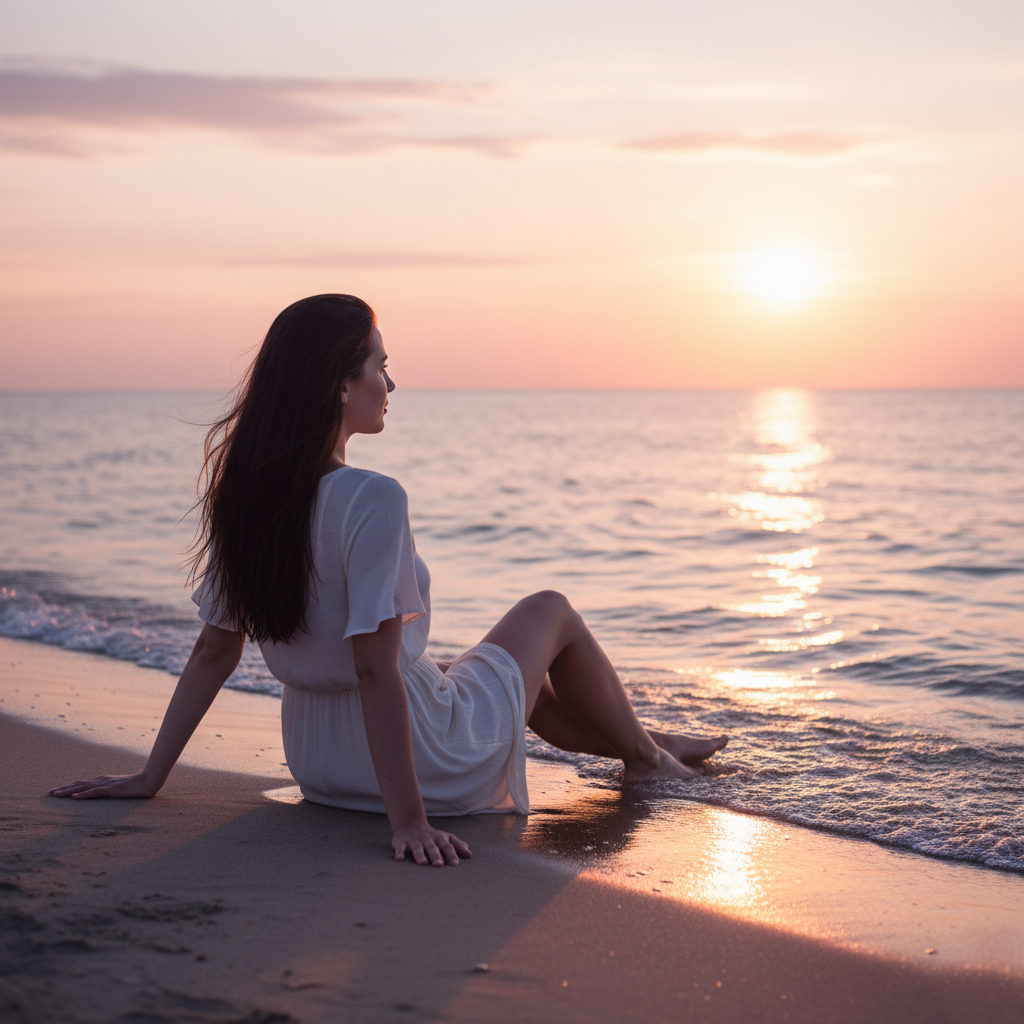
This pose is one of the most intimate and poetic you can achieve at sea. Sitting on the shore, letting the waves caress your feet, conveys serenity, a connection with nature, and a sense of pause amidst the constant movement of the water. It’s a perfect pose for capturing the essence of rest, reflection, and harmony with your surroundings.
The key is finding a comfortable and natural position. Your body should remain relaxed, with your back slightly straight and your arms resting gently on your legs or the sand. Your gaze can be directed toward the horizon, evoking a sense of contemplation, or downward, observing the movement of the water. If the photographer captures the precise moment a wave touches your feet, the image gains texture, life, and a touch of spontaneity that makes it unique.
The ideal attire for this pose consists of light garments, such as soft dresses or linen clothing, that complement the movement of the sea without stealing the show. Lighting plays a crucial role: during the early morning or at sunset, the warm light creates golden reflections on the water, illuminating the skin and generating a welcoming and emotional atmosphere. Furthermore, the tones of the sky and sea blend into a palette that enhances the tranquility of the scene.
This pose is perfect for artistic portraits or photographs with a romantic touch, as it combines delicacy and naturalness in a single shot. It represents a moment of profound connection between body, soul, and the sea.
3. Walking along the shore
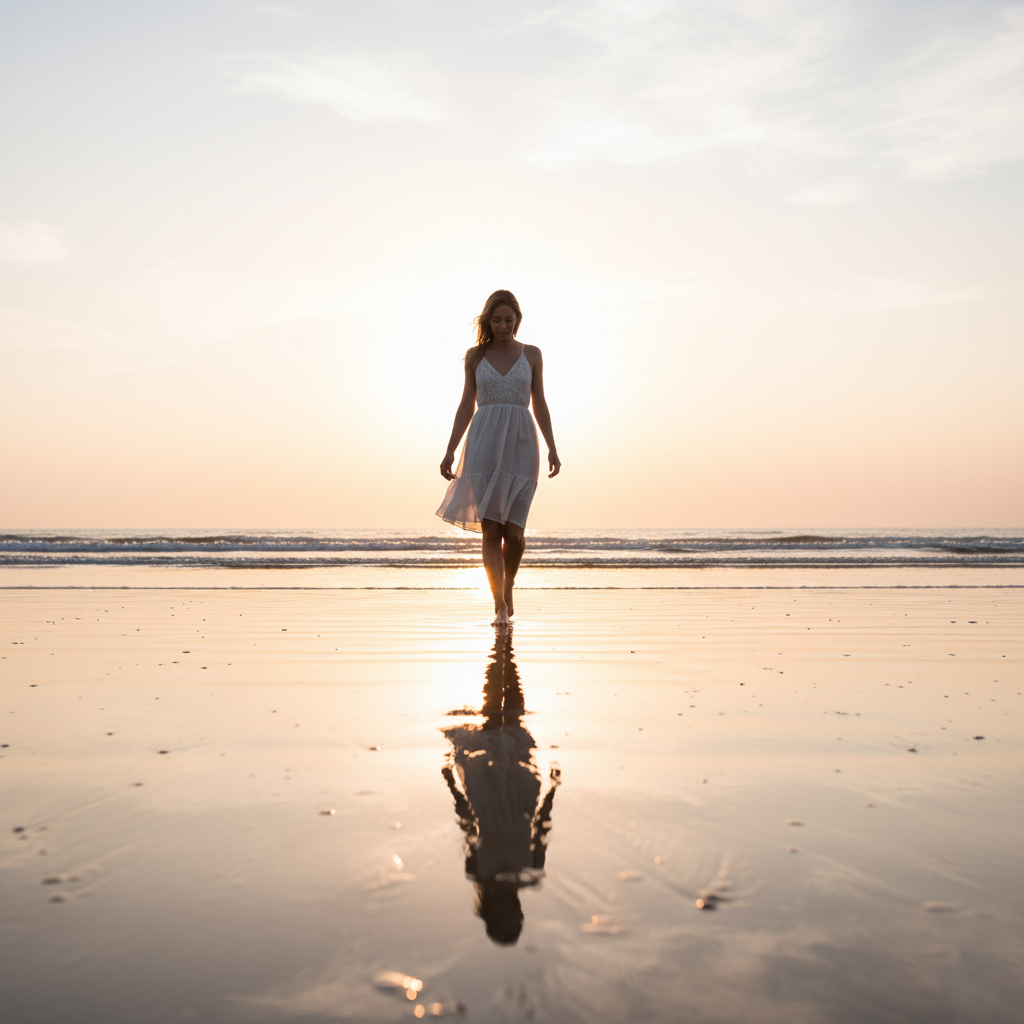
Walking by the sea is one of the most natural and versatile poses to capture in a photograph. It represents freedom, movement, and a fluid connection with the surroundings. The act of walking adds dynamism to the image, generating a visual flow that guides the viewer’s eye through the composition. It’s an ideal pose for those who want to convey spontaneity and calm without needing to look directly at the camera.
To achieve a harmonious shot, it’s important that the walk be gentle and relaxed, allowing the steps to set a tranquil rhythm. The arms can swing slightly or remain close to the body, while the gaze is directed toward the horizon or the ground, depending on the emotional intention of the photograph. The movement of the hair in the sea breeze and the sway of clothing complement the feeling of fluidity, creating a scene that seems to have been taken from an everyday moment.
The surroundings also play an essential role. If the tide is low, the reflection of the body on the wet sand adds a very attractive visual layer. Furthermore, the soft tones of dawn or dusk bathe the scene in a golden light that envelops the subject and the landscape in a warm atmosphere. This pose can be done barefoot or in sandals, although the sensation of the feet sinking into the sand often adds a more organic and emotional touch.
Walking by the sea symbolizes moving forward, letting go, and enjoying the present. It is a visual invitation to introspection and balance.
4. Standing between waves looking the Horizon
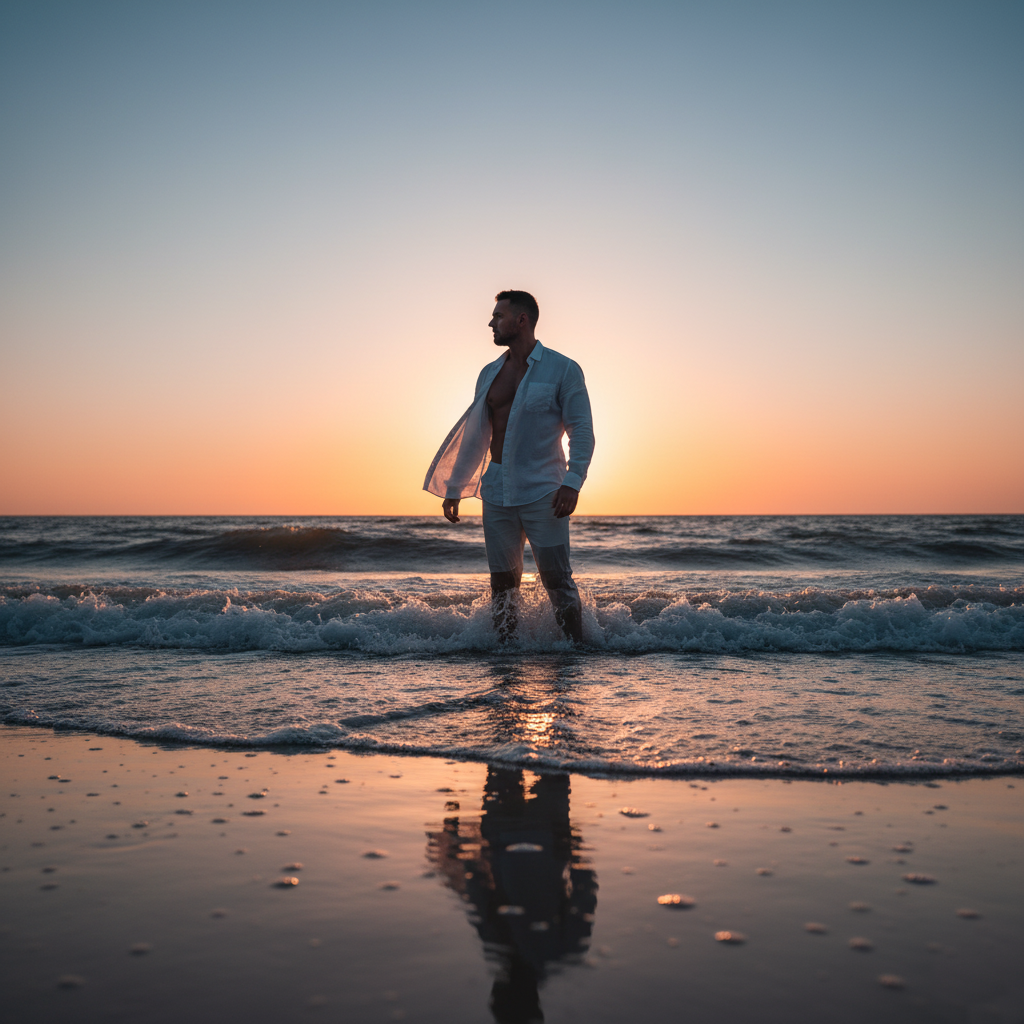
Few images convey as much strength and serenity as that of a person standing among the waves, gazing at the horizon. This pose symbolizes introspection, inner power, and a profound connection with the vastness of the sea. It is ideal for artistic, editorial, or personal portraits that seek to reflect calm, reflection, or freedom. The stillness of the body contrasts with the constant movement of the water, creating a visual harmony that is magnetic.
The posture should be firm yet natural, with the feet slightly buried in the sand to show that connection with the land and the sea. A straight back and relaxed shoulders help project confidence and balance. The gaze toward the horizon suggests silent contemplation, as if the subject were in dialogue with the ocean. If the wind is blowing, letting the hair and clothing move freely adds dynamism and naturalness.
The composition can vary depending on the intention: a close-up shot emphasizes the emotion in the face, while a wider shot highlights the smallness of humanity in the face of the grandeur of the sea. At sunset, golden and orange hues reflect off the waves, enveloping the figure in a soft light that accentuates the texture of the water and the skin.
This pose possesses a symbolic power that transcends mere aesthetics. It represents balance, hope, and the desire to look ahead. It’s a visual way of expressing quiet strength, perfect for introspective or inspirational sessions.
5. Laying down on the wet sand looking at the sky
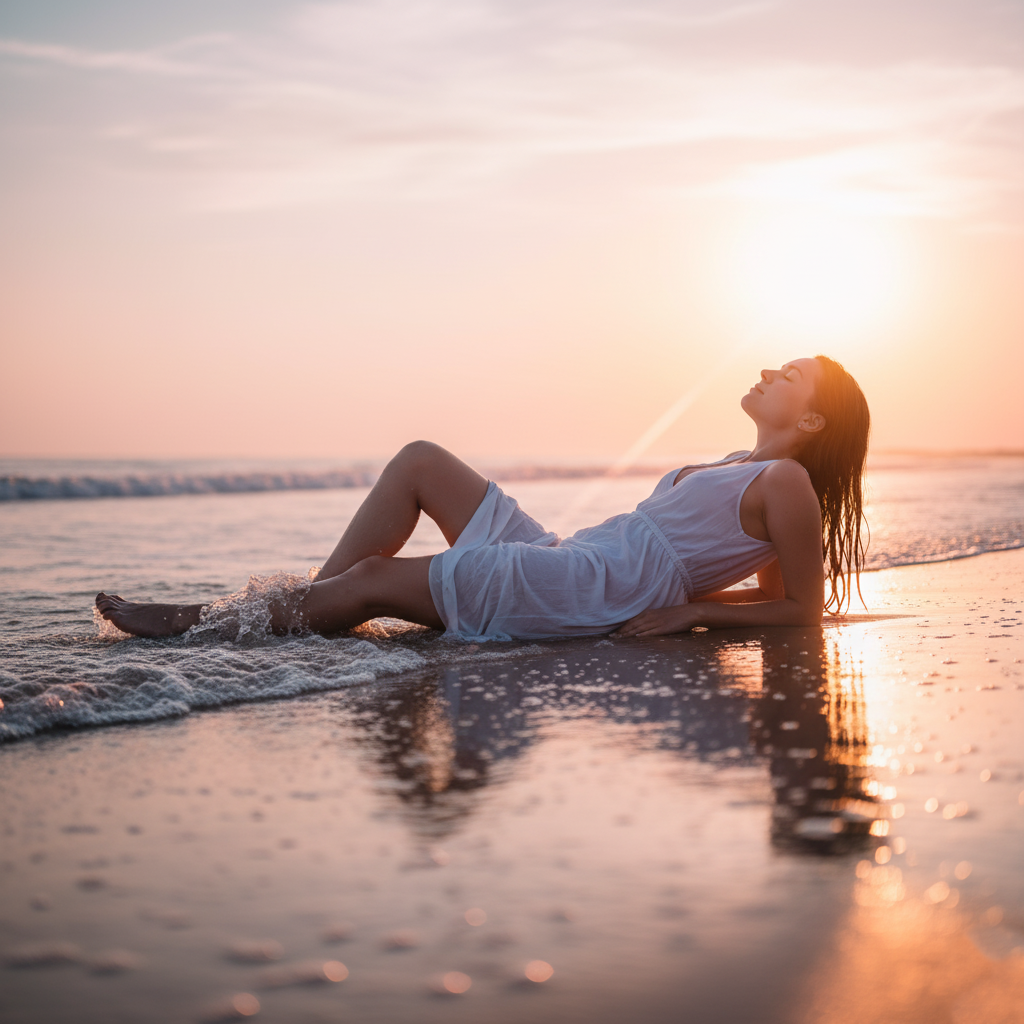
This pose is one of the most artistic and emotional you can take by the sea. Lying on the wet sand, right where the waves caress your body, creates an image of surrender and total connection with nature. It’s an ideal pose for conveying calm, introspection, or a sense of absolute freedom. Looking up at the sky, the subject seems to lose themselves in infinity, merging with the elements of the surroundings: earth, water, air, and light.
To achieve a balanced composition, the body should be relaxed, with arms open or resting at the sides. The position of the head is key: looking up with closed eyes evokes tranquility, while opening them projects curiosity or hope. The contact with the sand and water leaves natural textures on the skin, which lend authenticity to the image. If the photographer captures the precise moment a small wave reaches the body, the photo gains dynamism and freshness.
The light of dawn or dusk intensifies the emotional impact of the scene. The warm tones and golden reflections on the water create a soft contrast between the skin and the shimmering surface of the sea. Furthermore, this pose can play with unusual angles: from above to emphasize the body’s shape, or at ground level to highlight the horizon and the movement of the waves.
This idea works well in both personal and artistic sessions, and evokes the power of the connection between humankind and the natural environment.
Conclucion
Photographing at sea is an experience that transcends aesthetics; it’s an encounter with nature, with the constant movement of the water, and with oneself. The five pose ideas explored—back to the sea, sitting on the shore, walking alongside the waves, standing gazing at the horizon, and lying on the wet sand—reflect different ways of interpreting the freedom and beauty that the ocean inspires. Each one invites you to connect with the environment through a distinct emotion: serenity, introspection, joy, strength, or surrender.
The sea offers a living stage that transforms each photograph into something unique. Its changing light, its sounds, and its reflections create an atmosphere that no studio can replicate. The key is to let yourself be guided by the rhythm of the waves and maintain a natural attitude, allowing your body to respond to the elements spontaneously. When the person being photographed feels part of the landscape and not an external element, the images acquire depth and authenticity.
Furthermore, the sea is a universal symbol of emotions: it represents both calm and strength, beginnings and renewal. Therefore, photographs by the sea capture not just an image, but a state of mind. Whether at a golden sunrise or a blue sunset, the waves become the photographer’s accomplices, helping to tell visual stories full of life and sensitivity.


