
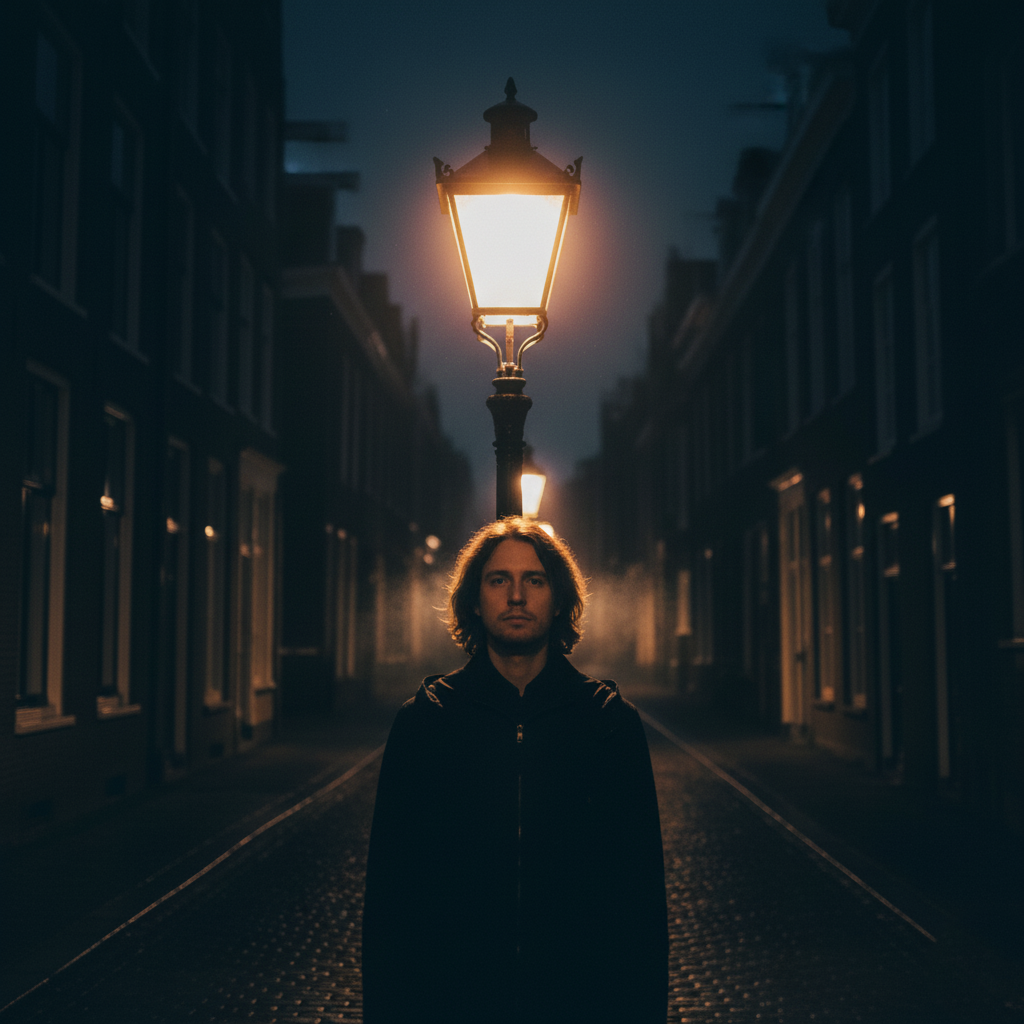
Nighttime possesses a special charm that transforms any everyday scene into a stage filled with mystery, light, and emotion. Photographing at night involves not only mastering technique but also understanding how darkness and light sources interact to create unique atmospheres. Poses for nighttime photos must adapt to this environment: the body becomes a point of contrast against the urban lights, shadows lengthen, and reflections take center stage. In these types of sessions, creativity is as important as posture, as every movement, every gesture, and every glance can change the narrative of the image.
Nighttime photos allow you to explore a wide variety of styles: from romantic portraits under streetlights to shots with neon lights that evoke a cinematic feel. The key is to use the available light to highlight the subject’s features without losing the essence of the setting. Therefore, poses should be expressive, natural, and consistent with the scenery. Stillness and fluidity can alternate depending on the intention: a static figure under a lamppost can convey introspection, while gentle movement among city lights suggests dynamism and nightlife.
Night also invites us to play with mystery. A partially illuminated face or a silhouette against a luminous background can reveal more than a fully revealed pose. From this interplay of light, shadow, and body emerge intense photographs, capable of evoking emotions without words.
1. Looking into the Light
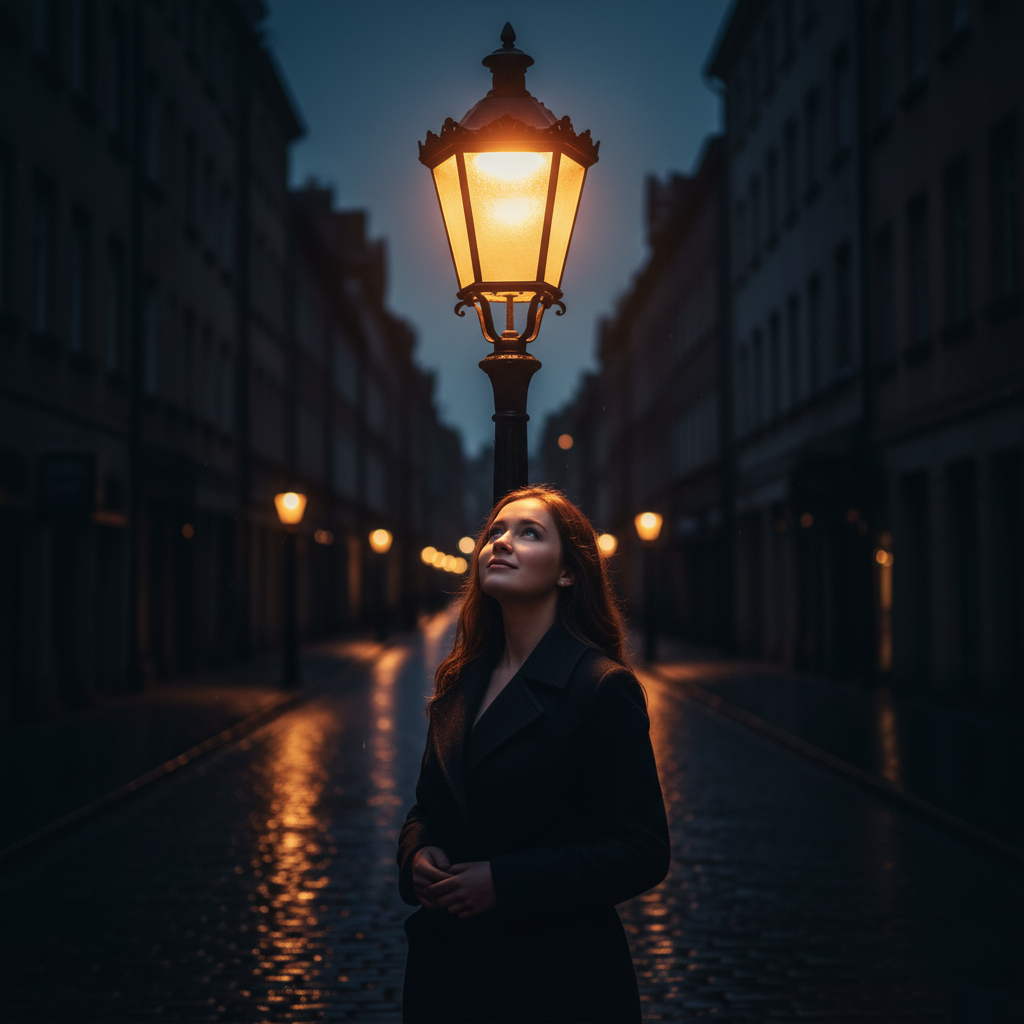
One of the most captivating poses for nighttime photos involves looking towards a light source, allowing the glow to partially illuminate the face and highlight the features. This pose works especially well when the light comes from the side or above, such as a streetlamp, a shop window, or a decorative lamp. The contrast between the surrounding shadows and the brightness bathing the subject creates an intimate and poetic effect, ideal for portraits that aim to convey serenity or contemplation.
The key is to maintain a relaxed and natural posture. The face tilts slightly towards the light, while the eyes seem to lose themselves in it. The body can be oriented in the opposite direction, creating a slight twist that adds visual depth. This simple gesture gives a sense of connection between the subject and their surroundings, as if the light were a guide or a thought materializing in the air.
The photographer must carefully manage the exposure to avoid losing facial details or overexposing the brightest point. Soft light highlights the skin’s texture and creates gentle shadows that add drama. This type of image is especially effective when using a dark background or one with blurred lighting, as it keeps the focus on the model’s expression.
This pose is perfect for shoots in well-lit streets, quiet squares, or terraces with warm lighting. It reflects introspection, hope, and a certain vulnerability that only the night can inspire.
2. Walking among urban lights
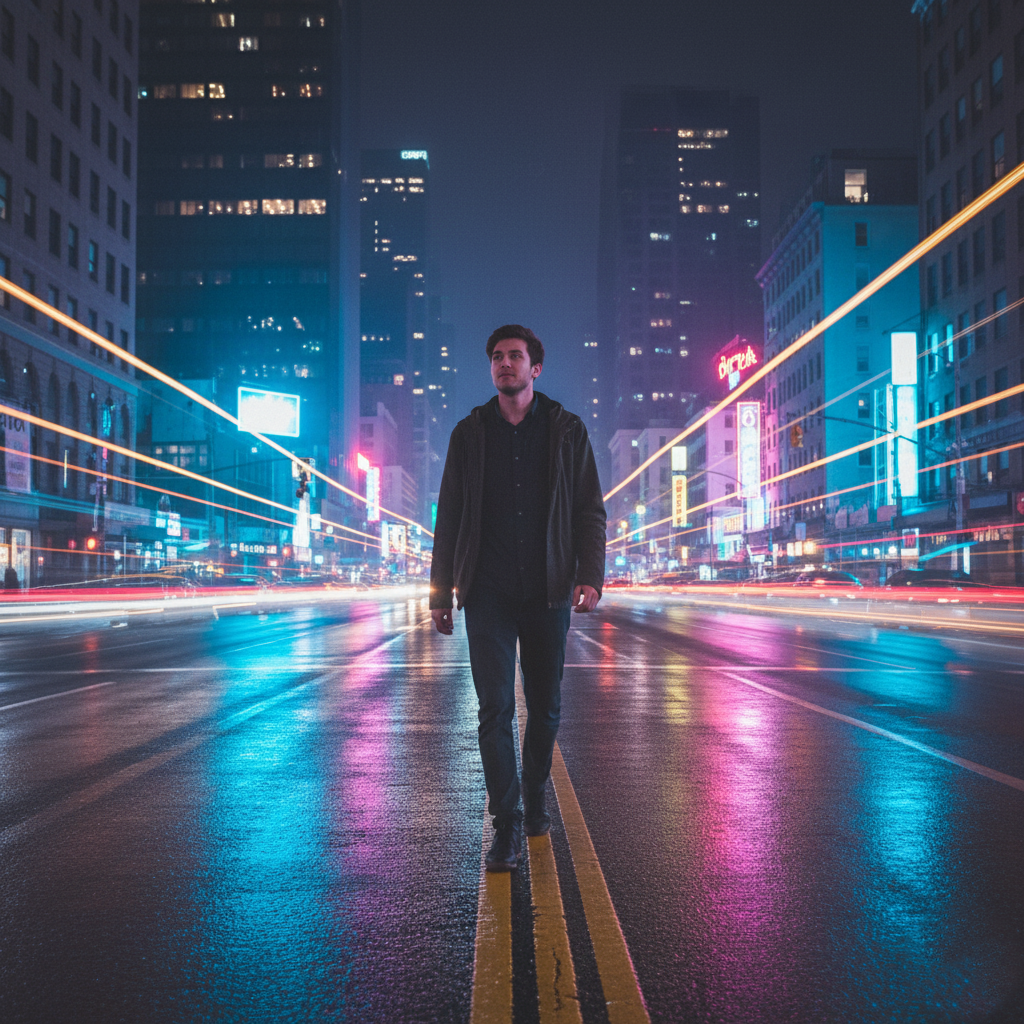
Walking among the city lights is one of the most natural and expressive poses for a nighttime shoot. The idea is to capture the body’s movement in an environment full of light and color, taking advantage of the reflections created by illuminated signs, shop windows, and car headlights. This pose conveys energy, freedom, and a cinematic touch, ideal for those who want photographs that combine dynamism with style.
The movement should be fluid, without rigidity. The model can walk slowly along the sidewalk or cross a lit street while the photographer captures the moment when a light falls on their face or their hair moves in the wind. It’s not about posing in the traditional sense, but about letting the body interact with the environment. A step mid-walk, a sideways glance, or a fleeting smile can be enough to create a powerful image.
The photographer can play with different shutter speeds: a faster one to freeze the movement or a slower one to leave a subtle trail of light behind the subject. In both cases, the scene comes alive. The urban backdrop—with its neon signs, gleaming shop windows, and blurred streetlights—adds visual texture and depth, making each shot feel like part of a moving story.
This pose is perfect for capturing the vibrant energy of the night, that blend of solitude and dynamism that defines cities after dark.
3. Siluet in front of the lights
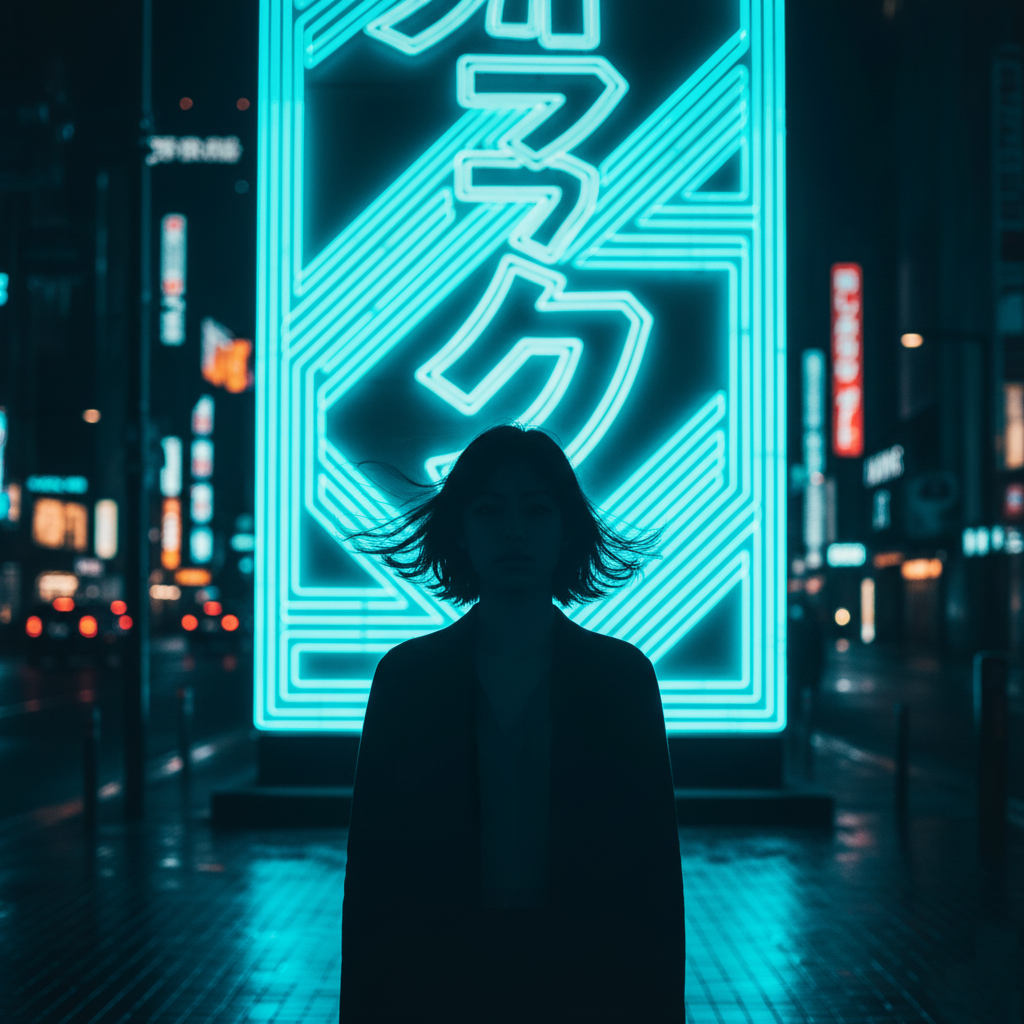
One of the most striking and visually appealing poses for nighttime photography is creating a silhouette against a bright light source. This technique transforms the subject into a mysterious figure that blends into the darkness, highlighting their outline and posture without fully revealing their identity. The power of this pose lies in its simplicity: a clear form against a luminous background can convey both elegance and drama.
To achieve this image, the subject should position themselves between the camera and a powerful light source, such as a neon sign, a car with its lights on, a streetlamp, or even a full moon. The body should be upright, with a defined posture that expresses intention: a hand in a pocket, hair blowing in the wind, or a slightly bent leg adds dynamism. The key is that the light illuminates the background and not the face, so that the figure is perceived as a perfectly defined shadow.
The photographer can play with angles to accentuate the proportion between the subject and the surroundings. A low shot, for example, makes the figure appear more imposing, while a side angle can highlight the body’s curves or the movement of the clothing. Furthermore, this pose works particularly well in black and white, where the contrasts become even more intense.
This idea is ideal for conveying strength, independence, or a touch of mystery, transforming a simple nighttime scene into a cinematic image.
4.Sitting under a lamppost
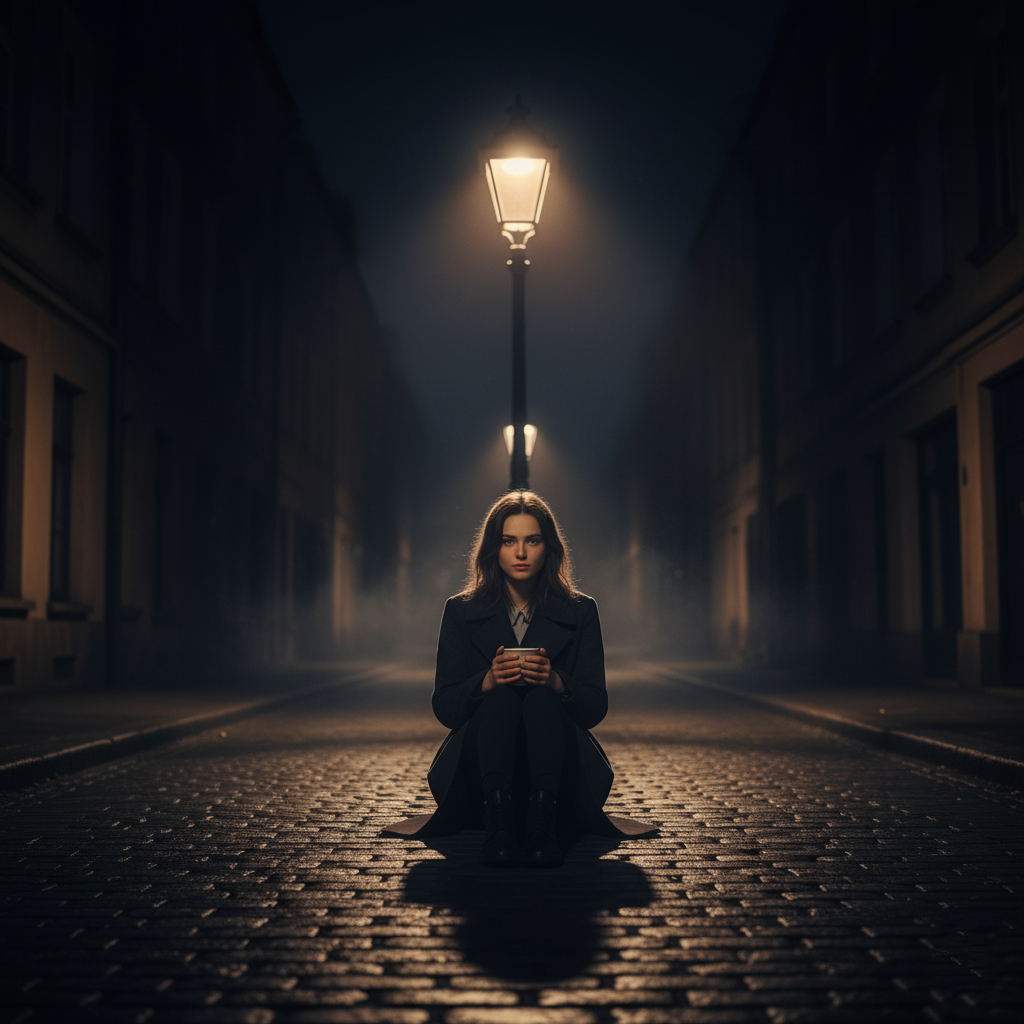
Among the most evocative poses for nighttime sessions, sitting under a lamppost holds a special place. This scene combines stillness, light, and emotion, creating an intimate portrait that seems frozen in time. The lamppost becomes the sole source of illumination, bathing the subject in a warm light that contrasts with the darkness of the surroundings. This pose conveys solitude, reflection, or calm, depending on the model’s gesture and expression.
The secret to this idea lies in its naturalness. The subject can sit on the edge of a sidewalk, on a bench, or on the wet pavement, allowing their posture to communicate their emotional state. Crossed legs, arms resting on the knees, or clasped hands contribute to serenity. The gaze can be directed toward the ground or toward the light source, creating different visual interpretations: introspection or hope.
The composition should focus on the relationship between the subject and the beam of light. The photographer can position themselves at a distance to include part of the environment—a tree, an empty street, a wall—that reinforces the feeling of solitude or a story told in silence. Furthermore, if the ground is damp, the reflections add texture and depth, turning the light into a natural mirror.
This pose works especially well in emotional or conceptual portraits, where the goal is not to show the subject, but rather their connection to the nighttime atmosphere.
5. Reflection in a lit puddle
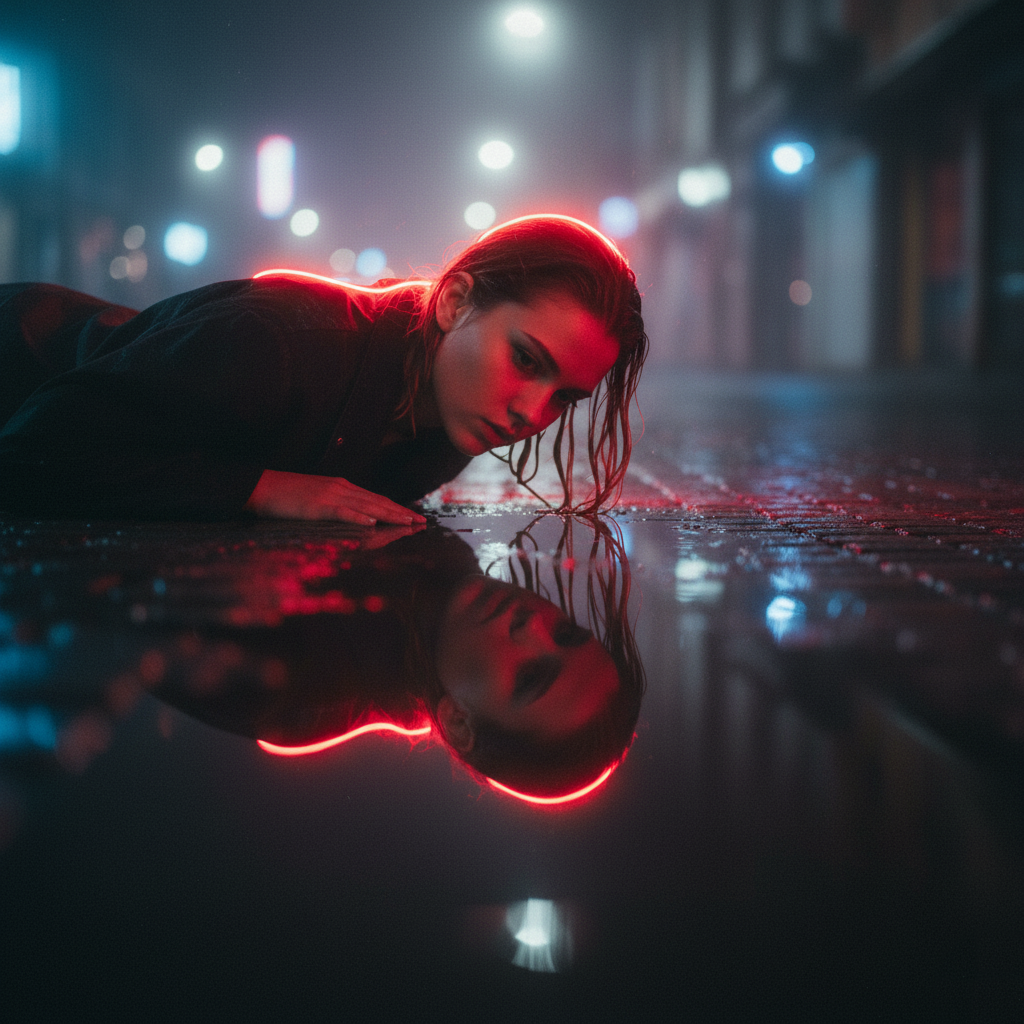
As night falls and the city still retains traces of rain, puddles become natural mirrors, reflecting the lights and colors of the surroundings. Taking advantage of these reflections for a nighttime photoshoot can generate unique images, full of magic and depth. The ideal pose involves positioning yourself near the puddle, interacting with the reflection: looking at it, extending a hand over the water, or leaning slightly forward. This position combines elegance with a contemplative air, perfect for artistic or conceptual portraits.
The body should project naturalness, as if the subject were lost in thought. The photographer can play with the angle of the shot to capture both the model and their reflection, achieving a symmetrical composition that invites a second look. The interesting thing about this pose is that the reflection adds a second dimension to the image, a kind of “double” of the subject who inhabits a more abstract and introspective world.
Lighting is fundamental. City lights, car headlights, or neon lamps can reflect on the water, creating a blend of warm and cool tones that envelop the scene. A slight distortion in the reflection—caused by a breeze or a falling drop—can accentuate the dreamlike feeling. This pose captures not just an image, but a moment suspended between reality and reflection.
Conclusion
Photographing at night is an experience that combines technique, intuition, and emotion. The darkness transforms the landscape into a stage where each light source comes alive, and nighttime poses become the visual language that translates that magic. Each of the ideas explored—looking towards the light, walking among city lights, playing with silhouettes, sitting under a lamppost, or being reflected in a puddle—demonstrates that night is not synonymous with limits, but with infinite possibilities for creating images full of atmosphere and feeling.
In this type of photography, light ceases to be just a technical resource and becomes another character. Shadows draw stories, reflections suggest emotions, and the contrast between light and darkness highlights the subject’s personality. Therefore, nighttime poses should always strive for balance: a natural gesture, a posture that engages with the light, a movement that captures the essence of the moment. It’s not just about posing, but about letting yourself be enveloped by the atmosphere and allowing the camera to capture the connection between the person and the night.
Furthermore, nighttime photography invites experimentation. There’s no single right way to do it; the important thing is to dare to play with light and shadow, with reflections, with gestures that arise spontaneously. Every photograph taken in the dark has its own character, a story that couldn’t be told in broad daylight.


