
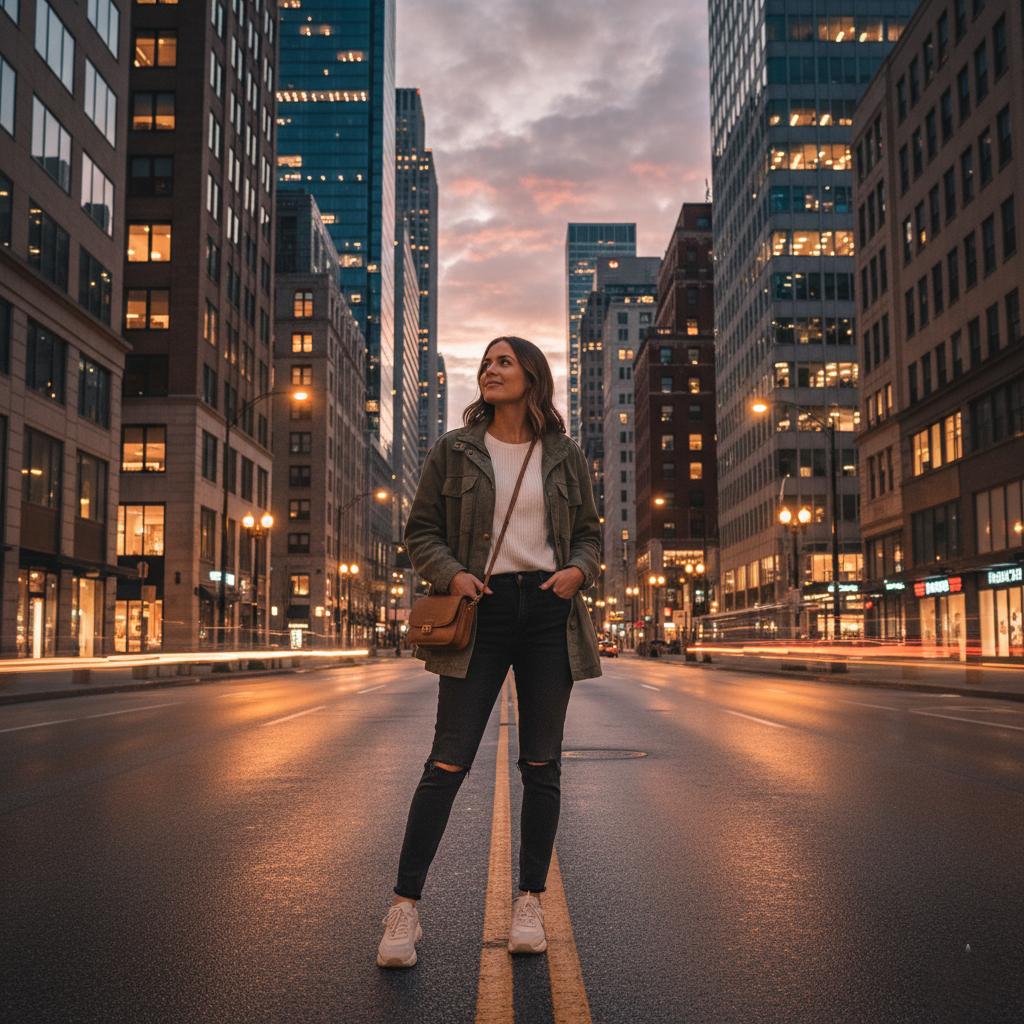
Urban photos possess a special magnetism: they capture the pulse of the city, the energy of its streets, and the authenticity of the person posing amidst concrete, graffiti, or neon lights. Unlike sessions in natural landscapes or tranquil interiors, urban photographs exude movement, style, and attitude. In this type of portrait, the pose not only defines the aesthetic but also the message: a blend of strength, freedom, and connection with the environment.
Posing in an urban setting involves more than simply standing in front of a camera. It’s about interacting with the space, taking advantage of textures, perspectives, light, and shadow to construct a unique visual narrative. Worn walls, pedestrian crossings, metal staircases, or even reflections in a shop window can become powerful allies when combined with the right attitude.
Each pose can convey a different story: from the confidence of someone walking without looking back to the introspection of a gaze lost among lights and cars. Cities, with their chaos and rhythm, offer a stage where every gesture comes to life. The key is to move naturally, feel the surroundings, and let your body flow with the space.
Whether you’re looking for a street style, minimalist, or sophisticated look, urban photos allow you to showcase a more authentic and contemporary version of yourself. Through the following ideas, we’ll explore how to combine expressive poses with the visual language of the city to create portraits with character, balance, and a cinematic touch.
Urban photos have a special magnetism: they capture the pulse of the city, the energy of its streets, and the authenticity of the person posing amidst concrete, graffiti, or neon lights. Unlike sessions in natural landscapes or tranquil interiors, urban photographs breathe movement, style, and attitude. In this type of portrait, the pose not only defines the aesthetic but also the message: a blend of strength, freedom, and connection with the environment.
Posing in an urban setting involves more than simply standing in front of a camera. It’s about interacting with the space, taking advantage of textures, perspectives, light, and shadow to construct a unique visual narrative. Weathered walls, pedestrian crossings, metal staircases, or even reflections in a shop window can become powerful allies when combined with the right attitude.
Each pose can tell a different story: from the confidence of someone walking without looking back, to the introspection of a gaze lost amidst lights and cars. Cities, with their chaos and rhythm, offer a stage where every gesture comes to life. The key is to move naturally, feel the surroundings, and let your body flow with the space.
Whether you’re looking for a street style, a minimalist look, or a sophisticated one, urban photos allow you to showcase a more authentic and contemporary version of yourself. Through the following ideas, we’ll explore how to combine expressive poses with the visual language of the city to create portraits with character, balance, and a cinematic touch.
1. Walking among Streets
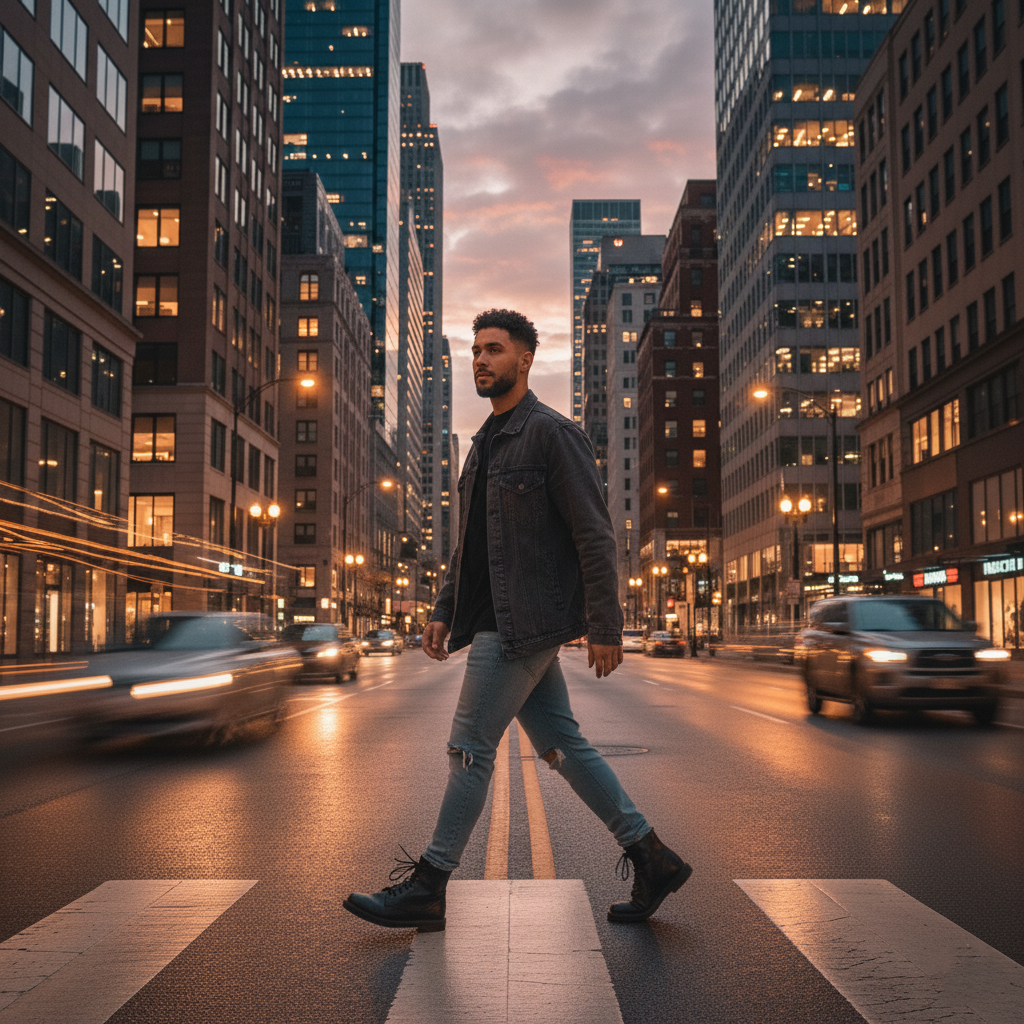
One of the most natural and effective poses for urban photography is capturing the moment in motion, walking through the city streets. This pose conveys dynamism, confidence, and freedom, while harnessing the constant energy of the urban environment. Instead of posing statically, letting your body flow in motion creates a much more vibrant, almost cinematic portrait, as if it were a still scene from a film.
To achieve this, walk with a firm, natural stride, looking straight ahead or slightly to the side, without needing to look directly at the camera. The important thing is that the gesture is authentic: that it looks like a casual stroll rather than a rehearsed pose. Your arms should move freely, accompanying your steps, and your body should maintain an upright posture, but without rigidity.
The urban environment will be your accomplice. You can walk on a sidewalk, a crosswalk, or even an empty street at dawn. The lines of the pavement or the buildings on either side will help create a deep and visually appealing composition. If there’s traffic or pedestrians, even better: that touch of chaos can give the photo a more realistic and spontaneous feel.
Clothing plays a key role: opt for outfits that blend in with the urban landscape, such as leather jackets, jeans, sunglasses, or trendy sneakers. Natural afternoon light or the glow of city lights at night can enhance the movement and textures of the scene.
2. Leaning against a wall or a railing
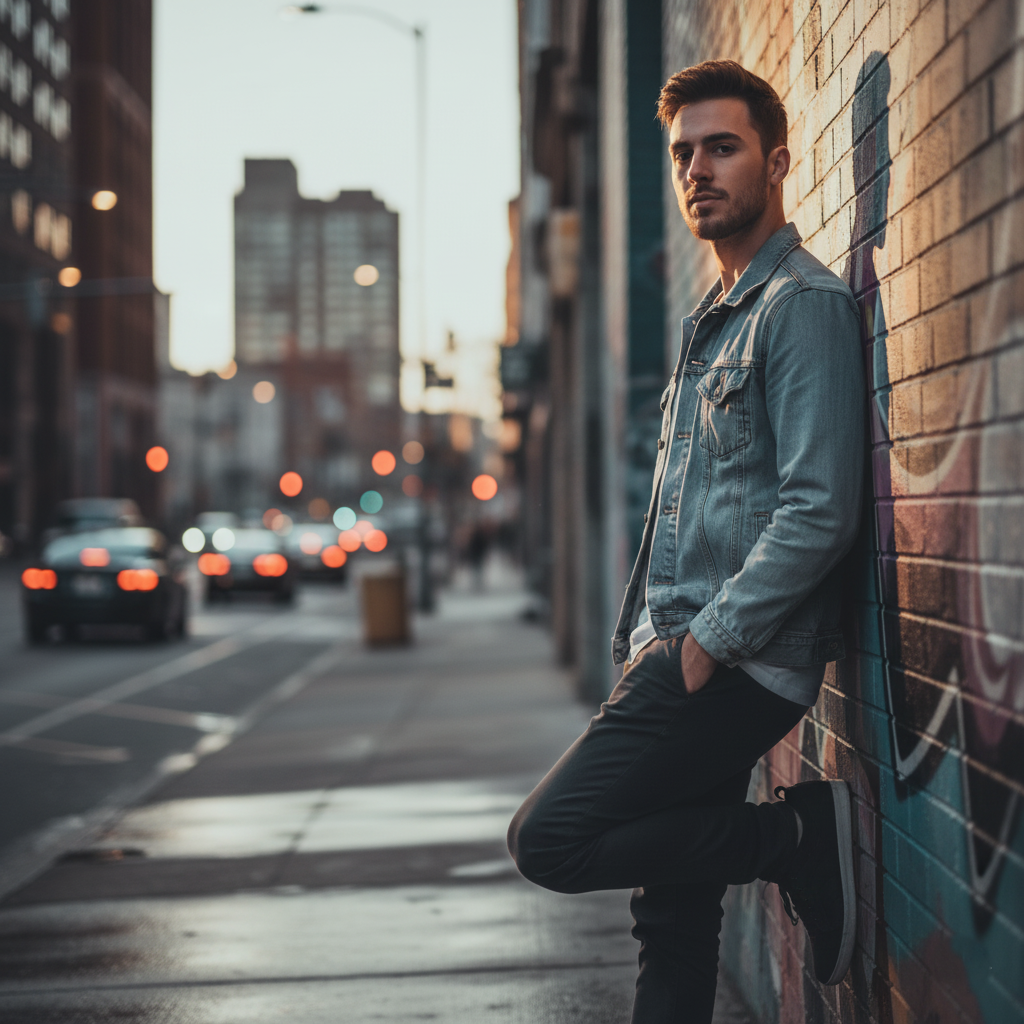
Leaning against a wall, railing, or urban structure is a classic yet highly effective pose for city portraits. This type of posture conveys relaxation, confidence, and a touch of mystery, ideal for effortlessly projecting a cool attitude. In an urban setting, concrete, metal, or brick surfaces add texture and character, becoming the perfect backdrop to highlight your personal style.
The key to this pose lies in the naturalness of the support. You can lean lightly with one shoulder against the wall or place a hand on the railing, keeping one leg slightly bent. Your gaze can be directed towards the camera if you’re aiming for a more intense image, or towards a point off-screen if you prefer a more introspective effect. In both cases, the important thing is that the pose doesn’t feel forced: your body should appear comfortable, as if you’re simply waiting for something or enjoying the moment.
The surroundings are essential. Look for walls with character—these could be colorful graffiti, weathered walls, or metal structures—that contrast with your outfit or accentuate your features. Urban bridge railings or staircases also make excellent backdrops, as they add diagonal lines and depth to the frame.
If you’re working with natural light, try shooting at sunset, when the sun creates long, warm shadows that add volume to the image. You can also experiment with artificial light, such as signs or streetlights, for a more nocturnal and modern effect.
3. Sitting on the edge of a sidewalk or a ladder
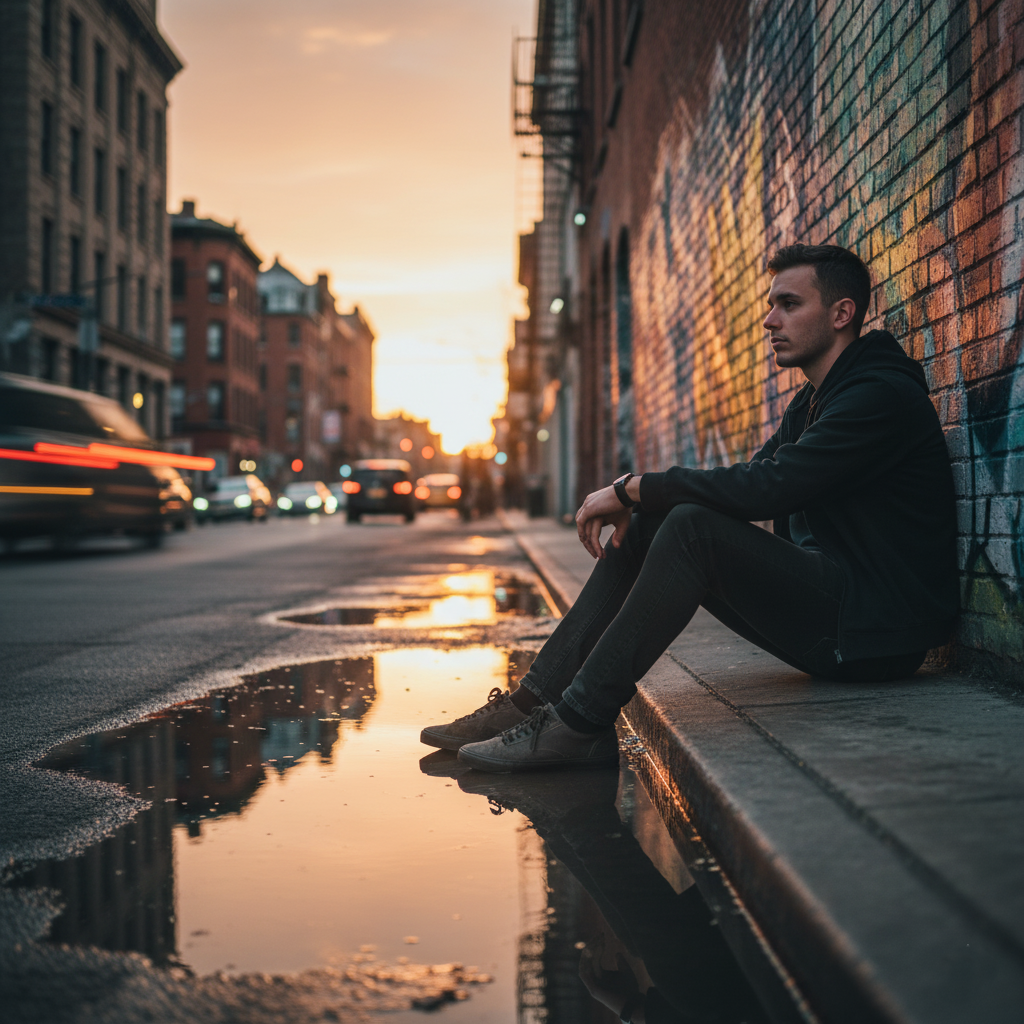
Urban photos gain authenticity when captured in seemingly everyday moments, and sitting on the edge of a sidewalk or on a city staircase achieves precisely that. This pose projects a blend of calm and connection with the surroundings, as if the city’s hustle and bustle has paused for just an instant. It’s ideal for those seeking to convey a relaxed, introspective, or simply spontaneous vibe.
When sitting, pay attention to your posture so it looks natural and elegant. You can keep your back slightly straight and your shoulders relaxed, allowing your legs to be positioned asymmetrically—one bent and the other extended, for example. Resting your elbows on your knees or interlacing your hands will add a touch of naturalness. You can also look down, to the side, or even at the cityscape; each direction of your gaze lends a different emotion to the image.
The urban environment offers numerous opportunities for this pose. A metal staircase, the edges of a graffiti-covered sidewalk, a low wall, or even a subway entrance can serve as a backdrop. The key is to make the setting look authentic and not overly tidy: small details—like worn pavement, shadows, or reflections—add character to the composition.
As for clothing, look for something that harmonizes with the background texture: oversized jackets, sneakers, jeans, or urban accessories like caps and sunglasses help reinforce the street style aesthetic. The soft light of dawn or dusk is usually ideal for this type of portrait.
4. Looking into the Urban horizon
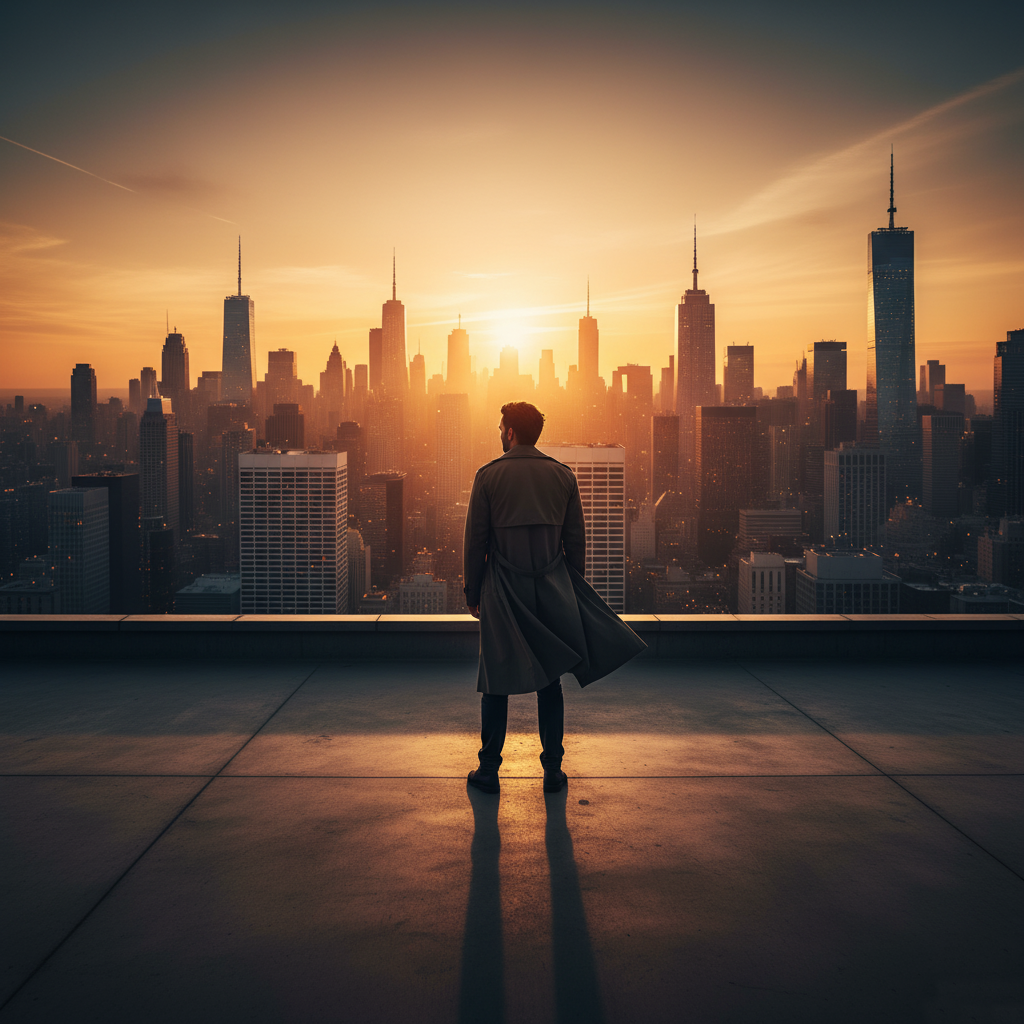
Among the noise and bustle of the city, a pose that conveys calm and reflection can create a powerful contrast. Gazing at the urban skyline—whether from a rooftop, a bridge, or an elevated street—not only creates a striking composition but also evokes a sense of freedom, dreams, and ambition. This type of pose works especially well for more conceptual portraits or for those seeking to capture the essence of feeling small in the face of the city’s immensity.
To achieve this pose, stand with your back to the camera or slightly in profile, gazing into the distance. Your body should project serenity: relaxed arms, firm feet, and a calm expression. If there’s a breeze, let it play with your hair or clothing, adding movement to the image. This pose relies less on facial expression and more on emotional composition, on the dialogue between the person and the cityscape.
The setting is key: a rooftop with distant buildings, an urban viewpoint, or even an elevated pedestrian walkway can offer captivating views. The city lights at nightfall create a vibrant backdrop that highlights the subject’s silhouette, while the golden hues of sunset can envelop the scene in a melancholic and poetic atmosphere.
As for clothing, choose for garments that flow with the wind or complement the surrounding colors. Long coats, scarves, or open shirts add visual dynamism. This type of image is not only aesthetically pleasing but also emotionally resonant, as if capturing a thought suspended between the present and what is to come.
5. Interacting with the urban environment
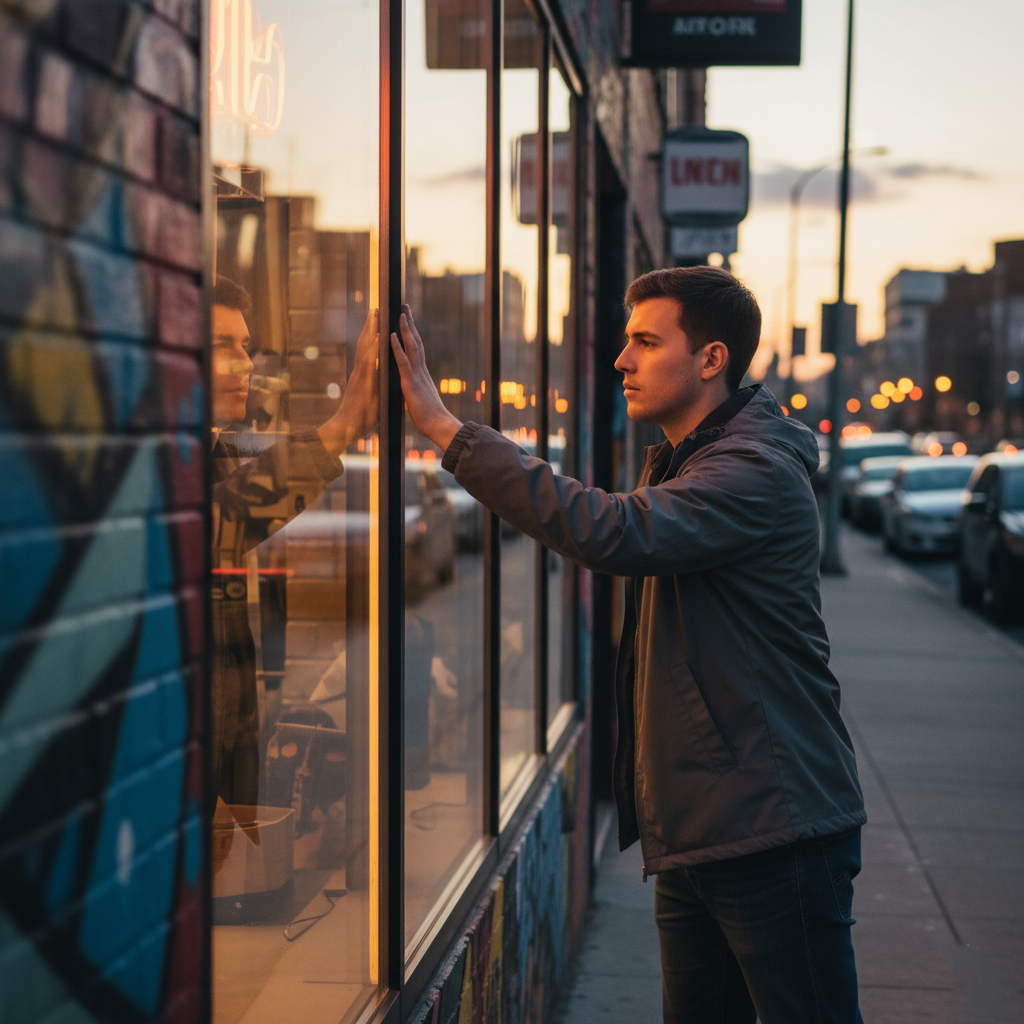
One of the most interesting and creative poses in urban photography is one where the subject interacts with their surroundings. Instead of simply posing against a backdrop, the person becomes part of the scene, merging with the architecture, objects, or textures of the city. This type of photo conveys authenticity, movement, and a connection to the space, in addition to offering more dynamic visual results.
The interaction can take many forms: touching a textured wall, leaning on a railing while observing the flow of people, walking through a path of light projected between buildings, or being reflected in a shop window. The important thing is that the gesture feels natural, almost like a moment captured by chance. By doing so, the body ceases to be an isolated element and begins to engage with the environment, generating a more complete visual narrative.
To reinforce the urban effect, pay attention to the details surrounding the scene: illuminated signs, moving cars, sharp shadows, or reflections in puddles can add depth and life to the composition. If the shoot takes place at night, take advantage of the colors of neon lights or streetlights to create striking contrasts. During the day, the shadows and lines of the buildings can guide the viewer’s eye toward you.
Your outfit should harmonize with the scene, but without competing with it. Garments in neutral tones or with colorful accents help you stand out without disrupting the overall aesthetic. The key is to maintain spontaneity and allow the surroundings to inspire you with every movement.
Conclusion
Urban photography is a powerful way to connect your personality with your surroundings. Every street, wall, or building tells a story, and the way you pose within that space transforms the image into a visual narrative. These five posing ideas for urban photos—walking through the streets, leaning against a wall, sitting on a sidewalk, gazing at the horizon, and interacting with your surroundings—reveal different ways to express who you are through body language and your relationship with the city.
In this type of photography, the key is finding a balance between spontaneity and composition. It’s not about finding the perfect pose, but about capturing the precise moment where attitude and atmosphere merge. Cities offer ever-changing backdrops, full of light, textures, and movement, which can enhance the essence of a portrait if observed carefully. Every shadow cast or reflection in a window is an opportunity to create something unique.
It’s also important to remember that your clothing, lighting, and posture should reflect your identity. The city can be chaotic, modern, or nostalgic, but your presence within it is what gives meaning to the image. Appearing relaxed, confident, and aware of your surroundings will make your photographs convey authenticity and energy—qualities that always stand out in front of the lens.
Urban poses aren’t just about aesthetics: they’re a form of expression. On every corner, there’s a story waiting to be told, and every step, glance, or gesture can become a visual fragment of your connection to life in motion.


