
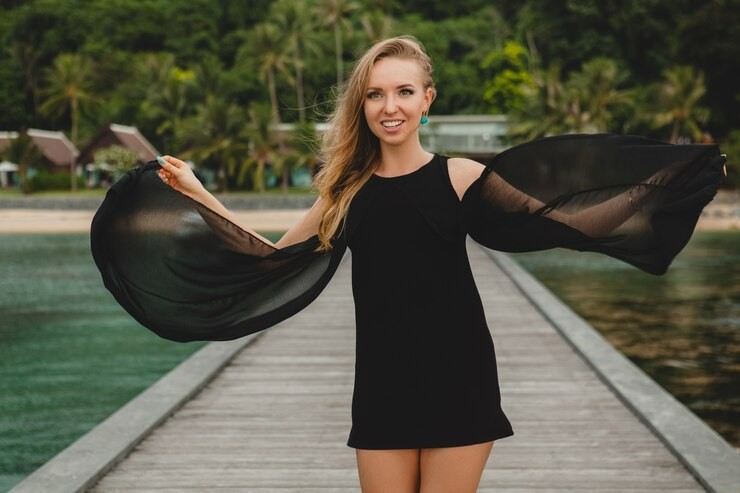
Dresses, with their shape, texture, and drape, offer a world of visual possibilities in a photoshoot. Whether long, short, flowing, fitted, or flared, each type of dress brings movement, elegance, and character to the image. As photographers, we must know how to leverage these qualities to create striking portraits where the garment not only shines but also highlights the wearer’s personality. Directing a successful photoshoot with a dress requires attention to detail: posture, body lines, lighting, and above all, how the dress interacts with the environment and movement.
In this article, we share five pose ideas for photos with a dress, designed for editorial shoots, personal portraits, fashion, lifestyle, or social media content. Each pose is designed to make the most of the dress’s design and to help you confidently guide your models or clients without resorting to rigid or repetitive poses. Here you’ll find aesthetic inspiration and technical recommendations to ensure your photos project elegance, presence, and dynamism. If you’re looking to enrich your portfolio and direct photoshoots with more purpose, keep reading. These ideas will give you new tools to create images that truly stand out.
1. Walking with the Dress in motion


One of the best ways to capture the fluidity and elegance of a dress is through movement. This pose involves asking the model to walk smoothly toward the camera or diagonally, playing with the drape of the dress. Whether the fabric is light and flowing or more structured, the simple act of walking creates a visual dynamism that brings naturalness, style, and life to the image. The goal is to capture the interaction between the body and the garment in motion, resulting in a spontaneous yet carefully crafted photograph.
From a technical standpoint, it’s ideal to shoot in burst mode to avoid missing those micro-expressions that occur as the model moves. Use a fast shutter speed (at least 1/500) if there’s a lot of movement in the fabric, especially if you’re outdoors in windy conditions. An aperture between f/2.8 and f/4.5 will help separate the model from the background, keeping the face sharp and leaving the surroundings softly blurred. This pose works beautifully in quiet streets, gardens, pathways, or any space where the model can walk freely without strong visual distractions.
To enrich the image, you can give her specific instructions: to hold the ends of the dress with her hands and lift them slightly as she walks, to gently turn her hips with each step, or to play with her hair as she walks to add more dynamism. You can also vary the direction of her gaze: have her look straight ahead, down, or give a fleeting glance at the camera. All of this contributes to a sense of elegant movement, without it looking like a runway show, but rather something more intimate and editorial. The expression should be relaxed, as if she’s enjoying a stroll.
This pose is perfect for flowing dresses, lightweight fabrics, or fluid cuts that move with the wind or her steps. It’s an excellent option for fashion shoots, personal portraits with a romantic touch, or outdoor lifestyle sessions. As the photographer, your challenge is to read the rhythm of the body and the garment, capture the shot at the right moment, and maintain harmony between background, light, and movement. When everything aligns, you’ll get a powerful, vibrant, and aesthetically memorable image.
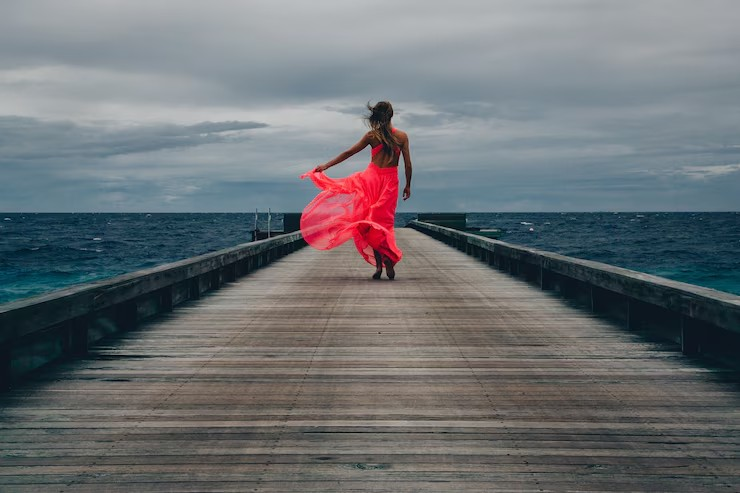
2. Sitting with her legs to the side and her dress spread out


This pose is ideal for subtly conveying elegance and femininity. It involves seating the model on a comfortable surface a bench, steps, a flat rock, or even the floor with her legs bent to one side, allowing the dress to drape and flow around her figure. This position elongates the body, creates a harmonious visual line, and allows you to play with the natural drape of the fabric. It also encourages a relaxed posture, perfect for tranquil, romantic, or editorial style portraits.
Technically, this pose lends itself to medium and close-up shots, where the face and torso take center stage, but also to wider shots if the dress has volume or details at the bottom. Use an aperture between f/2.8 and f/4.0 to highlight the model without losing texture in the dress. You can work with soft natural light (open shadow, golden hour, or window light) or with a side light source in the studio to gently model the folds of the dress. A slightly diagonal or overhead angle helps showcase how the fabric drapes on the floor.
The facial expression should complement the style of the shoot: it could be a soft smile, a thoughtful gaze down, or directly into the camera for a sense of connection. The hands can play a significant role: one can rest in the lap while the other adjusts part of the dress, holds a flower or accessory, or simply rests subtly on the floor. Pay close attention to the hair and neck posture, as any misdirected tilt while seated can visually shorten the figure.
This pose works particularly well with long, flowing, or textured dresses, such as those made of tulle, silk, or soft cotton. It’s also ideal for party dresses, bohemian looks, or more relaxed fashion choices. As the photographer, you should pay attention to how the garment falls when the subject sits and guide them clearly to avoid unflattering bunching of fabric. The beauty of this pose lies in its composition: when you manage to align expression, drape of the dress, posture and light, you obtain an elegant, balanced and extremely photogenic image.

3. Standing, with one hand on her waist and the other playing with the fabric


This pose is a timeless classic, perfect for projecting presence, attitude, and style. It involves the model standing with one hand on her waist (defining the silhouette) and the other gently playing with the fabric of the dress, lifting it slightly, extending it to one side, or simply caressing it subtly. It’s a versatile pose that works for both editorial and personal shoots and can be adapted to formal, bohemian, or casual dresses. The key is to convey both control and naturalness.
Technically, this pose looks incredible in full-body or three-quarter shots. You can work with side lighting or backlighting if you’re outdoors, especially at sunset, to create a soft halo effect on the silhouette. A medium aperture (f/3.5 to f/5.6) will allow you to maintain good definition in the face, arms, and dress. In the studio, you can use a main light with side bounce to maintain volume without harsh shadows. You can also experiment with creative shadows if the style allows it. The background should be clean or visually harmonious so that the figure stands out without distractions.
In terms of direction, it’s important that the model maintains a firm but relaxed posture. The arm at the waist should create a clear line that defines the figure without being too tense; the hand should be relaxed. The other hand can extend the fabric to the side, gently flutter it if there’s a breeze, or simply hold it delicately. You can vary the position of the feet to create a natural curve at the hip. The gaze can be directed towards the camera to create a connection or towards a point to the side if you’re aiming for a more editorial or dreamy feel.
This pose is ideal for dresses with drape, flow, or interesting details in the fabric. It also allows you to showcase personality and visual impact without exaggeration, making it a solid choice for campaigns, branding portraits, or personal sessions with an elegant approach. As the photographer, your role is to guide the subtle gestures, adjust angles, and observe the interplay between body, fabric, and light. When all of that comes together, you get an image that not only shows a dress, but a woman wearing it with attitude and presence.

4. Spinning around with her dress billowing.


This pose adds dynamism, joy, and a sense of freedom that elevates any dress shoot. It involves asking the model to gently spin, either in a single turn or a series of twists, while allowing the dress to move naturally. It’s perfect for light, flowing, or flared fabrics, as the garment visually unfolds as it spins, creating a very attractive circular shape. This pose conveys positive energy, spontaneity, and elegance, making it ideal for lifestyle portraits, romantic editorials, or social media content with a vibrant aesthetic.
To capture this pose, it’s best to use a fast shutter speed (at least 1/800) to freeze the movement of the dress and any hair involved. Use an aperture between f/2.8 and f/4.5, depending on how much you want to separate the model from the background. If you’re shooting outdoors, look for soft light (golden hour or natural shade) to avoid harsh shadows while maintaining good exposure. You can shoot in burst mode to later choose the exact moment when the dress is at its point of maximum expansion or just before the turn is completed.
Regarding direction, it’s important that the model doesn’t just turn for the sake of turning, but does so with intention and emotional expression. You can ask her to smile, look up, play with her arms, or close her eyes during the turn to create a more introspective or magical feeling. You can also work in sequence: first turning while looking at the camera, then at the horizon, or doing a complete turn and stopping in a final static pose. This type of dynamic generates a variety of images without disrupting the flow of the session.
This pose is ideal for long dresses, those with layers, or flowing fabrics like tulle, chiffon, or silk. It’s a perfect way to highlight the design of the garment in action, and at the same time, show the joy or lightness of the person wearing it. As the photographer, your task is to anticipate the optimal point of the turn, carefully frame the shot, and keep an eye on the expression. If everything aligns light, gesture and movement— you can achieve a truly iconic image, where the dress not only adorns, but dances with the camera.

5. Leaning against a wall or column, with a side view
This pose combines strength and serenity in a single image. It involves placing the model lightly leaning against a wall, column, door, or other vertical structure, with one shoulder or back touching the support, while her gaze is directed to the side or downwards. This pose creates natural vertical lines, stylizes the figure, and offers a sense of elegant introspection. It works very well in urban, architectural, or interior settings with good natural light.
From a technical standpoint, it’s ideal to work with soft side or overhead light, such as that coming through a window or reflecting off a light-colored wall. This adds volume to the dress and face without creating harsh shadows. You can shoot with an aperture between f/2.0 and f/4.0 if you want to focus all the attention on the model and blur the background for a clean and professional image. This pose works especially well in vertical half-body or full-body shots, where you can highlight both the drape of the dress and the texture of the supporting surface.
The direction here should focus on creating a connection between body and structure. The model can have one arm relaxed at her side, while the other gently touches the wall or the dress. You can also instruct her to cross one foot over the other to create a natural curve at the hip. The expression can vary depending on the intention of the portrait: a soft downward gaze for a more poetic tone, or an intense sideways glance if you’re aiming for something more editorial. It’s crucial that the pose doesn’t look forced; everything should flow naturally.
This pose is excellent for dresses with long, structured silhouettes or those with interesting details on the back or neckline. It also helps create a visual contrast between the figure and the background, making the image stand out even more. As the photographer, your role is to be mindful of the angle, avoid lines that cut off the figure, and ensure the dress is strategically positioned. With good direction and visual sensitivity, this pose can become one of the most elegant and memorable of the entire shoot.

Conclusion
Working with dresses in photoshoots offers enormous creative freedom, but it also demands a keen eye for direction, the drape of the fabric, and body language. These five pose ideas for photos with dresses provide a solid foundation for confident direction, allowing you to leverage the garment’s aesthetic and create images that convey elegance, dynamism, or introspection, depending on your style or your client’s. Remember that the dress is part of the visual language: when you know how to use it to your advantage, each photograph becomes a visual narrative where the body, movement, and light connect with intention.


