
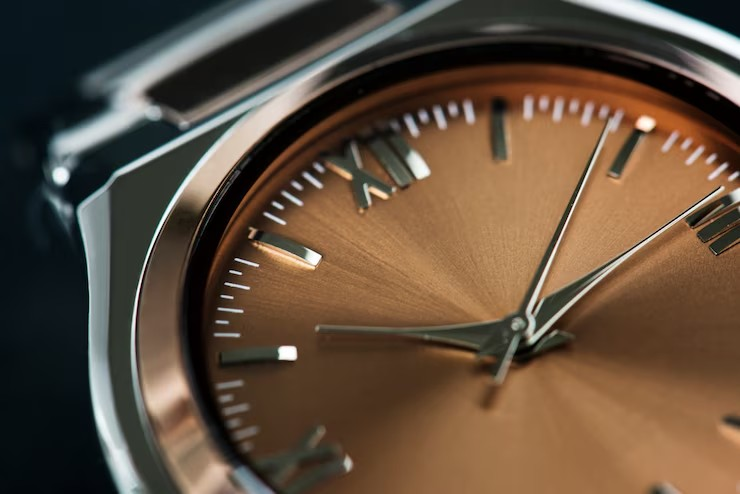
Watch photography may seem simple at first glance, but it’s actually a demanding field that tests your mastery of light, focus, and composition. Whether you’re working on an advertising campaign or simply want to enrich your portfolio with striking shots, achieving an image that communicates luxury, precision, and style requires more than just good equipment. In this article, we share five creative watch photography ideas that will not only inspire you but also give you practical tools to elevate the quality of your professional work.
As photographers, we know that every detail counts. The reflection in the crystal, the texture of the strap, or even the background you choose can make the difference between an average photo and one that truly impresses. That’s why we’ve gathered these ideas not only from an aesthetic perspective but also from a technical one, to help you create images that connect with discerning brands, clients, and audiences. If you’re looking to stand out in the world of product photography, keep reading: these ideas are designed to take your watch photography to the next level.
1. Use minimalist backgrounds that highlight the watch’s design


When photographing watches, one of the most common mistakes is using cluttered backgrounds or backgrounds with too many elements that visually compete with the product. Minimalist backgrounds, on the other hand, are one of the most effective strategies for highlighting the watch’s design, materials, and elegance. Think smooth surfaces, neutral tones, or soft textures like marble, light wood, or matte backgrounds. These not only help focus attention on the watch but also lend a more polished and professional look to the final image.
A white, gray, or black background might seem basic, but when well-lit and combined with good composition, it becomes an ideal canvas for highlighting metallic colors, leather straps, or subtle details like engravings. This type of background is especially useful if you’re working with brands that need content adaptable to different platforms, from catalogs to social media. You can even vary the background tone with color gels or in post-production to achieve a customized aesthetic.
The key is visual clarity. Less is more when it comes to product photography, and this is especially true for watches, where every millimeter matters. If the background is cluttered or contains elements that don’t contribute to the image’s narrative, the focus on what’s important is lost. Use plain backgrounds made of cardboard, photographic paper, acrylic, or even fabric, depending on the style you’re aiming for. Don’t underestimate the power of a well-chosen background to elevate your photos.
Finally, consider negative space as a visual resource. Leaving empty areas around the watch not only improves the composition but also gives you room to include text, logos, or cutouts if the client requests it. These kinds of decisions are what make the difference between an amateur photograph and one that’s strategically planned. So, the next time you’re faced with a watch photoshoot, start by asking yourself: does the background help tell the product’s story or does it distract from it?

2. Play with reflections and metallic surfaces


One of the biggest challenges—and simultaneously one of the most creative opportunities—when photographing watches is working with their metallic and crystalline surfaces. The watch case, dial, bezels, and crystal tend to reflect everything around them: the camera, the photographer, lights, windows, and even objects in the studio. But far from being a problem, these reflections can become allies if you know how to control and use them to add character to the image.
The key lies in the careful positioning of the lighting and the use of modifiers such as softboxes, diffusers, and reflectors. Soft, well-directed light will avoid harsh, unwanted reflections, while a more focused light source can be used to create strategic highlights that accentuate metallic contours or curves in the design. You can even use black cards (known as “flags”) to cut unwanted glare or create dark reflections that give the watch volume and contrast. It’s a subtle technique, but when you master it, the result is spectacular.
You can also experiment with reflective surfaces like glass, acrylic, or polished steel as a base for your watches. This creates doubling effects that add visual depth to the composition and a touch of sophistication. Just be sure to thoroughly clean each surface and the watch itself before shooting. The slightest dust or fingerprint will be obvious with macro lenses and could ruin a perfect shot. An anti-static brush or cotton gloves can be your best friends here.
If you’re photographing for a brand that aims to convey luxury and precision, mastering the use of reflections will be essential. Don’t be afraid to spend time fine-tuning angles or patiently moving lights. Every detail you manage to highlight with a controlled reflection will add value to the image. Remember: in watch photography, reflections aren’t mistakes; they’re opportunities to showcase the product’s character. Dare to use them as an integral part of your visual style.

3. Create scenes that tell a story


Beyond a clean, technical image, what truly connects with the viewer is often a scene that evokes a story, a lifestyle, or an emotion. In watch photography, this means going beyond the isolated product and placing it within a context that suggests who uses it, how they use it, and in what kinds of situations. This approach is not only visually appealing but also has significant commercial value, as it helps the customer imagine themselves using the product.
For example, if you’re photographing a sports watch, you could place it on a hiking backpack, next to a compass and a map, with a rustic wood texture in the background. If it’s an elegant office watch, you could include a fountain pen, a leather notebook, and a laptop or smartphone. These elements shouldn’t overshadow the watch but rather help create a cohesive environment that tells a visual story. The secret lies in the selection of props: they should complement the watch, not compete with it.
Furthermore, these narrative scenes allow you to play with color palettes and textures. A watch with a brown leather strap can look incredible against a beige linen background, paired with brass or wood accents that complement its warm tones. Conversely, a minimalist watch with a white dial can benefit from a clean, modern, and monochromatic setting. It all depends on the message you want to convey. This type of photography is ideal for social media, advertising campaigns, or editorial catalogs that aim for an emotional connection with their audience.
Don’t forget that storytelling also involves considering the angle, framing, and depth of field. You can use wide shots to showcase more of the surroundings or close-ups to suggest a scene without revealing everything. And if you’re working with models, make sure their poses and clothing align with the visual narrative you’re building. In short, using storytelling in watch photography is a powerful way to highlight your work and deliver a more complete and memorable visual product.

4. Experiment with natural and artificial light


Mastering lighting is fundamental in watch photography, as this type of product is full of reflective surfaces, tiny details, and materials that react differently to each light source. To achieve striking images, it’s important to know when to take advantage of natural light and when it’s preferable to use artificial lighting. Each offers specific advantages depending on the style of photography you want to achieve, and combining them intelligently can elevate the quality of your work.
Natural light, especially that which comes from a window with translucent curtains, creates a soft and enveloping illumination that works very well to create a relaxed, organic, and intimate atmosphere. It’s ideal for lifestyle shoots or social media content, where the goal is to showcase the watch in an everyday context. However, it has its limitations: it can vary in intensity and color temperature throughout the day, which complicates consistency between shots. Furthermore, if not properly controlled, it can create unwanted reflections on the watch crystal.
On the other hand, artificial light gives you complete control over the scene. You can use flashes, continuous LED lights, or a combination of both with modifiers like softboxes, diffusers, and reflectors. This allows you to precisely shape the light, eliminate unwanted reflections, and highlight specific textures on the watch, such as the dial engraving or the metallic sheen of the case. You can also repeat exact setups across different sessions, which is very useful in commercial or catalog photography where visual consistency is key.
An effective technique involves using cross lighting or double side lighting to give the product volume and create subtle contrasts that emphasize its shape. You can even add accent lights directed specifically at areas like the hands or the logo. Playing with cool or warm light also adds drama or elegance, depending on the watch’s style. The key is to experiment and adjust patiently: each type of watch reacts differently, and your job as the photographer is to find the light that best represents it.

5. Capture close-up shots to show the details
One of the great attractions of watches lies in their details: the engravings on the dial, the design of the hands, the textured bezel, the crown, or even the strap pattern. All these elements speak to the watch’s quality, style, and personality. To capture this visual richness, it’s essential to work with close-up shots that allow the viewer to appreciate what might otherwise go unnoticed. This type of shot is especially effective in professional product photography, where the focus is on showcasing the excellence of the craftsmanship.
To achieve these close-up shots, it’s ideal to use a macro lens or a telephoto lens with a good minimum focusing distance. These lenses allow you to get close enough without losing sharpness, which is essential when working with small and highly detailed objects. Additionally, it’s important to use a tripod to avoid any movement and maintain precise focus on the area you want to highlight. A shallow depth of field can also help create a sense of luxury and exclusivity, blurring the background and focusing all attention on the watch’s details.
It’s not just about getting closer, but about carefully composing the image. You can focus on just the dial logo, a visible gear in an automatic watch, or the interplay of textures between metal, crystal, and leather. In this type of photography, lighting again plays a key role. Using side lights, small reflectors, or even snoots will help you define contours, highlight reliefs, and add depth to the image. Every detail should appear clean, well-exposed, and free of distractions, so it’s also crucial to check that there’s no dust or fingerprints on the watch.
This technical and aesthetic approach not only adds visual value but also conveys professionalism and product expertise. Brands highly value these types of images because they showcase the level of detail and quality of their pieces, something that directly influences the end customer’s perception. As a photographer, specializing in these close-up shots will not only enhance your portfolio, but also open doors in the world of commercial watch photography, where every millimeter counts and every detail can be the difference between a sale and an ignored image.

Conclusion
Take your product photos into the next level. As you’ve seen, photographing watches isn’t just about taking a good picture, but about combining technique, creativity, and visual sensitivity to intentionally highlight every detail. These five ideas are just the beginning of a path full of possibilities for improving your portfolio, attracting new clients, or even specializing in product photography. If you’re passionate about telling stories through objects and light, this type of photography can become a great career opportunity. The important thing is to keep exploring, practicing, and seeking inspiration in other styles and visual disciplines.


