
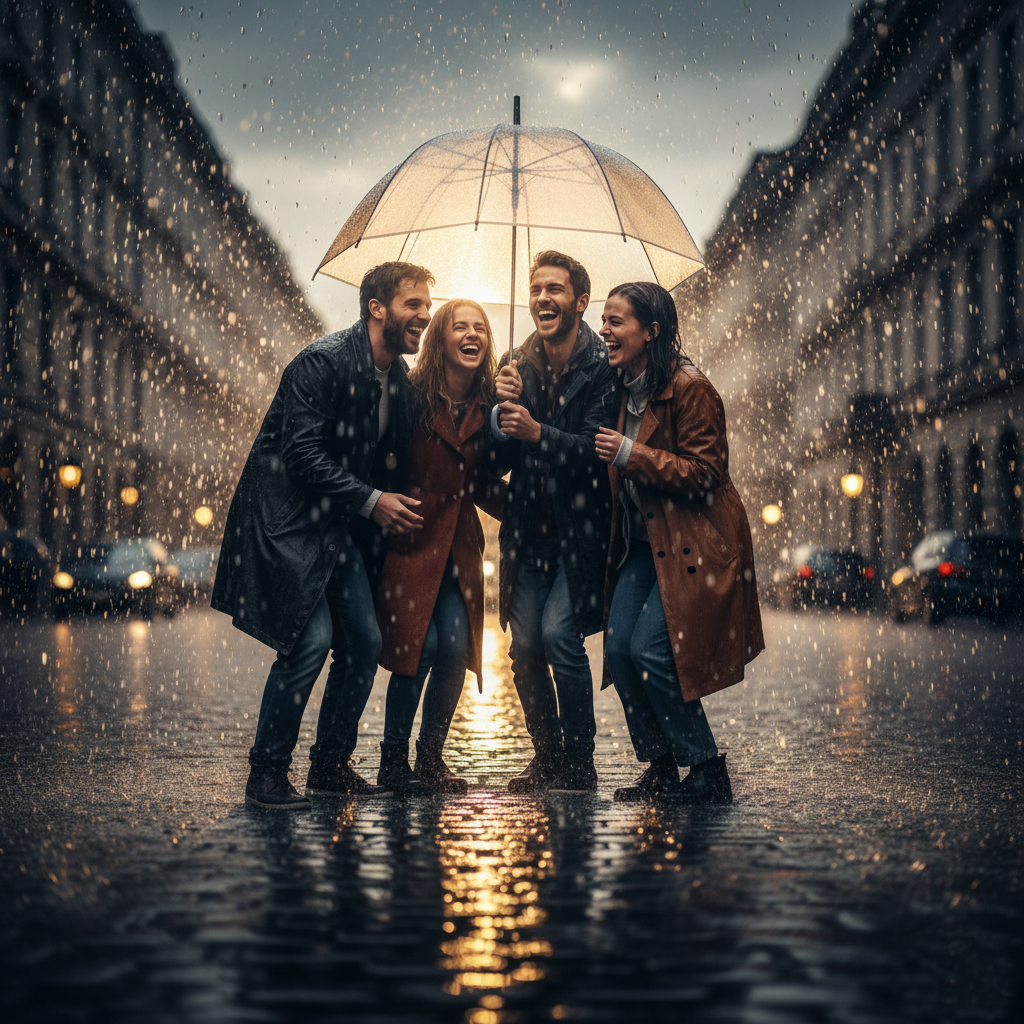
Photos taken in the rain possess a special magic that few conditions can match. The combination of water, diffused light, and a melancholic atmosphere creates images brimming with emotion and natural beauty. Posing in the rain not only conveys romance but also freedom and authenticity. Each drop can become part of the composition, adding texture and depth to the scene. This type of photography invites you to experiment with gestures, expressions, and movements that capture the essence of the moment, allowing spontaneity to take center stage.
Taking beautiful photos in the rain requires a balance between technique and attitude. The rain softens the light and envelops the subject in a cinematic atmosphere, ideal for portraits full of feeling. Poses can range from playful and joyful to introspective or poetic, depending on the desired style. The secret lies in letting the environment naturally influence your posture: getting a little wet, laughing underwater, or simply observing the raindrops can generate profound and genuine images.
Clothing and accessories also play an important role. A transparent umbrella, a colorful raincoat, or even soaked casual clothes add character to a photograph. Reflections on the wet pavement, diffused light, and raindrops suspended in the air create a perfect setting to capture genuine emotions. Each pose in the rain tells a different story, one in which the person connects with their surroundings and lets nature take its course.
1.Walking under the umbrella
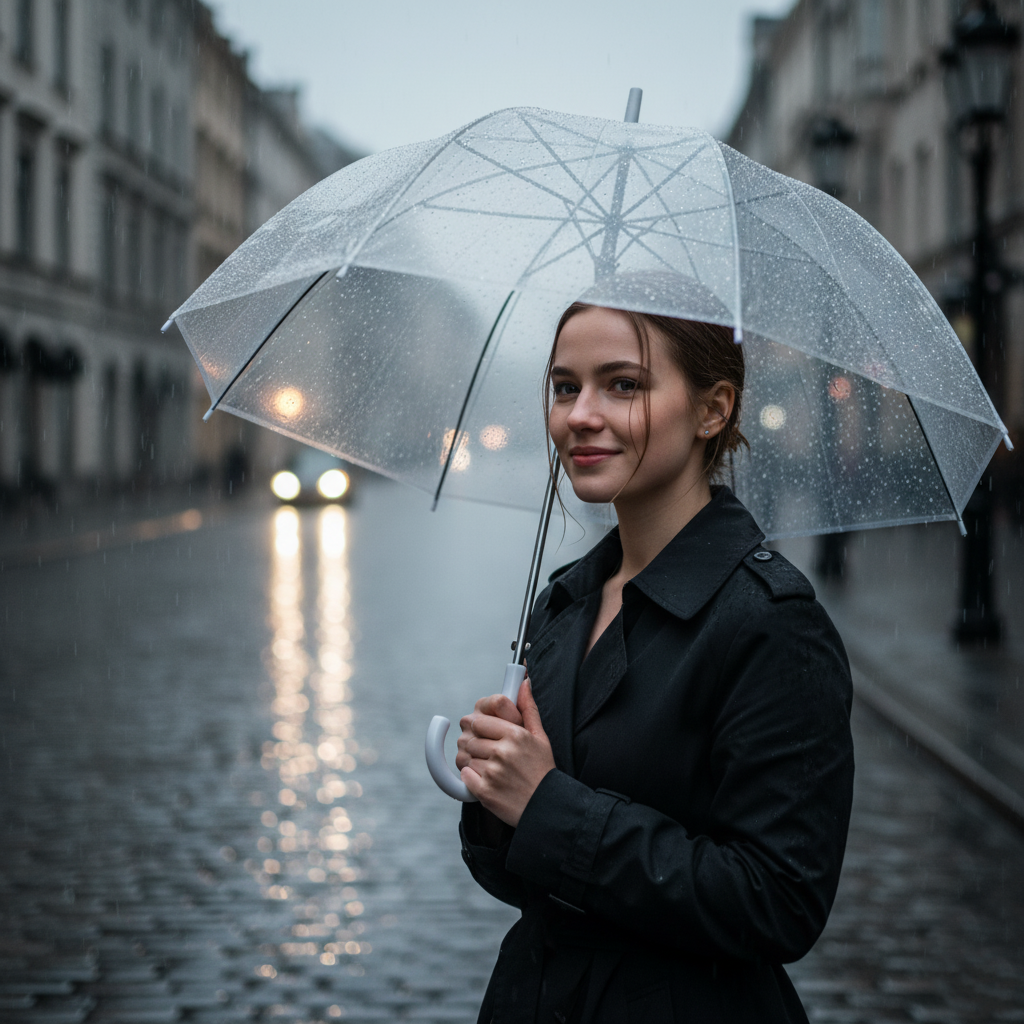
One of the most charming poses for capturing the essence of rain is walking under an umbrella. This gesture, as everyday as it is romantic, conveys movement, serenity, and a sense of calm that feels natural on camera. The act of walking adds dynamism to the image, while the umbrella becomes a visual element that frames the face and offers gentle protection from the rain, allowing it to blend into the surroundings without stealing the show.
To achieve this pose, it’s important to maintain a relaxed and natural posture. The umbrella should be held lightly, preferably to one side or slightly tilted, to allow the light to illuminate the face. The gaze can be directed toward the horizon or the ground, projecting introspection, or toward the camera with a subtle smile for a warmer and more spontaneous touch. The gait should be slow and fluid, allowing the movement of the body and clothing to complement the soft atmosphere of the scene.
The lighting on rainy days is often diffused, which enhances the softness of portraits. Taking advantage of the reflections on the wet ground and city lights, if the shoot is in a city, can add depth and color to the photograph. A transparent or neutral-toned umbrella helps keep the focus on the person, while vibrantly colored ones provide an attractive contrast in gray or cloudy scenes.
This pose is ideal for conveying peace, nostalgia, or hope. The balance between body movement, facial expression, and the rainy environment transforms this scene into an image full of life and sensitivity.
2. Jumping in puddles
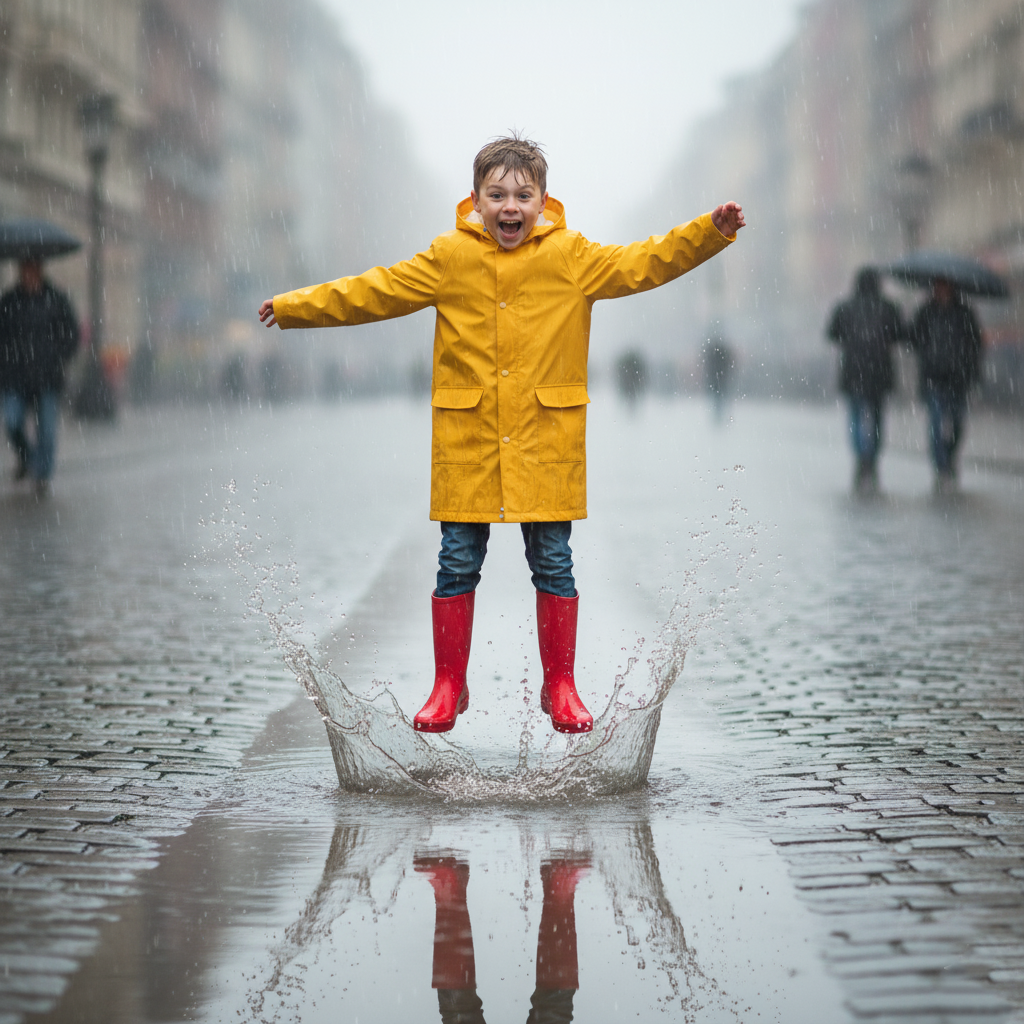
Nothing expresses childhood joy and freedom better than jumping in a puddle during the rain. This pose captures a moment full of energy and authenticity, ideal for conveying spontaneity, fun, and natural movement. Jumping in puddles not only creates a vibrant image but also allows you to play with the reflections of the water and the splashes that, frozen in mid-air by the camera, create a dynamic and unique composition.
To achieve a successful shot, the photographer must capture the exact moment the feet touch the water, generating an explosion of droplets around the subject. Facial expression is key: a broad smile or genuine laughter reinforces the feeling of happiness and carefree abandon. As for posture, outstretched or slightly raised arms help balance the body and add dynamism to the scene.
Clothing also plays an important role. Colorful rain boots and a raincoat that contrasts with the gray surroundings create a focal point that draws attention. Furthermore, if the ground reflects the sky or buildings, a visual effect is achieved that doubles the beauty of the moment. In natural outdoor settings, such as parks or country lanes, puddles reflect trees and clouds, adding texture and depth to the photograph.
This pose works especially well in sessions that aim to highlight authenticity, the enjoyment of life’s little pleasures, and a connection with nature. The rain ceases to be an obstacle and becomes an expressive element that brings the image to life.
3. Looking at the sky under the Rain
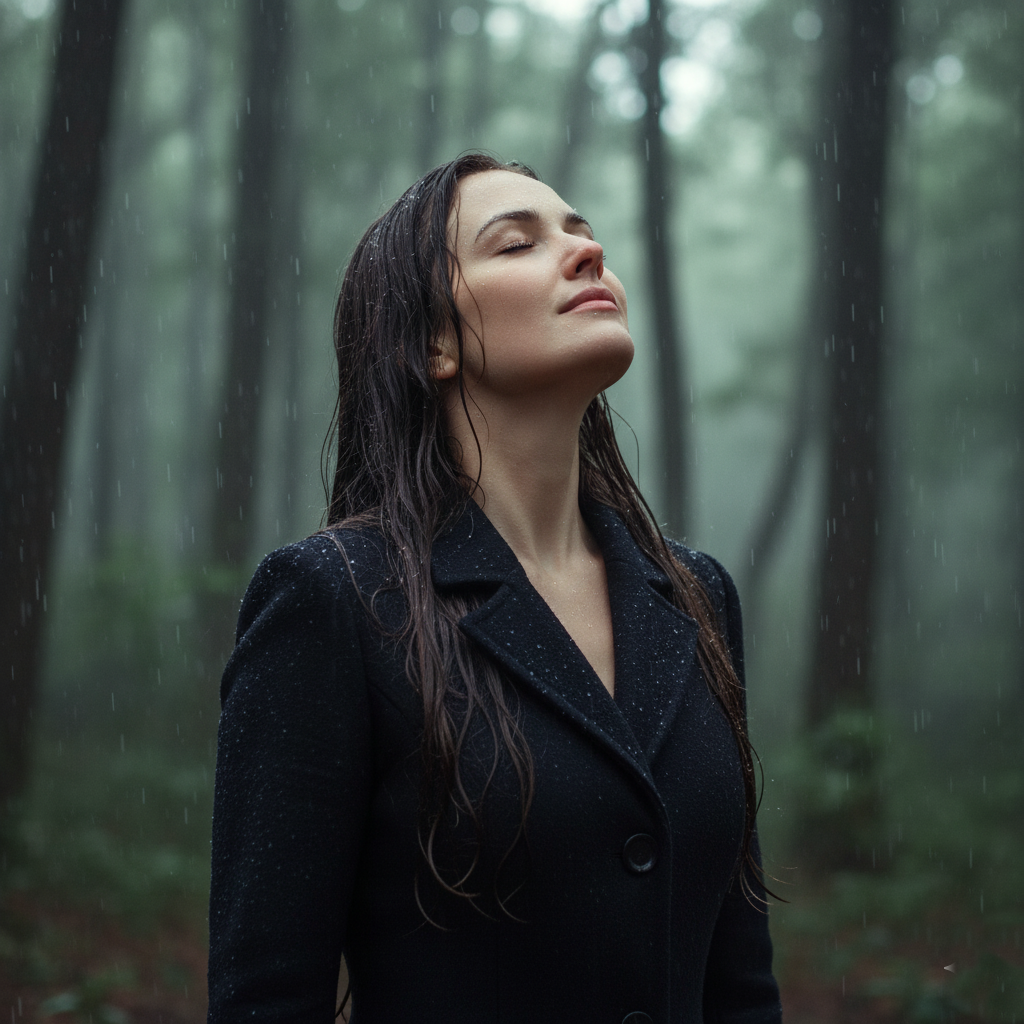
One of the most emotive and cinematic poses for capturing rainy days is to lift your face to the sky and let the raindrops fall freely onto your skin. This pose symbolizes freedom, a connection with nature, and a moment of pure introspection. The facial expression, usually relaxed or with a slight smile, projects a blend of surrender and serenity, as if the subject were enjoying a pause amidst the chaos.
The key to this idea is capturing the feeling of the moment. It’s not just about posing, but about feeling the rain. The gaze can remain closed to convey calm or open towards the sky to express wonder and hope. The body should be upright, with relaxed shoulders and arms loose or slightly open, inviting the rain to envelop the entire scene. This gesture communicates authenticity and vulnerability, two emotions that translate into profoundly human images.
The photograph can benefit from a natural background, such as trees or mountains, although it also works very well in urban settings if there are lights reflecting off the raindrops. The diffused light of the cloudy sky softens the contours of the face and creates an almost painterly atmosphere. If the photographer plays with a subtle backlight, the raindrops acquire a special glow, transforming the scene into a magical moment.
This pose is ideal for sessions that seek to convey profound emotions or visual narratives laden with symbolism. Looking up at the sky in the rain becomes a gesture of acceptance and gratitude, perfect for intimate or artistic portraits.
4. Running under the Rain
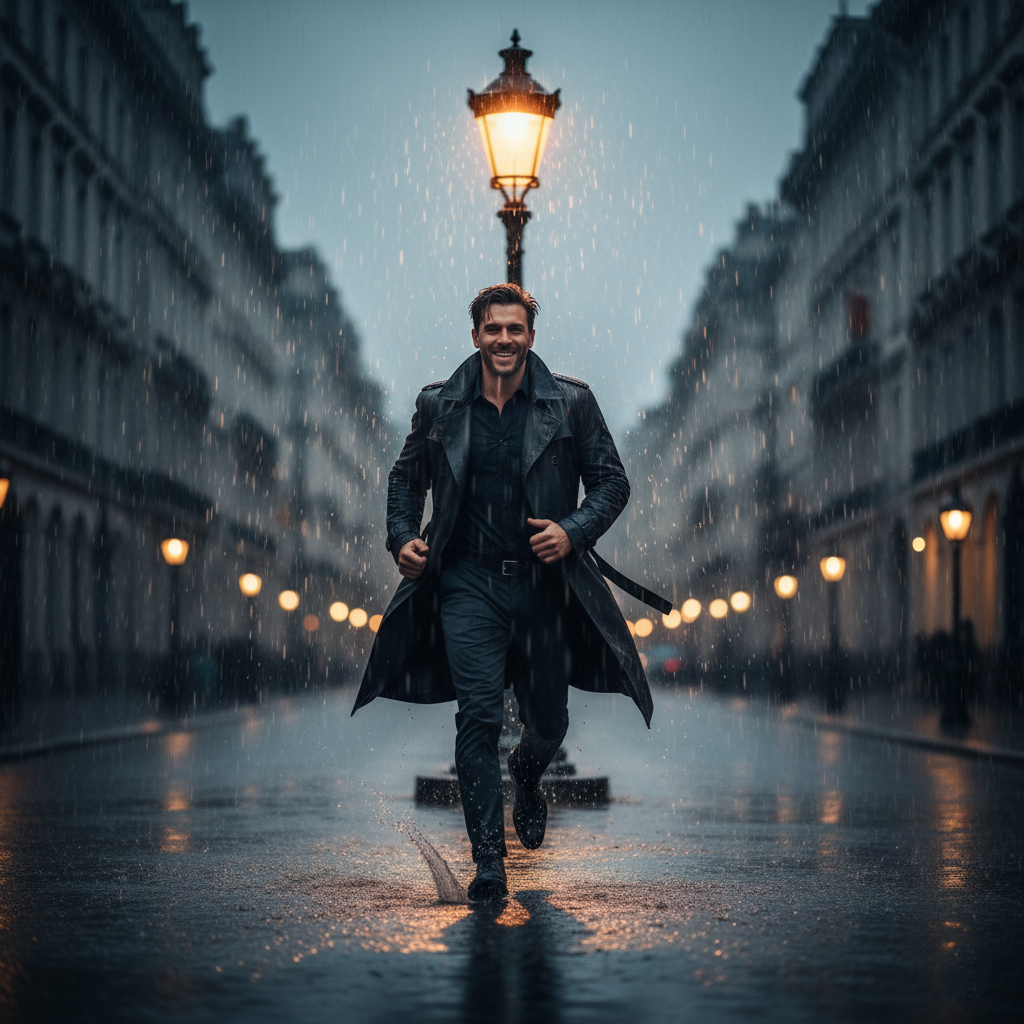
Capturing the movement of a person running in the rain is one of the most powerful ways to convey energy, emotion, and vitality. This pose combines dynamism and freedom, evoking the feeling of living in the moment without worrying about the weather. The act of running creates an intense visual narrative: it can represent a symbolic escape, a quest, or simply the joy of moving through the raindrops.
To achieve a convincing image, the body must reflect real movement. It’s not about faking a run, but about moving naturally, allowing the hair, clothing, and raindrops to follow the direction of the momentum. The camera, in this case, can play with the shutter speed: a fast exposure will freeze the raindrops in mid-air, while a slower one will leave streaks that give a sense of speed and continuity.
The pose can vary depending on the intention of the photograph. If a more emotional image is desired, the subject can look ahead with determination or close their eyes to convey enjoyment. On the other hand, if the idea is to capture a joyful scene, a smile or spontaneous laughter will reinforce the feeling of fun. The surroundings also play a role: a cobblestone path, an empty street, or an open field can all contribute different narrative nuances to the composition.
The contrast between the movement and the stillness of the wet landscape creates a poetic atmosphere. The rain, instead of being an obstacle, becomes a visual element that frames the emotion of the moment, enhancing the image’s authenticity.
5. Reflections on the wet Ground
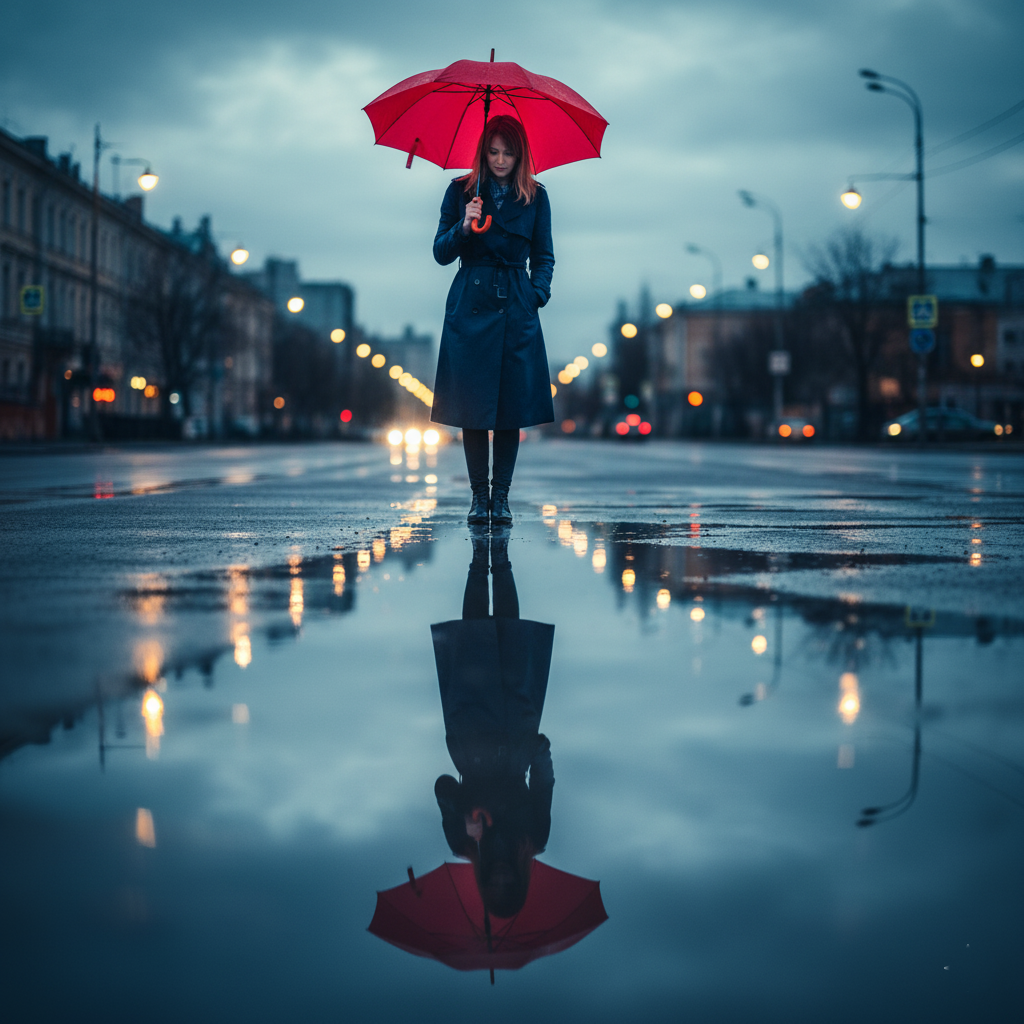
Reflections are one of the most fascinating elements that rain offers. Taking advantage of the shine on the wet ground to create artistic compositions is an excellent way to capture images full of depth and symbolism. This pose involves playing with perspective: the subject can be standing, sitting, or walking, while their reflection is clearly projected onto the pavement or a puddle, generating a visual effect that doubles the scene and transforms it into something poetic.
For this idea, the body position must be carefully considered. A relaxed posture, with arms slightly at the sides or hands in pockets, allows attention to be divided between the real figure and its reflection. Looking down, observing one’s own reflection, also works, adding an introspective and melancholic touch. The photographer can opt for a low angle to emphasize symmetry, or a diagonal shot that gives a sense of movement.
The key is to take advantage of the ambient light. After the rain, the wet surface acts as a natural mirror, reflecting light, colors, and silhouettes. In urban settings, neon signs and streetlights can create vibrant flashes, while in natural landscapes, reflections of the sky and trees lend a more serene aesthetic. The final image should strive for balance: the reflection not only complements the subject but also adds a second narrative dimension.
This pose conveys calm, reflection, and beauty in the everyday. It’s ideal for conceptual sessions or artistic portraits that aim to transform a simple rainy moment into a visually striking work of art.
Conclusion
Photographing in the rain is more than just capturing a wet environment or a gray sky; it’s about finding beauty in the unexpected, emotion in the ephemeral, and poetry in the movement of water. The five pose ideas we explore—walking under an umbrella, jumping in puddles, gazing at the sky, running in the rain, and playing with reflections—show how this natural phenomenon can become the best ally for an expressive image. Every drop, every reflection, and every gesture under the storm conveys a different story, a unique emotion that connects the viewer to the essence of the moment.
Rain provides a type of light that few natural conditions can offer. Its softness envelops colors, enhances textures, and creates a cinematic atmosphere that is difficult to reproduce artificially. That’s why photo sessions on rainy days invite you to experiment, break out of your routine, and let chance play its part. Poses in the rain don’t strive for static perfection, but rather for naturalness, feeling, and the connection between the subject and their surroundings.
Furthermore, rain has a symbolic power that transcends the visual. It can represent renewal, freedom, nostalgia, or joy. In each pose, the body becomes a channel for expressing these emotions, while the surroundings transform into a living, ever-changing stage. The best photographs aren’t those that avoid getting wet, but those that dare to embrace the weather as part of the story they want to tell.


