
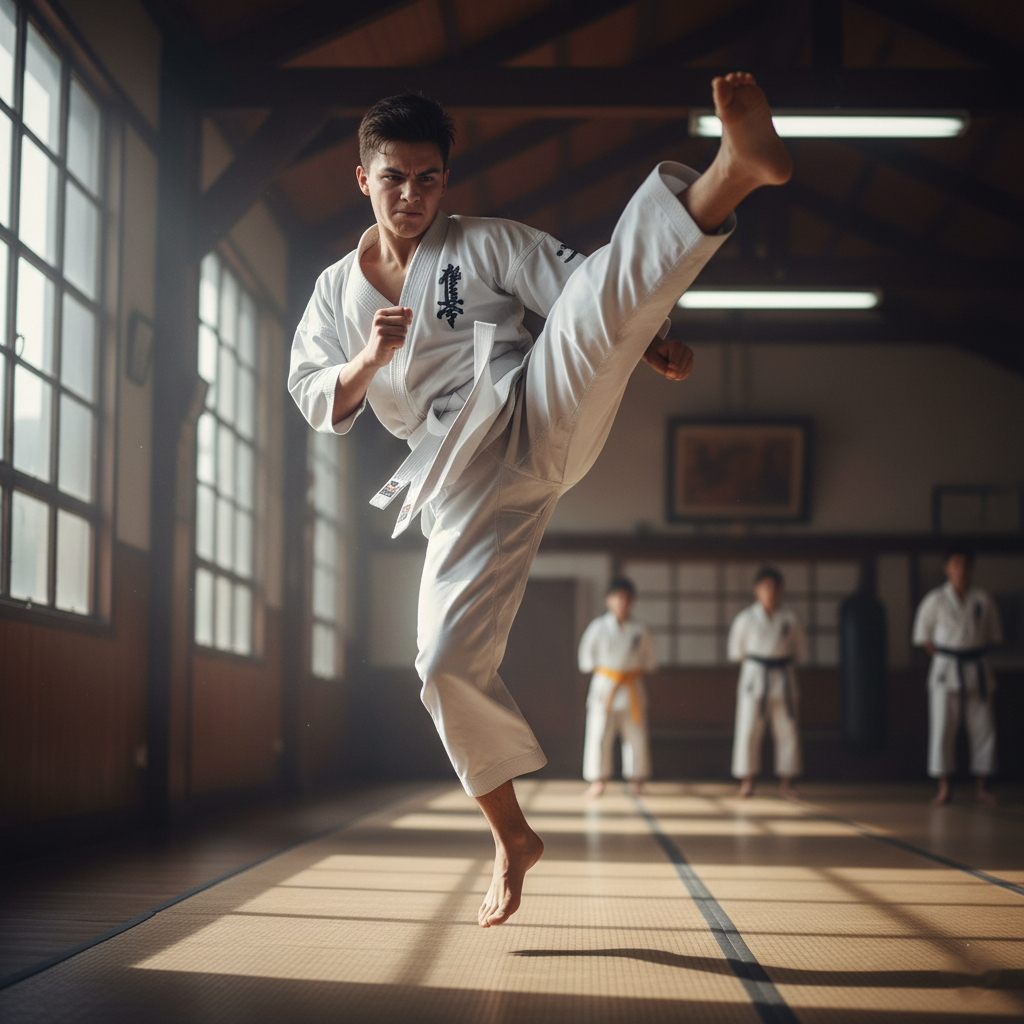
Karate is not only a martial art but also a discipline that combines strength, precision, and elegance. Capturing these qualities in photography requires poses that convey power, concentration, and movement, reflecting the essence of the sport. Karate photos can go beyond simple action: they can tell stories of training, overcoming challenges, and self-mastery, showcasing the intensity and dedication each practitioner brings to the discipline.
Each pose should highlight correct posture, balance, and coordination of movements. Through specific gestures such as katas, extended fists, or air kicks, the photograph can convey both physical and mental strength. Furthermore, facial expressions play a crucial role: a focused gaze or a determined expression can communicate more than the action itself.
The choice of setting also influences the aesthetics of the photo. From a traditional dojo with tatami mats and training weapons to outdoor settings that reflect discipline and harmony with nature, the background should complement the pose and reinforce the visual narrative. Appropriate lighting highlights muscles, clothing, and movements, increasing the drama and sense of movement.
Furthermore, karate photos offer a unique opportunity to capture the combination of elegance and power. Poses can range from dynamic, showcasing the impact of a kick or punch, to static, focusing on the karateka’s posture and concentration. Each image becomes a reflection of the dedication, passion, and discipline that characterize those who practice this martial art.
1. Combat-ready guard position
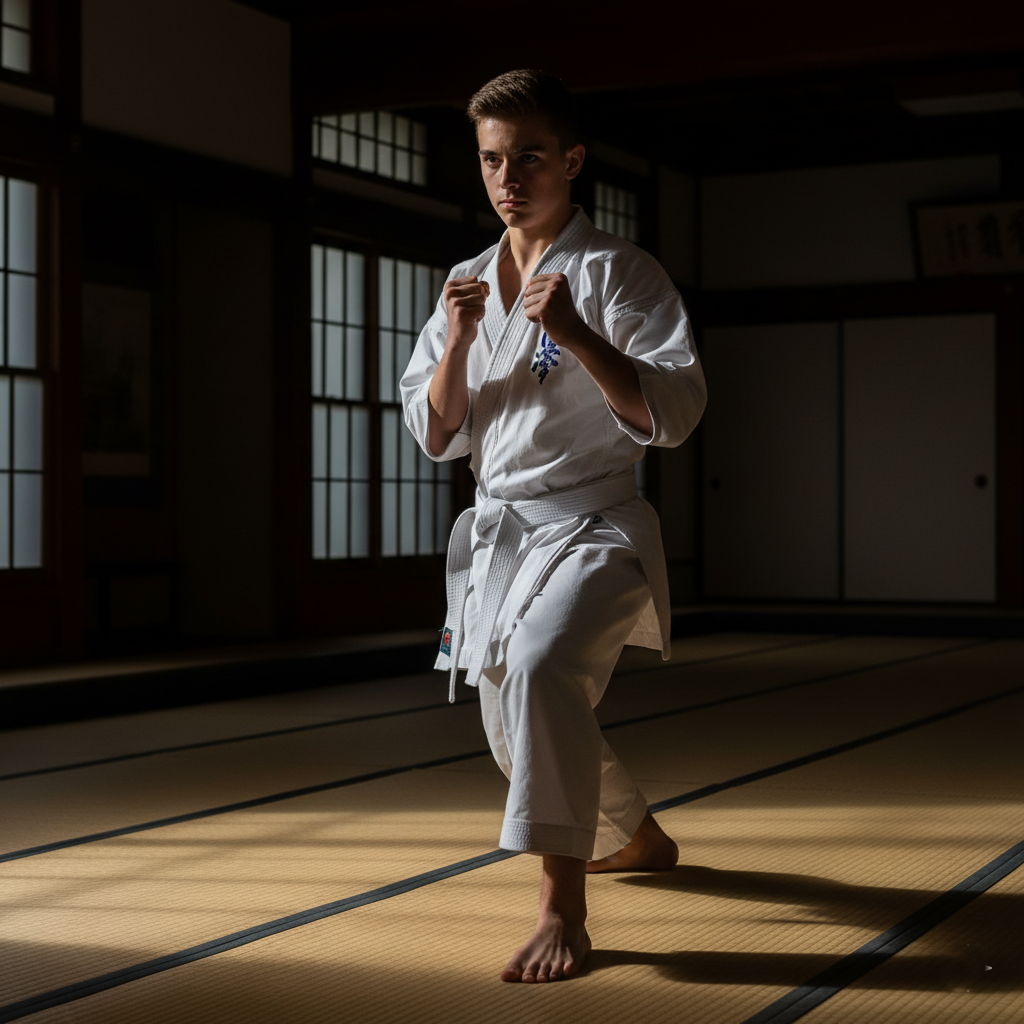
One of the most iconic poses in karate photography is the guard stance. This posture reflects concentration, balance, and readiness, conveying the practitioner’s discipline and strength. In this guard position, the karateka keeps their feet firmly planted on the ground, with knees slightly bent, while their fists are positioned in front of their face or body, ready to block or attack. This pose is not only visually powerful but also communicates control, confidence, and respect for the technique.
For the pose to be effective, it’s important to pay attention to body alignment. The gaze should be intense and focused, showing determination and concentration. The shoulders should be relaxed yet firm, avoiding unnecessary tension that disrupts the harmony of the pose. The kimono should be properly positioned, with the belt correctly knotted, as these details reinforce authenticity and respect for the discipline.
Lighting and framing are fundamental. Side lighting can accentuate the musculature, the folds of the kimono, and the shadows that add drama to the image. The background can be a classic dojo, with tatami mats and weapons in the background, or a minimalist space that focuses all attention on the karateka.
This pose works for both individual portraits and action shots, serving as a base for other, more dynamic poses. It’s ideal for conveying respect, preparation, and technical mastery, showing the viewer that karate is not only about physical strength, but also about mindset and discipline.
2. Executing a high kick
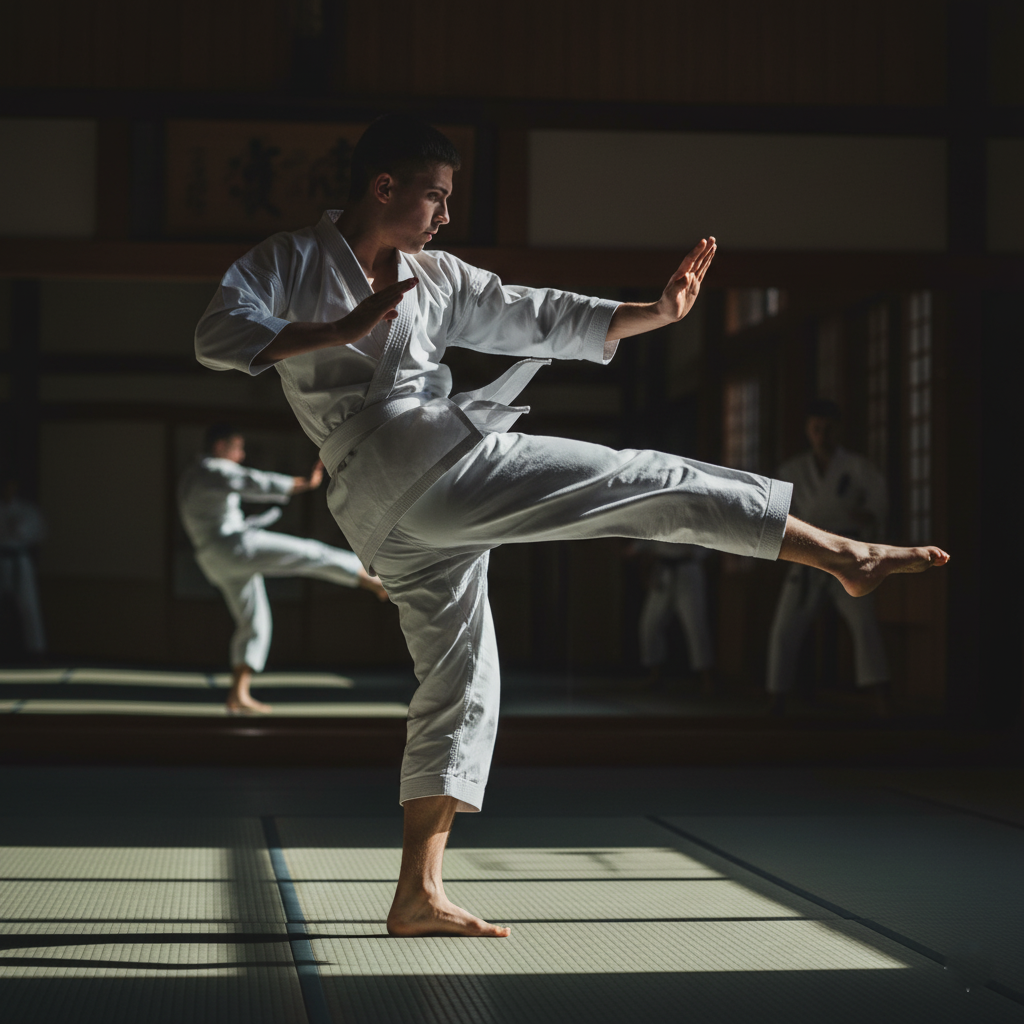
One of the most spectacular and dynamic poses in karate photography is capturing a karateka executing a high kick. This stance demonstrates strength, flexibility, and precision, showcasing both the practitioner’s power and control. A high kick, whether front or side, conveys action and drama, making it ideal for highlighting the technique and agility that characterize this martial art.
To achieve an effective pose, it’s important that the foot is fully extended and the toes are correctly pointed according to the discipline’s technique. The supporting leg should maintain balance, with the knee slightly bent for stability. The karateka’s gaze is usually directed toward the target of the kick, conveying concentration and determination. The arm position is also key: they can be extended for balance or close to the body for defense, depending on the technique being emphasized.
Framing and shutter speed are essential for capturing the movement clearly. A fast camera can freeze the exact moment of the kick, highlighting the power and precision of the movement. Side or overhead lighting accentuates the musculature and the folds of the kimono, adding drama to the image. The background can be minimalist or a dojo, avoiding distractions and ensuring that attention is focused on the karateka’s movement.
This pose not only demonstrates physical skill but also discipline and dedication, conveying the essence of karate as a complete martial art that unites mind and body.
3. Executing a block or defense
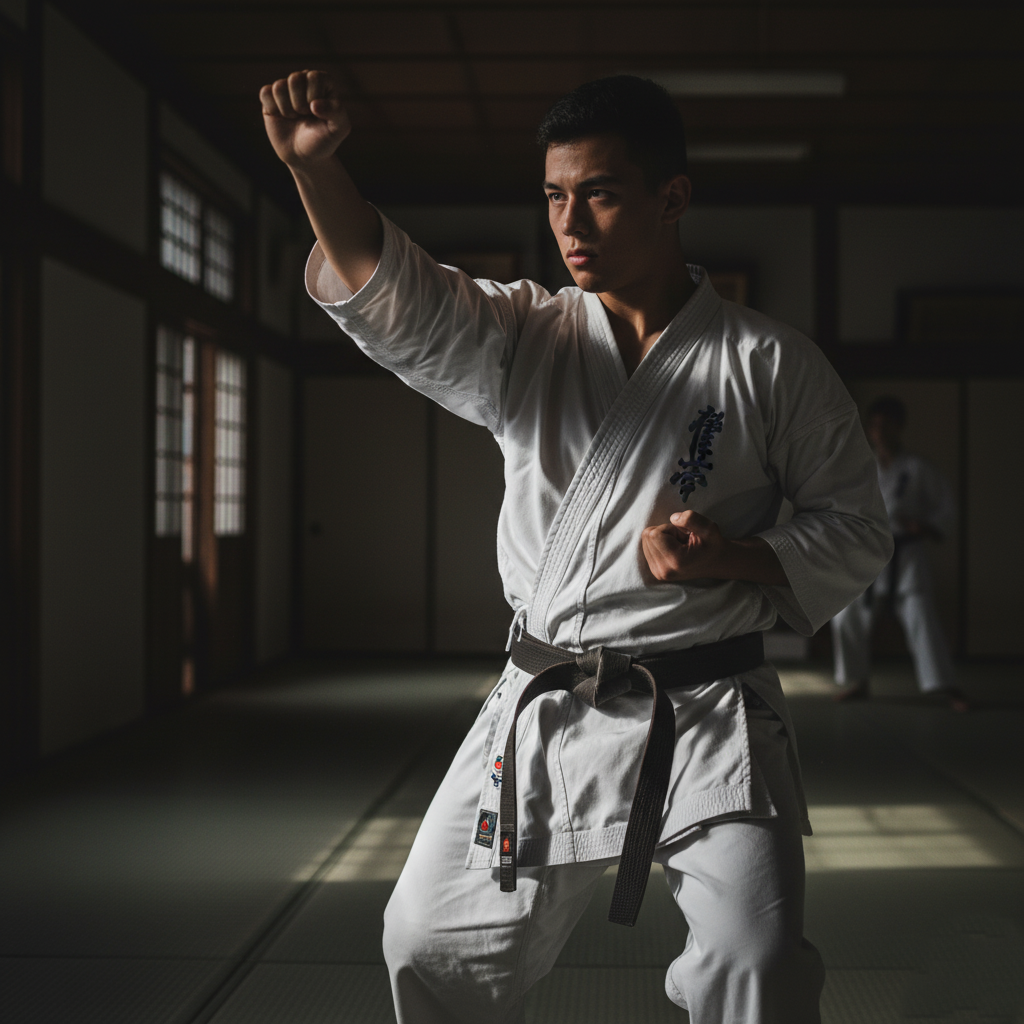
Capturing a block or defense in karate is one of the most expressive and meaningful poses for photographing this martial art. This stance reflects control, concentration, and technique, showcasing the karateka’s ability to react to an imagined or real attack. A good block conveys confidence and strength, while the overall posture communicates balance and body mastery.
For the pose to be authentic, the karateka must keep their feet firmly planted on the ground, with their legs slightly bent to ensure stability. The arm performing the block should be correctly aligned, with the palm or forearm oriented according to the technique, while the other arm remains in a defensive or balancing position. The gaze should be focused, conveying concentration and alertness, while the body remains firm yet relaxed to reflect control and fluidity.
Lighting is key to highlighting the strength of the stance and the musculature, especially with side or slightly overhead lighting that creates dramatic shadows. The framing can be at the karateka’s eye level or slightly tilted to emphasize the action and tension of the technique. Simple backgrounds, such as the dojo mat or a clean, uncluttered space, ensure that the focus remains on the gesture and expression.
This pose not only highlights the karateka’s physical skill but also the discipline and precision required for each movement. Furthermore, it’s ideal for conveying a sense of respect and mastery in martial arts photography, combining strength and aesthetics.
4. Posing in static kata
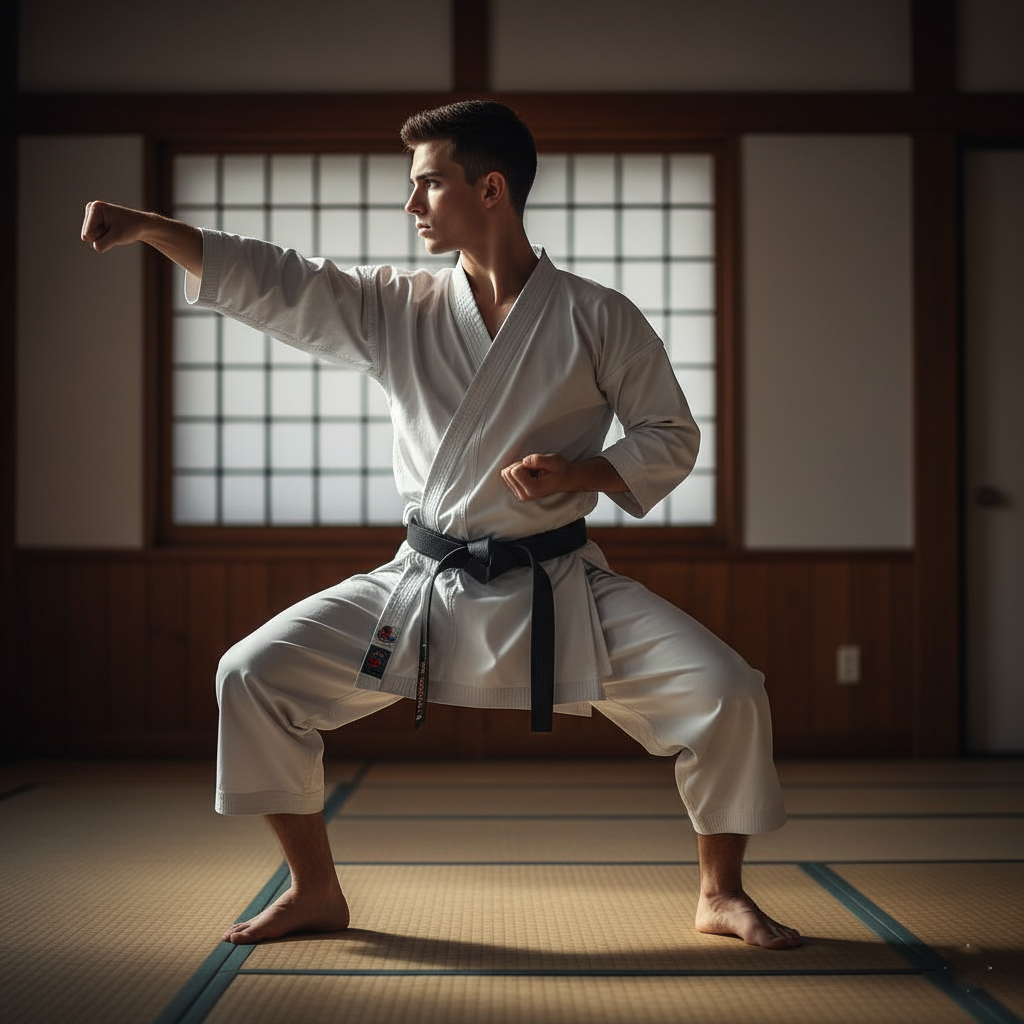
Kata is one of the most important practices in karate, and capturing a static moment during its execution results in photographs full of elegance and discipline. This pose reflects precision, concentration, and body control, showcasing the harmony between strength and technique that characterizes this discipline. A static kata allows the viewer to appreciate the posture, alignment, and intention behind each movement, even when the action is not in full motion.
To achieve an effective kata pose, the karateka must keep their feet firmly planted, knees bent if necessary, and back straight, conveying stability. The arms and hands should be positioned according to the kata’s form, whether in attack, defense, or transition stance, demonstrating technical accuracy. Facial expression is crucial: a focused gaze and a serious expression reflect respect and dedication to the discipline, reinforcing the photograph’s authenticity.
Lighting and framing are essential. Side or overhead lighting can highlight the folds of the kimono and the musculature, creating depth and drama. The background should be clean or minimalist, such as a dojo or an open space, so that all the attention is focused on the pose and gesture. The composition can capture the full body or a medium shot that emphasizes the arm and leg technique.
This pose is perfect for action portraits and for showcasing the discipline, control, and aesthetics of karate, conveying a message of strength and concentration combined with elegance.
5. A jump or a kick in Motion
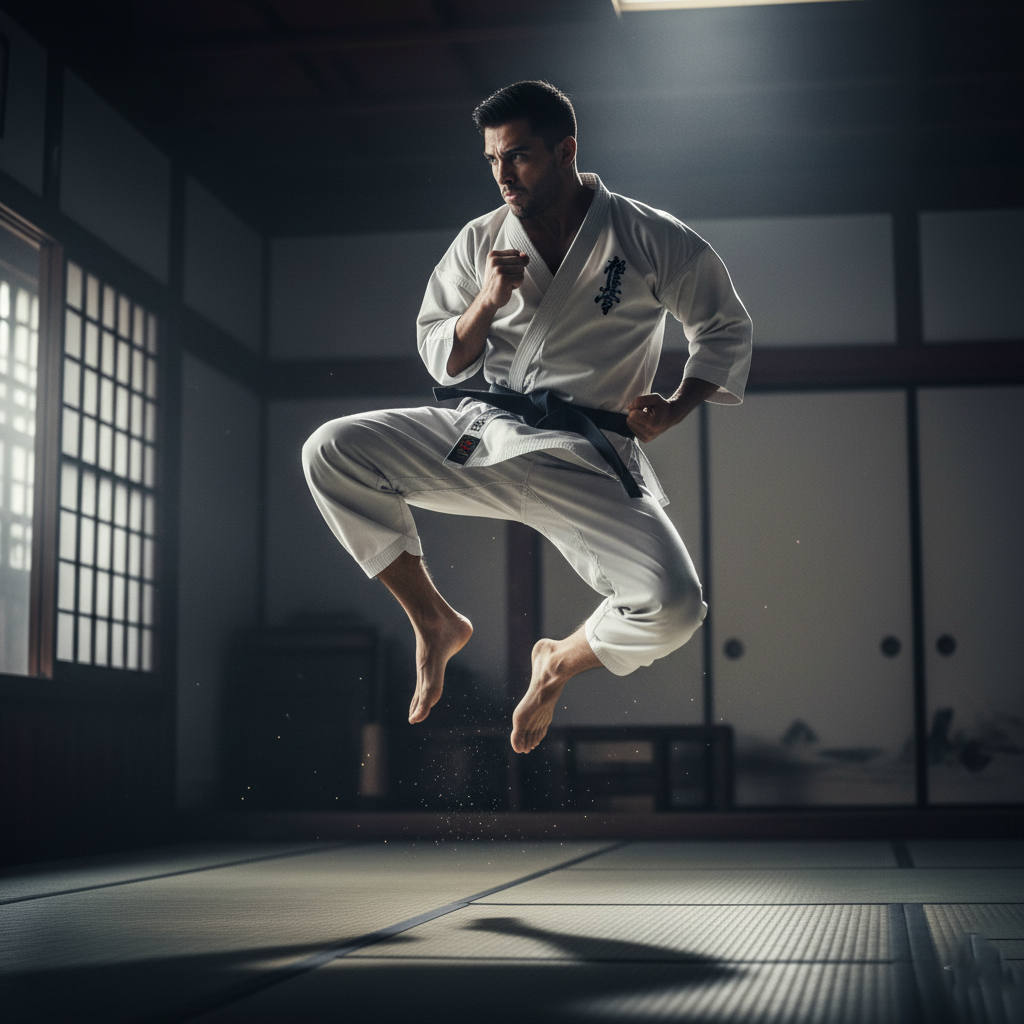
One of the most dynamic and spectacular poses in karate photography is capturing a jump or a kick in motion. This pose reflects strength, agility, and coordination, showcasing the karateka’s ability to execute techniques with precision and power. Unlike static poses, jumps or kicks in action convey dynamism and excitement, capturing the intensity and control that characterize this martial art.
For the pose to be impactful, the karateka should keep the kicking leg fully extended, while the supporting leg flexes to ensure balance. The arms are strategically placed to maintain stability and complement the action. The gaze should be focused on the target of the kick, conveying concentration and determination. It is essential to synchronize the technique with the moment of capture, using a fast shutter speed to freeze the movement and highlight the power of the gesture.
Lighting and background play an important role. Side or overhead lighting can emphasize musculature, the folds of the kimono, and the tension in the body. A simple background or the dojo’s tatami, slightly blurred, allows the action to take center stage, increasing the image’s drama.
This type of pose is ideal for showcasing not only physical prowess but also the karateka’s energy and fighting spirit. It captures the essence of movement and technical precision in a single instant, making the photograph impactful and expressive.
Conclusion
Karate photographs don’t just capture movements or techniques; they reflect the discipline, concentration, and dedication that characterize those who practice this martial art. Through the poses explored, from the guard stance to leaps in motion, it becomes clear that each posture has a purpose: to convey strength, precision, balance, and the mind-body connection. These images not only showcase the karateka’s physical skill but also their concentration and determination, fundamental elements of the practice.
The style of the photos can vary depending on the intention. Static poses, such as kata or guard stances, highlight elegance, control, and technique, while dynamic poses, such as air kicks or active blocks, capture the energy and power of the movements. Each approach allows the viewer to perceive the discipline of karate, whether through the visible strength in the muscles or the concentrated calm in the facial expression.
Lighting, backgrounds, and composition are essential to enhancing the visual narrative. Side lighting highlights the musculature and tension in the body; A simple background ensures that the focus remains on the action; and the right framing allows you to capture both the technique and the emotion of the moment. These elements work together to create images that impress not only with their technique but also with the story they tell.


