
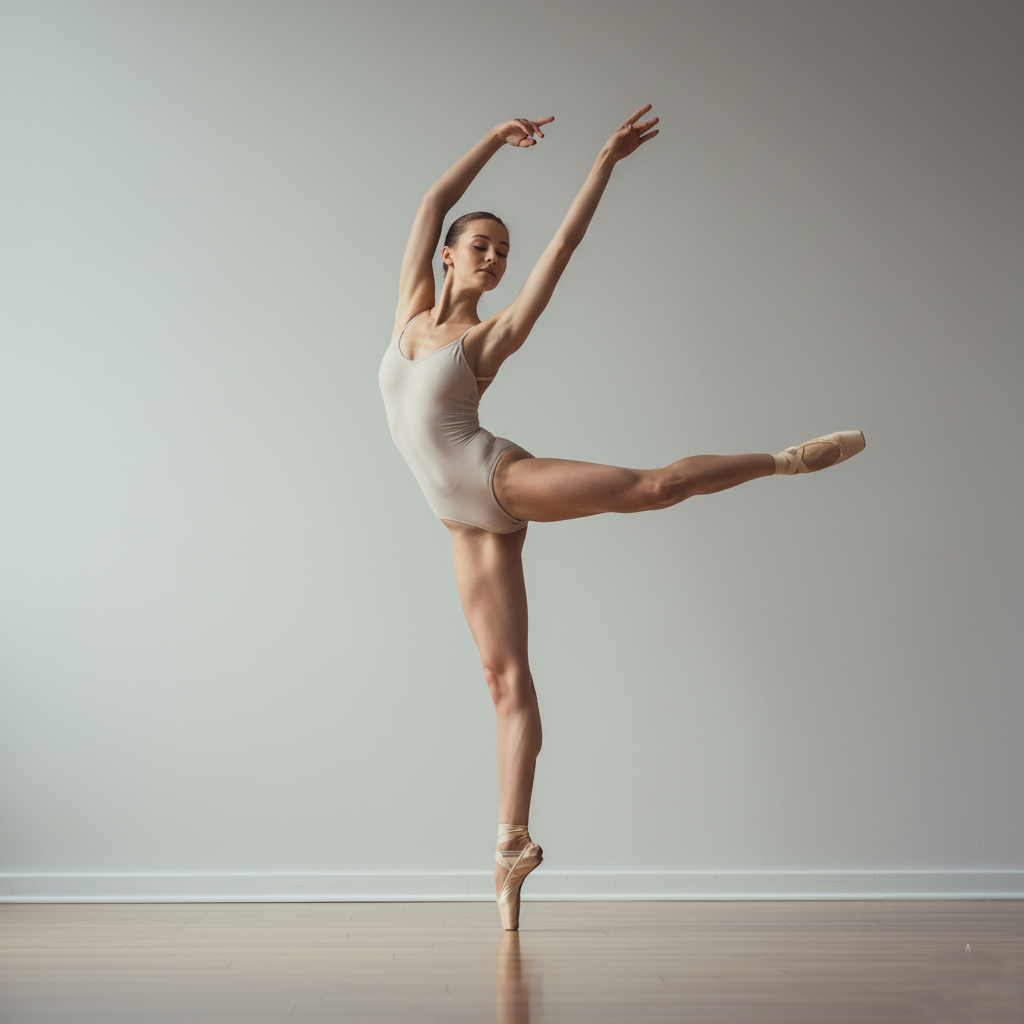
Dance is a universal language that conveys emotions, stories, and movement through the body. Capturing the essence of dance in a photograph requires not only technique but also sensitivity to freeze a moment that speaks for itself. Each pose can reflect strength, grace, passion, or delicacy, and it is precisely this ability to convey emotions that distinguishes a good photo from a truly memorable image. By exploring different poses for dance photography, a world of possibilities opens up to showcase the dancer’s personality, the aesthetics of their style, and the intensity of the moment experienced on stage or in the intimacy of a studio. Effective dance photography combines composition, lighting, and expression, but the dancer’s pose is the heart of the image. It is there that movement is transformed into visual art and where the viewer’s eye can perceive both technique and emotion.
Furthermore, the right poses can highlight specific aspects of each discipline, from the fluid elegance of classical ballet to the explosive energy of urban dance. It’s not just about showing the body in impossible positions, but about capturing the story the dancer wants to tell. In this sense, experimenting with different poses and angles is essential to finding images that are both dynamic and aesthetically appealing. Each photograph can become a reflection of the effort, passion, and dedication that dance entails. Creativity knows no bounds: a turn, a jump, or a subtle gesture can transform an everyday scene into an image full of life and expression.
1. The aerial pose or frozen jump
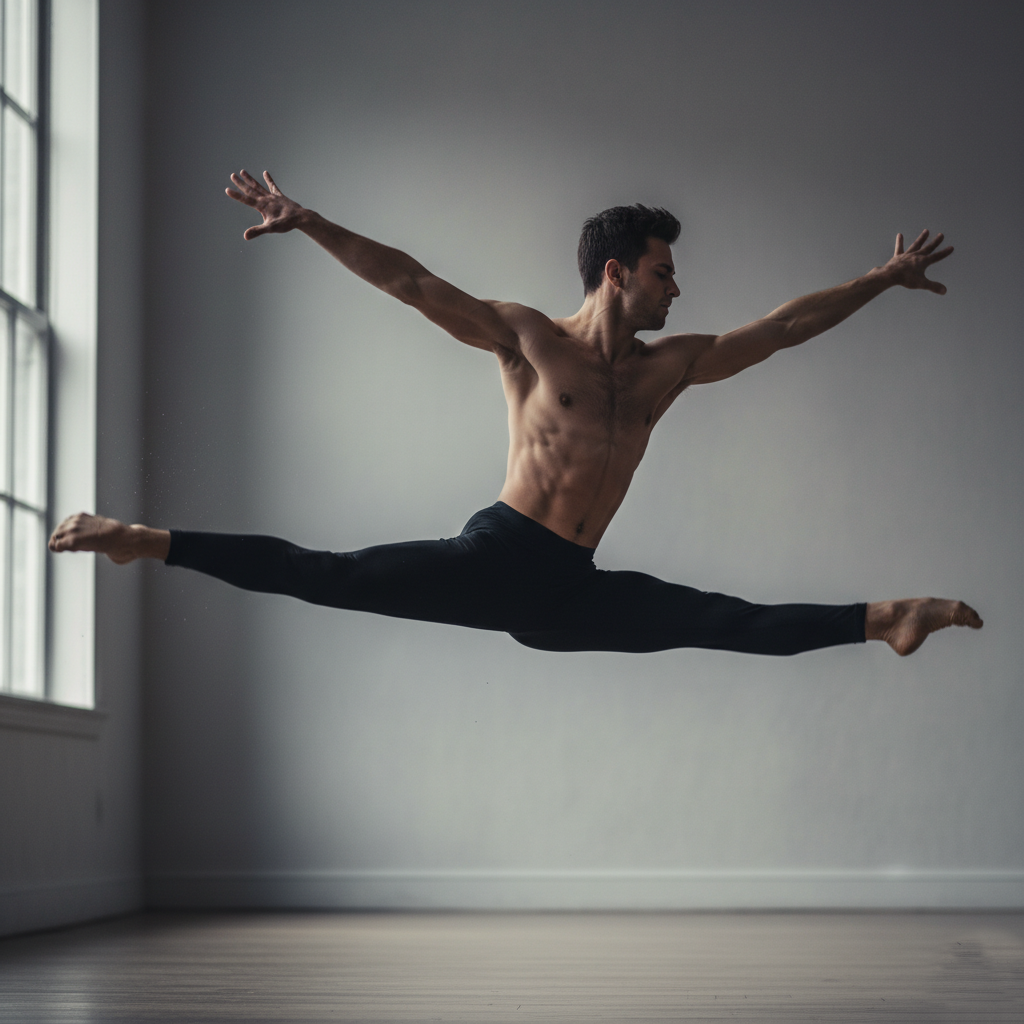
One of the most striking poses in dance photography is the one that captures a leap in mid-air. This pose not only conveys energy and dynamism but also reflects the dancer’s strength, technique, and precision. Freezing a jump requires coordination between the photographer and the dancer, seeking the exact moment when the body reaches its peak expression. The height, the extension of the legs, and the opening of the arms become visual elements that capture the viewer’s attention, conveying a sense of lightness and freedom that only dance can offer. This pose is especially powerful because it breaks the sense of gravity and allows the image to tell a story of effort, momentum, and contained emotion in a single instant.
Furthermore, a well captured jump can be adapted to different dance styles. In ballet, for example, it can showcase an aerial plié or a grand jeté, highlighting the elegance and elongation of the body; in contemporary dance, a jump can express rebellion, strength, or surprise; and in urban dance, it can reflect energy, rhythm, and attitude. To achieve the desired effect, the choice of background, lighting, and the dancer’s gaze direction are crucial. The aerial pose invites experimentation with photographic composition, allowing photographers to play with shadows, lines, and diagonals that enhance the sense of movement and depth. It also challenges the photographer to capture the harmony between the body and the space, creating images that seem to come alive on their own.
2. Balancing on one foot
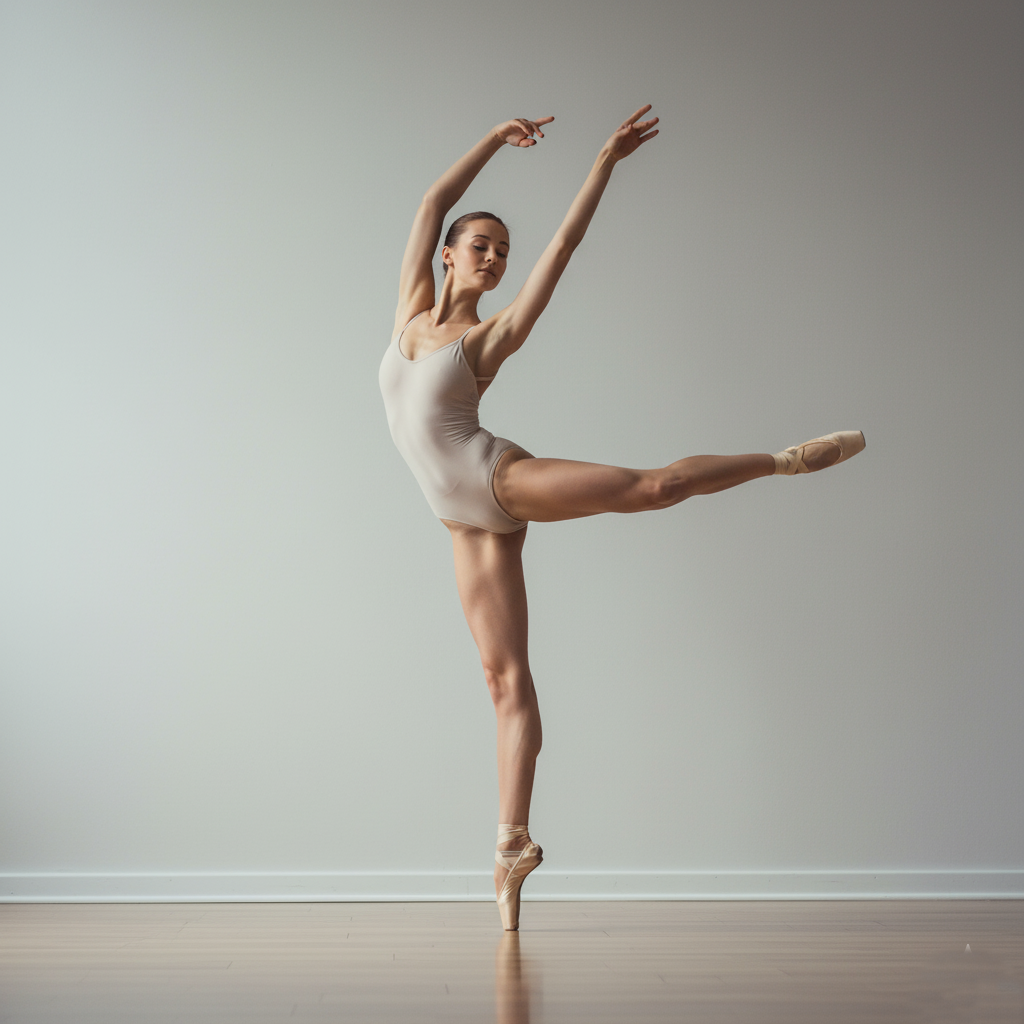
Another pose that lends great visual impact to dance photography is the one in which the dancer stands on only one foot, displaying control, stability, and grace. This type of pose highlights the body’s strength and the precision of the movements, and often conveys a sense of elegance and delicacy that is captivating to the viewer. Maintaining balance on one foot requires concentration and technique, as every muscle contributes to the stability and harmony of the posture. Photographing this pose allows the photographer to emphasize the body’s lines, the extension of the limbs, and the fluidity of the movements, showcasing not only the dancer’s physical ability but also their artistic expressiveness.
Balancing on one foot can take many forms depending on the dance style. In ballet, it is often accompanied by raising the other foot to pointe or relevé, creating an elegant line that elongates the figure and emphasizes classical posture. In contemporary dance, the raised leg can curve more freely, while the arms and torso create diagonals that add dynamism and visual tension. Even in urban styles, this pose can be transformed into a dramatic gesture, emphasizing attitude and stage presence. The key is capturing the exact moment when the body maintains that perfect suspension, where each part contributes to a balanced and harmonious composition. Lighting, framing, and the direction of the gaze are essential to conveying strength, delicacy, and emotion.
3.The spinning or pirouette pose
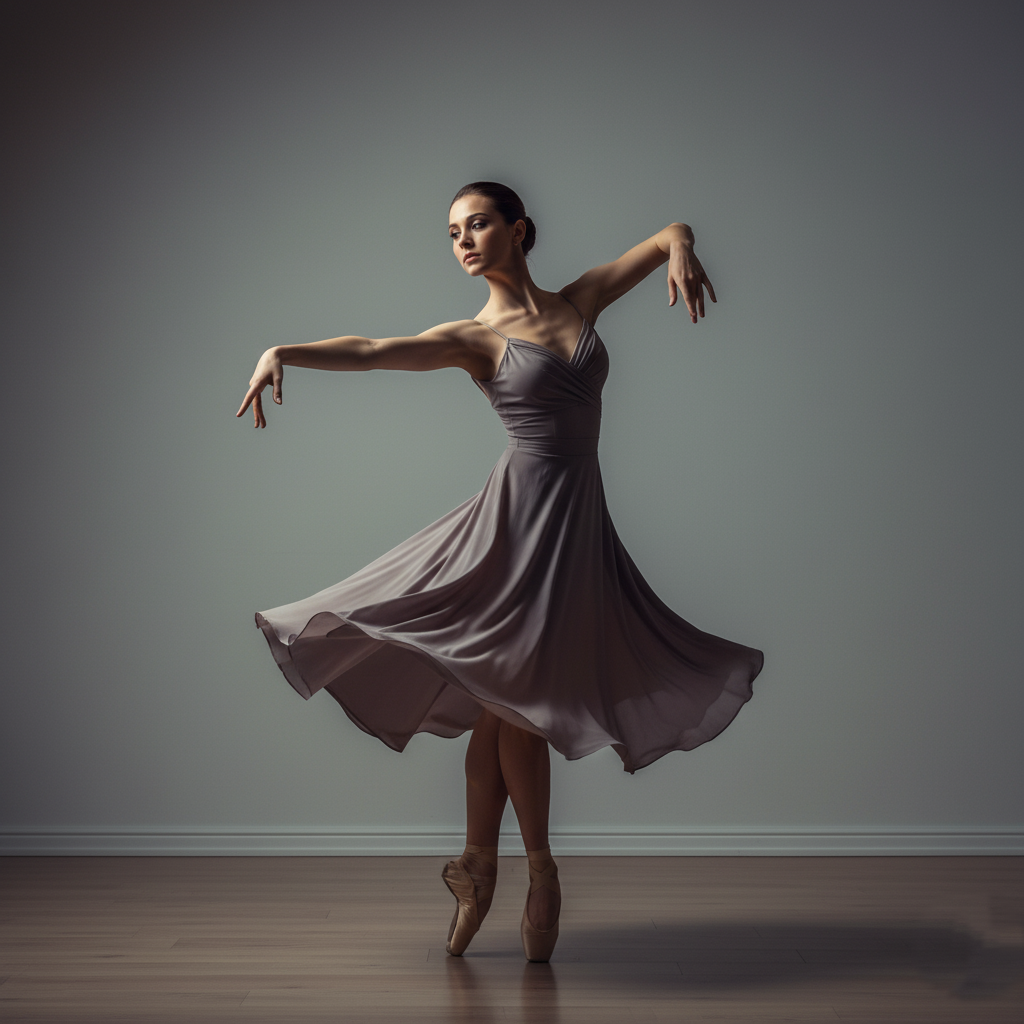
The turn is one of the most expressive poses in dance photography, conveying movement, energy, and fluidity in a single instant. Capturing a frozen pirouette allows the viewer to perceive the dancer’s grace and skill, showcasing how the body moves with harmony and control. This type of pose is ideal for highlighting the technique and aesthetics of dance, as it combines torso twist, leg extension, and arm positioning into a visually compelling whole. Furthermore, a well-captured turn can suggest a narrative: the sense of continuous movement can tell stories of emotion, freedom, or passion without words.
Depending on the dance style, the pirouette can take different forms. In classical ballet, the turn might be an enroulé or a pirouette, where perfect line and focus on the body’s axis are fundamental; in contemporary dance, turns can be freer and more creative, with unexpected twists and arm movements that add expressiveness; and in urban dance, a turn can be dynamic and energetic, displaying speed and power. For photography, capturing a pirouette demands precise timing, sharp focus, and sometimes the use of fast shutter speeds to freeze the motion while maintaining a sense of lightness and fluidity. Composition also plays a crucial role: the direction of the gaze, the movement of the hair, and the position of the limbs can transform the pirouette into an image that seems to flow beyond the frame.
4. Floor work
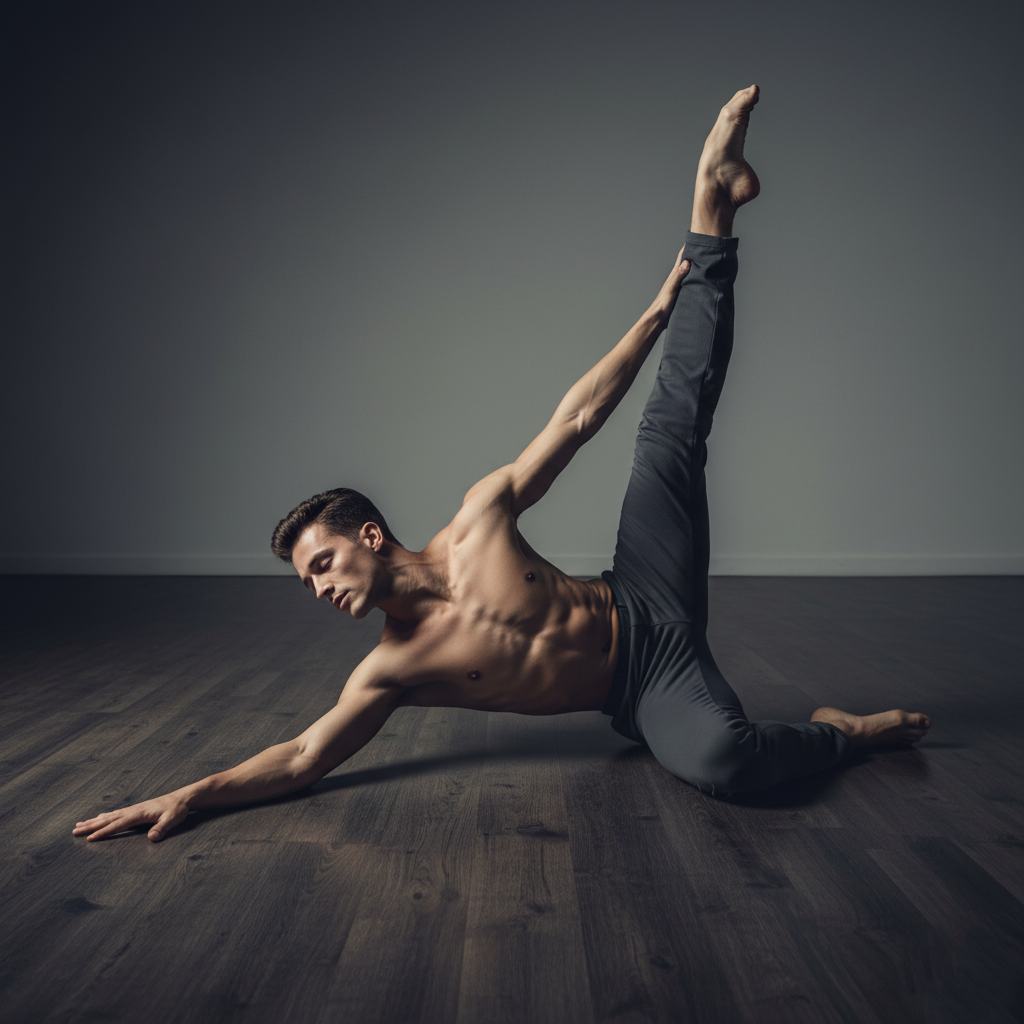
Dance isn’t confined to the air or the feet; many disciplines, especially contemporary and jazz, utilize the floor as an expressive element. Floor work allows for the exploration of angles, lines, and forms that wouldn’t be possible standing, adding variety and depth to dance photography. This pose conveys closeness, intimacy, and strength, showing the dancer in direct contact with the space. Every floor pose, whether reclining, in a partial support position, or performing extensions, reflects control, flexibility, and expressive capacity, becoming a powerful visual resource for capturing subtle or dramatic emotions.
Floor work offers endless compositional possibilities. For example, an extended arm, a bent leg, and a gaze directed toward the camera can create a dramatic effect that captures the viewer’s attention; an arched body can convey tension, effort, or delicacy; and the interplay of skin with light and shadow creates a visual effect that emphasizes form and volume. This pose also allows the photographer to experiment with unusual angles, close-ups, or overhead shots, making the image more dynamic and artistic. It’s ideal for conveying deep emotions, as contact with the ground often suggests vulnerability, introspection, or a connection with the environment.
5. Body language and gestures
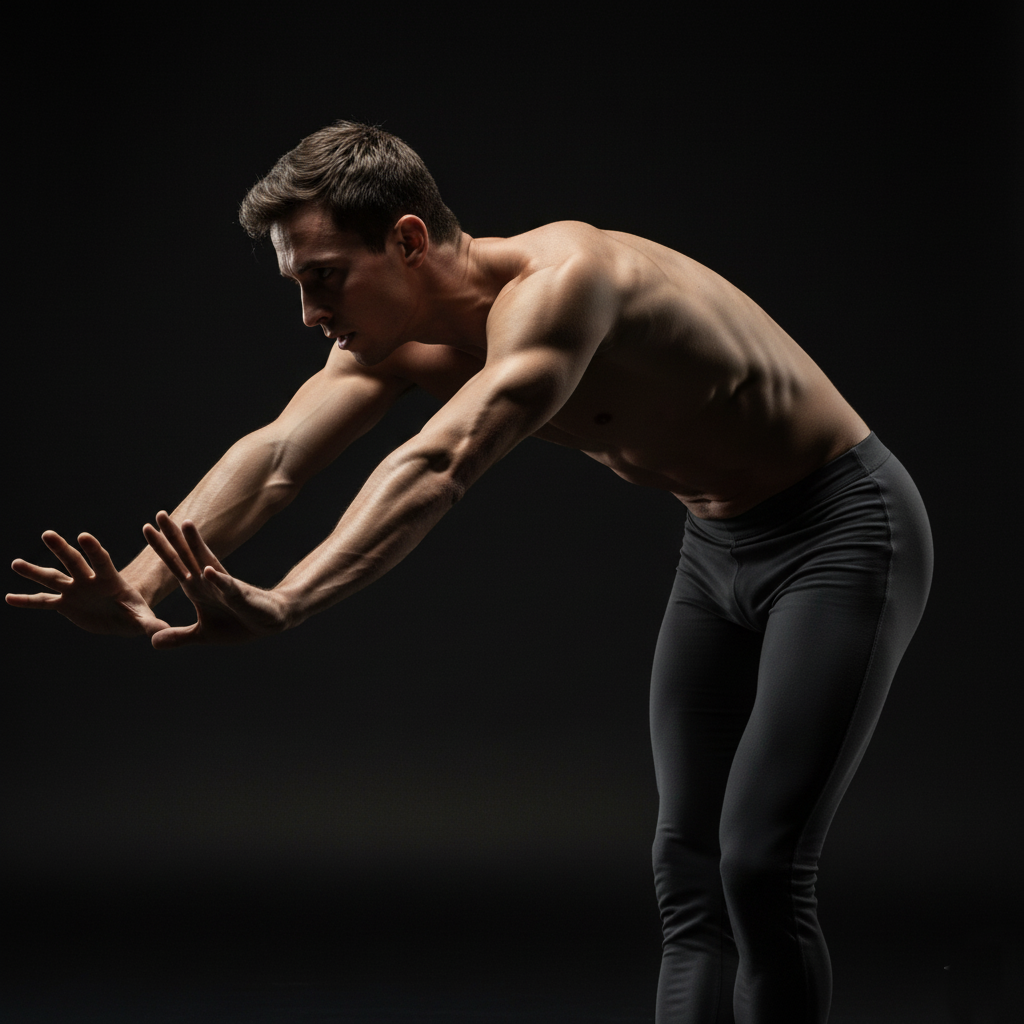
Beyond leaps, turns, and balances, dance photography can also focus on body language and gestures, capturing emotions through subtle movements and dramatic poses. This type of pose centers on conveying a story, feeling, or mood through body position, muscle tension, and gaze direction. Unlike technical poses, the most important element here is the emotional connection the dancer communicates, whether through a hand gesture, a torso tilt, or the curve of the back. The power of these images lies in their ability to make the viewer feel what the dancer is experiencing, transforming each photograph into a reflection of art in its most human and expressive form.
Body language can take many forms depending on the dance style. In contemporary dance, a slow movement with outstretched arms and open hands can convey vulnerability or surrender; in urban dance, a leaning posture with emphatic gestures can reflect attitude and energy; and in ballet, an arched torso with a forward gaze can suggest elegance, melancholy, or serenity. The key to capturing this pose lies in attention to detail: the position of the fingers, the tension of the muscles, the direction of the eyes, and the body’s interaction with light and space. Through these images, the photographer can create compositions that tell a complete story, where movement blends with emotion and technique becomes a vehicle for expression.
Conclusion
Dance photography is an art that goes beyond simply capturing movement; it’s about freezing emotions, stories, and the very essence of the dancer in a single, powerful moment. The five pose ideas we explore—the aerial leap, the one-legged balance, the pirouette, floor work, and body expression—offer different ways to convey energy, elegance, and feeling, each with its own unique visual and narrative power. Experimenting with these poses allows the photographer to discover new perspectives and ways to highlight both the dancer’s technique and expressiveness, resulting in images that are not only aesthetically pleasing but also emotionally impactful.
By combining these poses with good composition, appropriate lighting, and thoughtful framing, each photograph can be transformed into a work of art. Creativity plays a crucial role: it’s not just about reproducing familiar movements, but about exploring how every gesture, every line, and every angle can tell a unique story. Even the smallest details, such as the direction of the gaze, the tension of the muscles, or the interaction with the space, contribute to the image’s narrative strength. Thus, dance photography becomes a bridge between ephemeral movement and the permanence of the image, where each pose captures an unrepeatable moment that reflects dedication, passion, and artistry.
Ultimately, these poses invite photographers and dancers to experiment and collaborate, finding the perfect balance between technique and emotion. From the power of a leap to the subtlety of a gesture, each pose offers opportunities to express creativity and tell stories through the image. By exploring, rehearsing, and capturing these poses, one can create a dance photography portfolio that not only documents movement but also conveys the intensity, beauty, and emotion that only dance can offer.


