
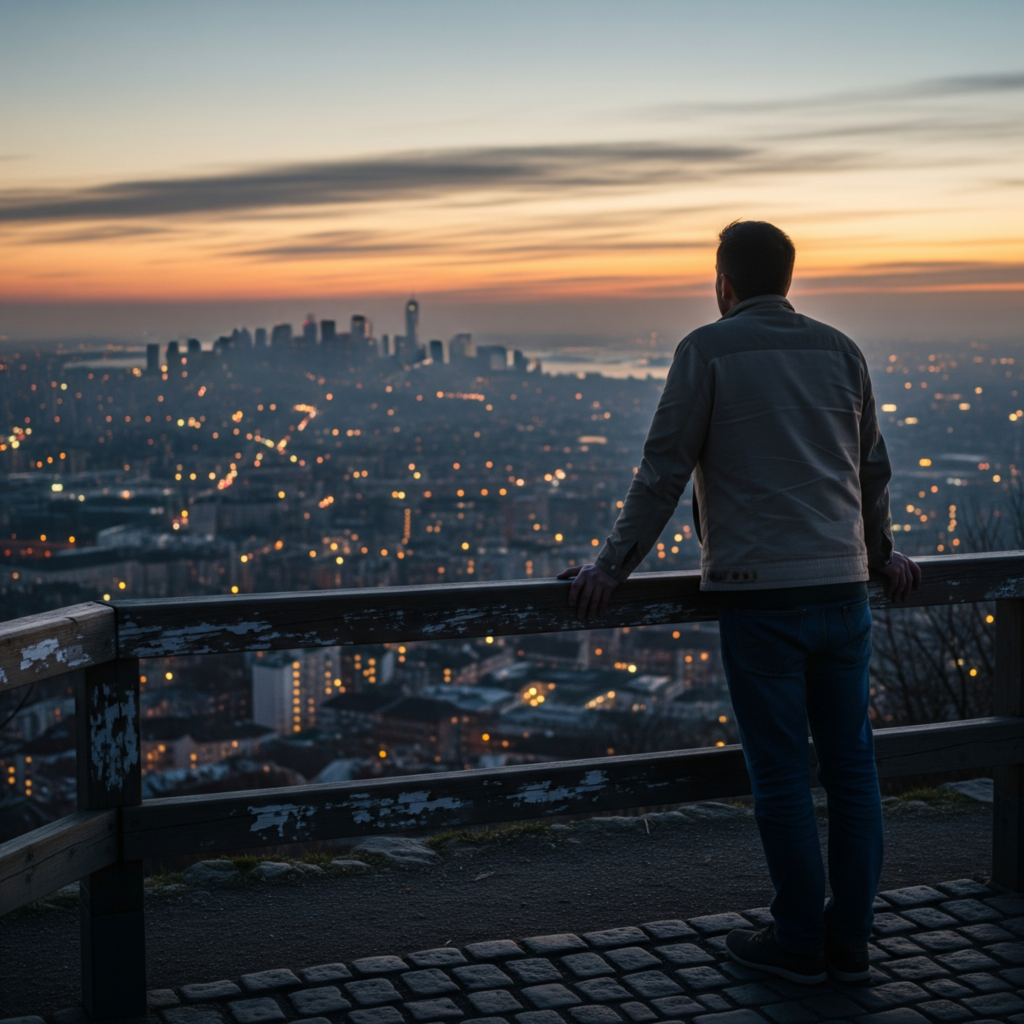
Back-facing photographs have become a very popular trend in artistic photography and on social media. These poses convey a sense of mystery and subtlety, inviting the viewer to imagine the story behind the image without showing the person’s face. They also allow photographers to highlight not only the surroundings or landscape, but also the details of the posture, silhouette, and body language.
When someone turns away from the camera, a different narrative is automatically generated: it can be a moment of contemplation, freedom, intimacy, or even nostalgia. Interestingly, these poses adapt to different photographic styles, from urban portraits to nature shoots, fashion sessions, travel, or even casual photos at home. The versatility of this technique lies in its ability to communicate emotions without showing a facial expression.
On the other hand, posing with your back to the camera is also helpful for those who don’t feel entirely comfortable in front of a camera or who prefer to maintain a certain degree of privacy. This style allows them to participate in the photograph in a more relaxed way, without worrying about smiling or maintaining a specific expression.
In this article, we’ll explore five creative ideas for taking photos of your back that are not only aesthetically pleasing but also tell a story. Each suggestion will be accompanied by a detailed description to help you visualize the scene and experiment with your own poses. Get ready to discover how to transform a simple back turn into a stylish and personal visual element.
1. Walking into the Horizon
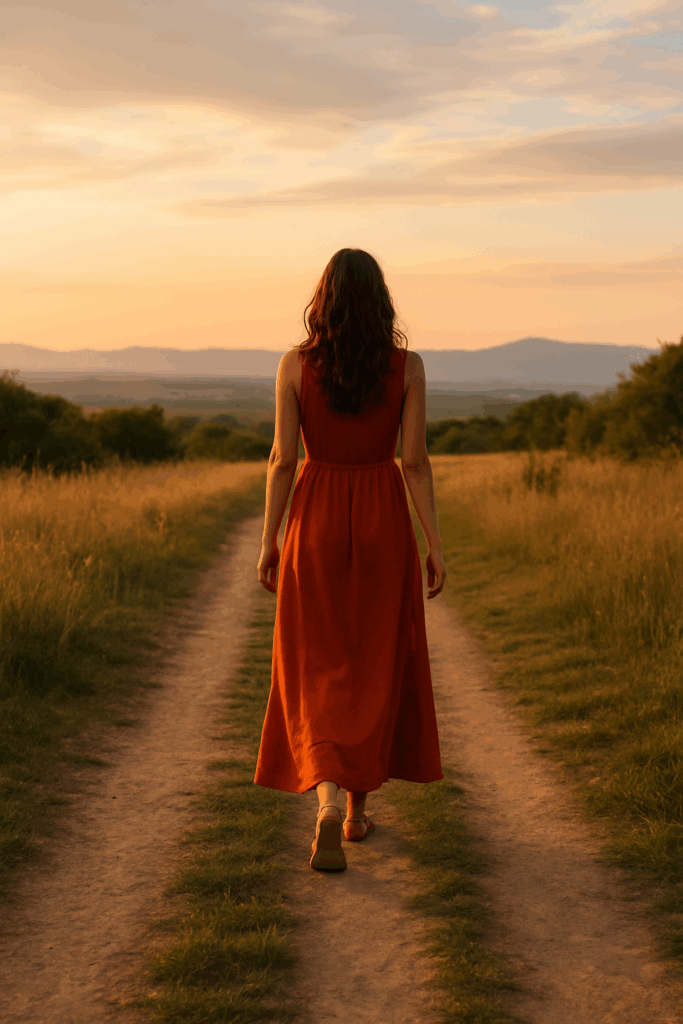
One of the most charming and natural poses for back to back photos is capturing the moment you walk toward the horizon. This type of photograph conveys movement, freedom, and a sense of embarking on a journey not just physical, but also emotional. The key to this pose is maintaining a relaxed posture, letting your body sway naturally as you move forward. Your arms can hang loosely at your sides or even crossed behind you, depending on the vibe you want to give the image.
This style works perfectly in expansive settings, such as a beach at sunset, a path lined with trees, a mountain trail, or even a city street with buildings that guide the perspective. Composition plays a fundamental role, as the horizon line or the path becomes a frame that directs the viewer’s gaze toward you and, at the same time, toward the unknown.
An interesting detail is to play with your clothing or accessories. For example, a long dress billowing in the wind, a travel backpack, or a hat can add an extra narrative touch to the photo. Furthermore, walking lightly, as if there were no rush, lends the image a more contemplative and poetic air.
The photograph not only becomes a memento of a visited place, but also a metaphor for moving toward new destinations. The simplicity of the pose is what makes it so effective: you don’t need to force an expression or worry about the angle of your face, because all the power lies in the silhouette and the context.
2. Looking over the shoulder
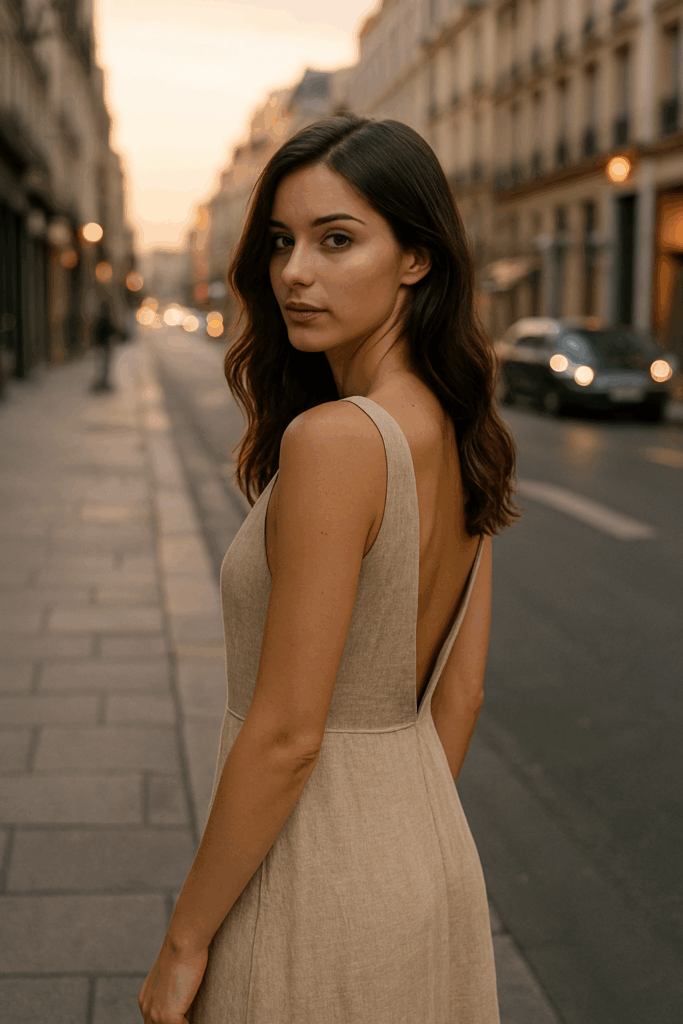
Another incredibly captivating pose for back-facing photos is looking over the shoulder. This gesture combines the subtlety of the back with a touch of mystery and complicity, since, although the face isn’t fully revealed, just enough is hinted at to attract attention. It’s a pose that conveys femininity, confidence, and an enigmatic air, perfect for more intimate or artistic portraits.
The key to this pose lies in the body posture. The body should be facing away from the camera, with the back straight to elongate the silhouette, while the head is turned slightly to one side. It’s not necessary to look directly at the lens; in fact, it’s often more expressive to look down, at an object in the hand, or toward the horizon. This creates a visual interplay that keeps the photograph interesting without being too obvious.
The surroundings also play an important role. Indoors, a room with good natural light can create a cozy or romantic atmosphere. Outdoors, a background such as a field of flowers, a lake at sunrise, or even a wall with urban textures can add impact to the image. Clothing and accessories, such as a dress with an open back, a hat, or a flowing shawl, also enhance the elegance of the pose.
This type of photography works very well to convey deeper emotions, such as nostalgia, flirtation, or introspection. At the same time, it’s an excellent option for those looking for eye-catching photos for social media, since the small gesture of turning breaks the rigidity of a completely back-facing pose and adds dynamism.
3. Sitting and contemplating the landscape
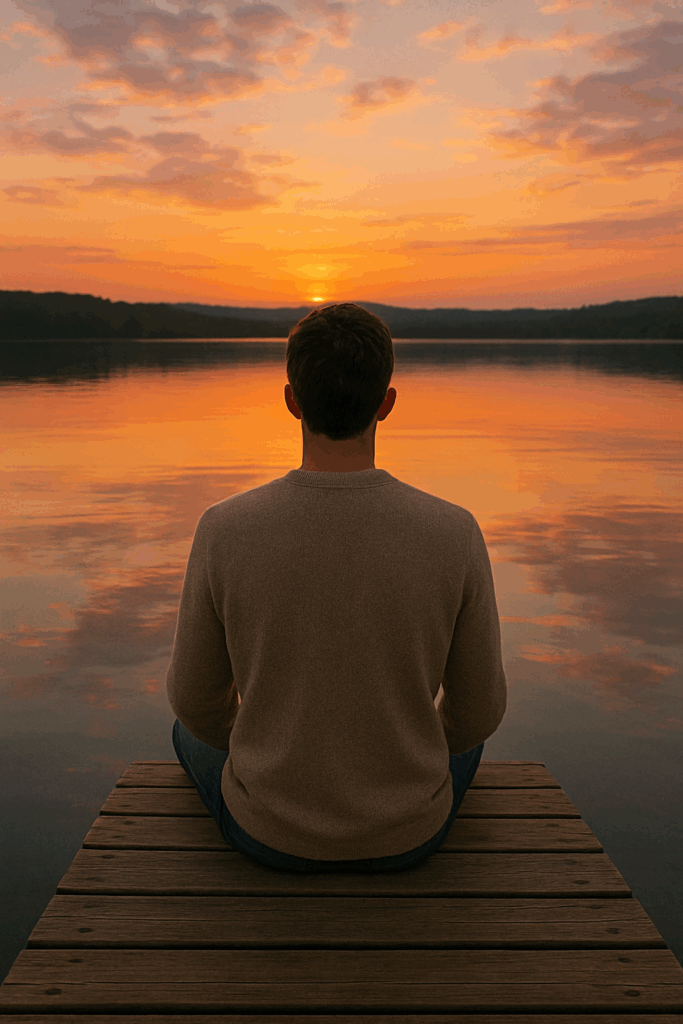
One of the most evocative ways to pose with your back to the camera is while seated, contemplating the landscape that unfolds before you. This pose conveys calm, introspection, and a moment of connection with the surroundings. It’s not just about capturing the person, but about creating a visual dialogue between the model and the setting. The composition often highlights the vastness of the place in contrast to the human figure, giving the image a poetic and almost cinematic feel.
The key is to choose a location with ample space and a striking view: it could be a mountaintop, the shore of a lake, the edge of a pier, or even a bench in a city park. The person sits with their back straight or slightly relaxed, allowing their arms to naturally follow the posture. Resting the elbows on the knees or clasping the hands reinforces the feeling of deep contemplation.
Clothing can also add meaning to the photograph. A travel jacket, a hat leaning to one side, a blanket draped over the shoulders, or a casual outfit all help convey different emotions: from adventure to the tranquility of home. Furthermore, the use of natural light is crucial; a sunrise or sunset bathes the scene in warm tones that reinforce the peaceful atmosphere.
This pose is perfect for those seeking to capture a personal memory of a visited place or want to convey the feeling of experiencing a moment of pause amidst the daily hustle and bustle. The back becomes a canvas that frames not only the model but also the world they observe.
4. Leaning against a railing or wall
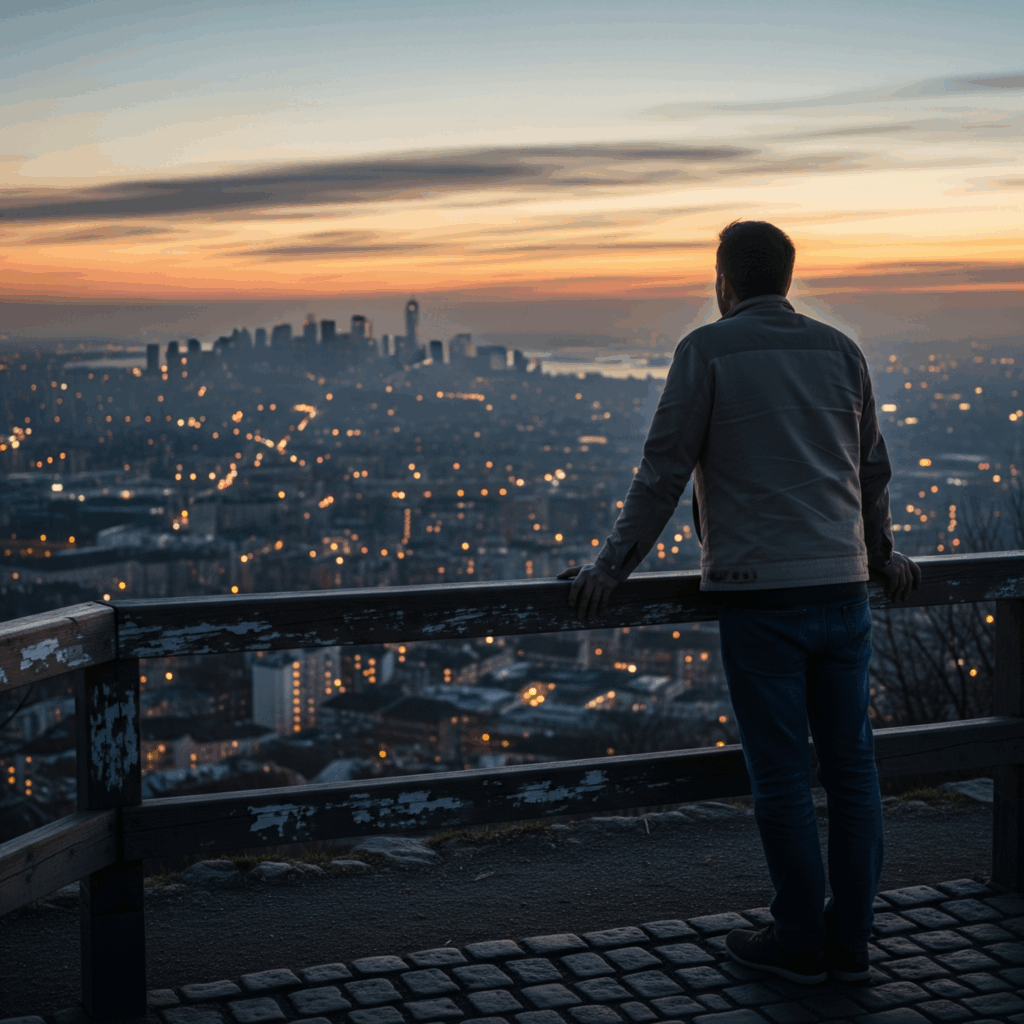
A pose that always works for back-facing photos is when the person leans casually against a railing, wall, or any horizontal surface. This posture conveys relaxation, confidence, and a contemplative air, as if the subject is enjoying their surroundings or reflecting on the moment. Furthermore, this type of pose allows you to play with lines and shapes in the background, creating interesting compositions that guide the viewer’s eye toward the subject and the surrounding scene.
To achieve a natural effect, the posture should be light: shoulders slightly tilted forward or supported, back straight but relaxed, and arms resting on the supporting surface or hanging gently at the sides. Details matter; a slight movement of the hair or a tilt of the head can make the image feel more dynamic and alive. If the subject is wearing casual or urban clothing, the combination with the environment can be very aesthetically pleasing, especially if textures like metal, wood, or concrete are incorporated.
The photograph can capture different perspectives: from a medium shot that includes part of the face in profile, to a full shot showing both the subject’s posture and the background. Light also plays a crucial role: the side or golden light of the afternoon helps to highlight the figure and creates subtle shadows that add depth to the image. This type of pose works in both urban and natural outdoor settings, adapting to the context and creating a harmonious visual balance.
This pose is ideal for those seeking images with a casual and relaxed style, yet with a touch of sophistication. It allows the photographer and model to experiment with camera angle, distance, and composition, generating results that look natural and aesthetically pleasing.
5. Sitting back in a special place
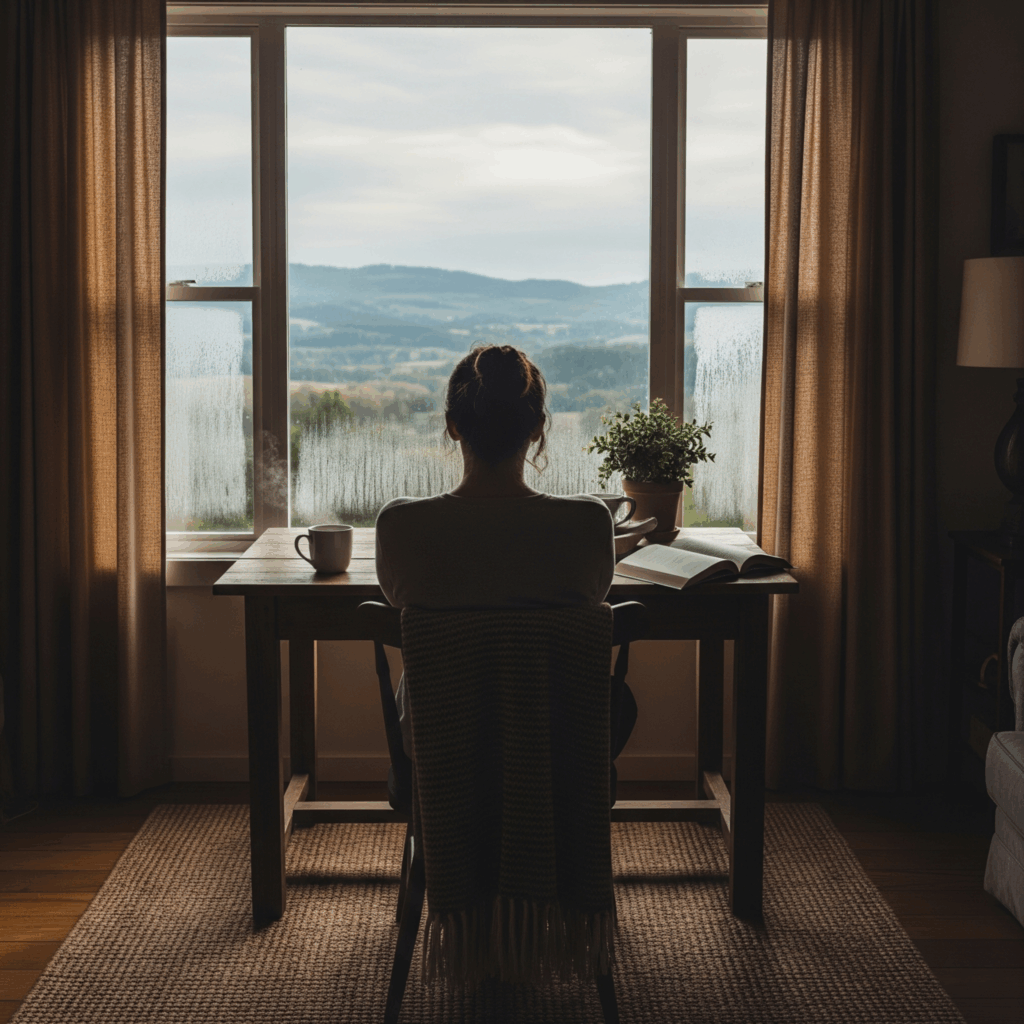
One of the most intimate and reflective poses for birthday photos is sitting with your back to the camera in a meaningful location. This idea conveys calm and a connection to your surroundings, while also adding an artistic touch to the image. It can be done in various settings: a park bench, the edge of a beach, a terrace with a panoramic view, urban stairs, or even a cozy corner at home. The important thing is that the location complements the atmosphere of the photo.
By sitting, the subject projects a sense of pause, as if taking a moment for themselves amidst the celebration. This tranquility contrasts with the typical energy of a birthday, making the image a unique and special memory. By not showing the face, the photograph highlights the silhouette, posture, and surroundings, allowing the viewer to focus on the story behind the scene.
The pose can vary depending on the mood you want to convey. For example, a person sitting on the edge of a pier with their feet dangling over the water gives a feeling of freedom and serenity. In contrast, someone sitting on a city bench, observing the city’s activity, reflects a contrast between the personal and the collective. You can also play with accessories: a hat, a cup of coffee, or even a small cake in their hands to reinforce the idea of celebration.
Framing is key: a shot from behind and slightly elevated can highlight the surroundings, while one from below better frames the figure against the sky or background. Natural light, especially at dawn or dusk, can lend a magical touch to the scene.
Conclusion
Photos taken from behind possess a special charm because they convey emotions without directly showing the face. Throughout this article, we’ve explored various ideas, from walking towards the horizon and looking over someone’s shoulder to sitting and contemplating a landscape, wandering through an urban environment, or simply finding a special corner to pause and reflect. Each of these poses offers a distinct narrative, and all share the ability to generate mystery, intimacy, and authenticity.
What’s fascinating about this type of photography is that it doesn’t require elaborate production or complicated poses. Often, the most powerful element lies in the simplicity of the posture and the way the environment interacts with the human figure. The fact that the face isn’t shown allows anyone to identify with the image, making it a universal experience. This is how, the viewer can project their own emotions, memories, or dreams onto the photograph.
Furthermore, this style is ideal both for those seeking to convey an artistic moment and for those who wish to maintain a degree of privacy. There’s no need to overthink facial expressions or the “perfect pose,” because the power lies in the body, the context, and the atmosphere. This also makes back-facing photos a versatile resource, adaptable to different styles: fashion, travel, urban photography, intimate portraits, or even social media content.
Ultimately, back-facing poses are much more than a trend: they’re a way to tell stories from a different perspective, leaving room for interpretation and imagination. By experimenting with these ideas, you’ll not only obtain beautiful and original images, but also memories that capture the essence of a moment in a poetic and unique way.


