
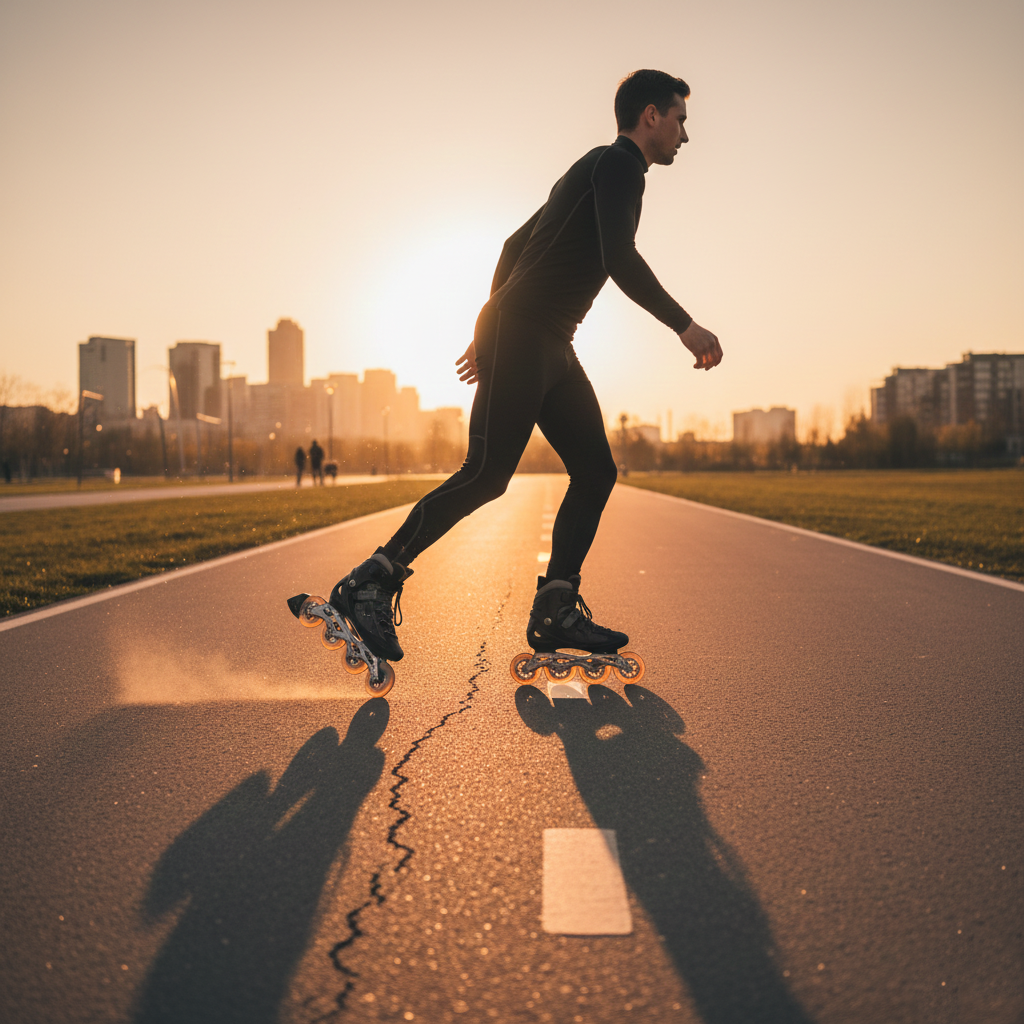
Photographs of people on skates or rollerblades have a unique charm because they combine movement, style, and a sense of freedom that few activities convey as well. Skating is not just a sport; it’s also an aesthetic expression: from the natural posture of the body as one glides across the pavement to the relaxed or energetic attitude each model can project. That’s why capturing images of skaters in outdoor settings offers endless visual possibilities. Natural light, urban shadows, wide-open spaces, and the textures of the environment blend seamlessly with the wheels, the colors of the skates, and the dynamic lines of the body, creating vibrant and lively compositions.
When preparing a photoshoot with skaters, it’s important to choose poses that take advantage of both the skater’s technique and the visual narrative you want to convey. Some positions emphasize balance and control, while others project movement, lightness, or a distinctly urban attitude. Even the most serene poses can become powerful images when properly framed within the environment. Rollerblading sessions allow you to play with low perspectives, diagonal angles, and moving backgrounds that enhance the feeling of speed or calm, depending on the desired effect.
This type of photography also invites you to explore the model’s personality. Whether it’s someone who has been skating for years or someone who simply enjoys the aesthetics of rollerblading, every gesture can tell a different story. Therefore, selecting poses that connect with that personal style is key to achieving authentic and expressive images. Throughout these ideas, you’ll find different ways to capture the essence of skating, showcasing everything from moments of subtle balance to action-packed instants.
1. Balance on one leg to highlight control and style
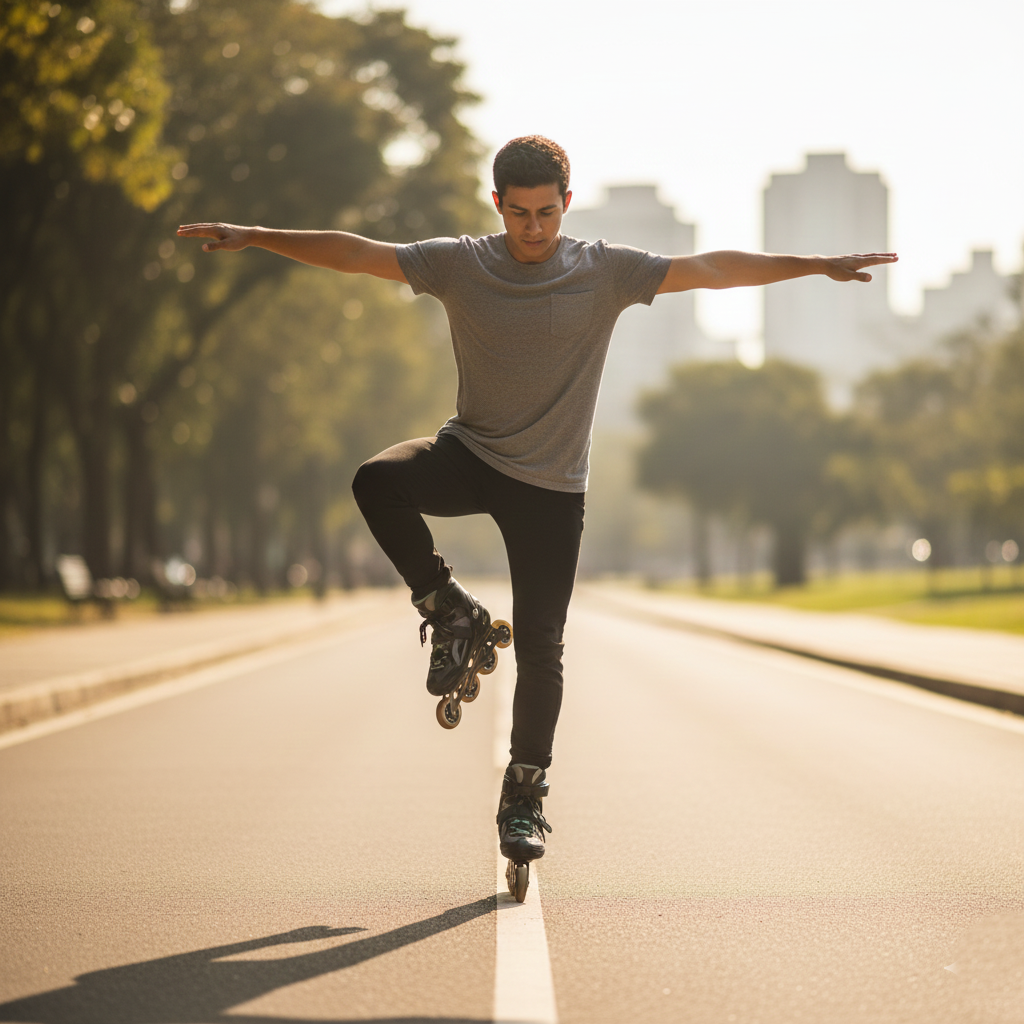
One of the most expressive and photogenic poses for people on skates or rollerblades is the one-legged balance. This pose combines technique, confidence, and striking physical beauty, because it allows you to showcase the precise tension of your body while maintaining stability. To achieve it, the model must support their entire weight on one skate while the other leg is raised slightly backward or to the side. The important thing is that the movement looks natural and fluid, as if it were a spontaneous moment during a skate. The position of the arms greatly influences the expressiveness: they can be extended to the sides to create broader lines and generate a sense of openness, or placed close to the body for a more understated and elegant image.
The setting is fundamental to enhancing this type of pose. If the photo is taken outdoors, a wide street, a clear bike path, or a park with long walkways will add depth and allow the background to create a vanishing point that draws the eye toward the model. Natural light also plays an important role: the soft illumination of dawn or dusk will make the body’s contours appear cleaner and provide a warm touch that softens the tension of balance. For those who prefer a more urban style, a backdrop with graffiti, colorful walls, or modern architecture adds an interesting contrast between the rigidity of the background and the elasticity of the balanced body.
This type of pose conveys concentration, serenity, and technical control, but it also invites a more artistic side of skating. By freezing the exact moment the model holds the pose motionless, the photograph expresses the duality of skating: the calm that precedes movement and the mastery that allows the body to continue flowing.
2. Front slide to transmit movement and connection with the camera
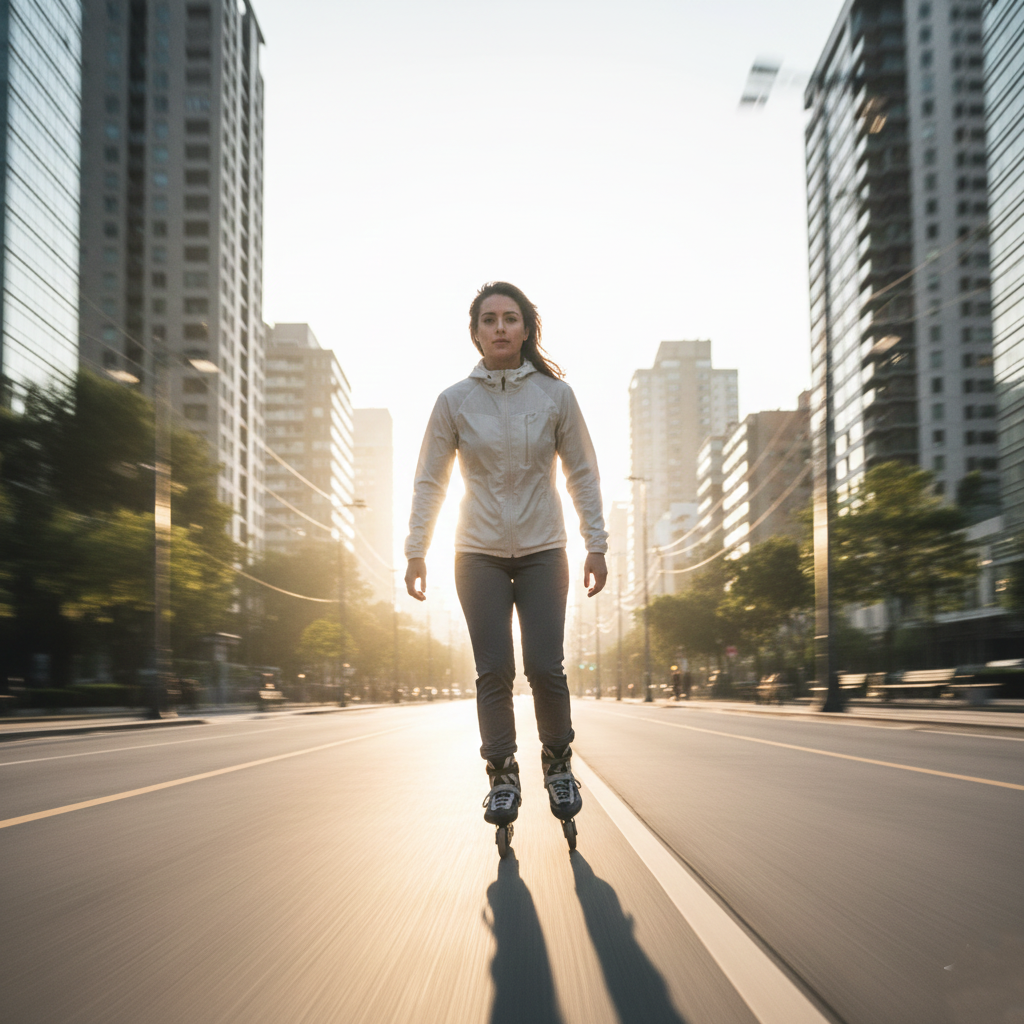
The smooth forward glide is one of the most effective poses for capturing the essence of skating because it combines dynamism with a sense of direct intimacy between the model and the camera. This pose involves asking the person to slowly move toward the lens, maintaining a steady pace that freezes the movement without losing the naturalness of the gesture. Ideally, the body should lean slightly forward, enough to suggest fluidity, but without exaggerating to the point of compromising balance. The gaze also plays an important role: it can be directed straight at the photographer to create a strong and close connection, or it can be directed toward the path to convey a more relaxed and spontaneous vibe.
During the glide, it’s common for the skater’s clothing, hair, or even accessories to react to the wind, visually enriching the photograph and adding a touch of real energy. Skating involves continuous movement, so this pose captures a genuine moment of gliding, without the need for complex tricks. The photographer can choose to follow the model’s movement with the camera to create a subtle trail effect in the background, or maintain a fixed focus to freeze the figure while the surroundings suggest speed. Both techniques work and depend on the desired style.
The setting also influences the visual impact. A long, open road, a pedestrian avenue, or a bike path with clearly defined lines helps create depth, guiding the viewer’s eye toward the model. Natural light should be used to highlight the body’s contours and the moving wheels, especially if photographed during times of soft light. This pose conveys confidence, personal style, and a sense of constant movement that is very appealing in photography.
3. Sitting on the floor with the skates in the foreground to highlight style and personality
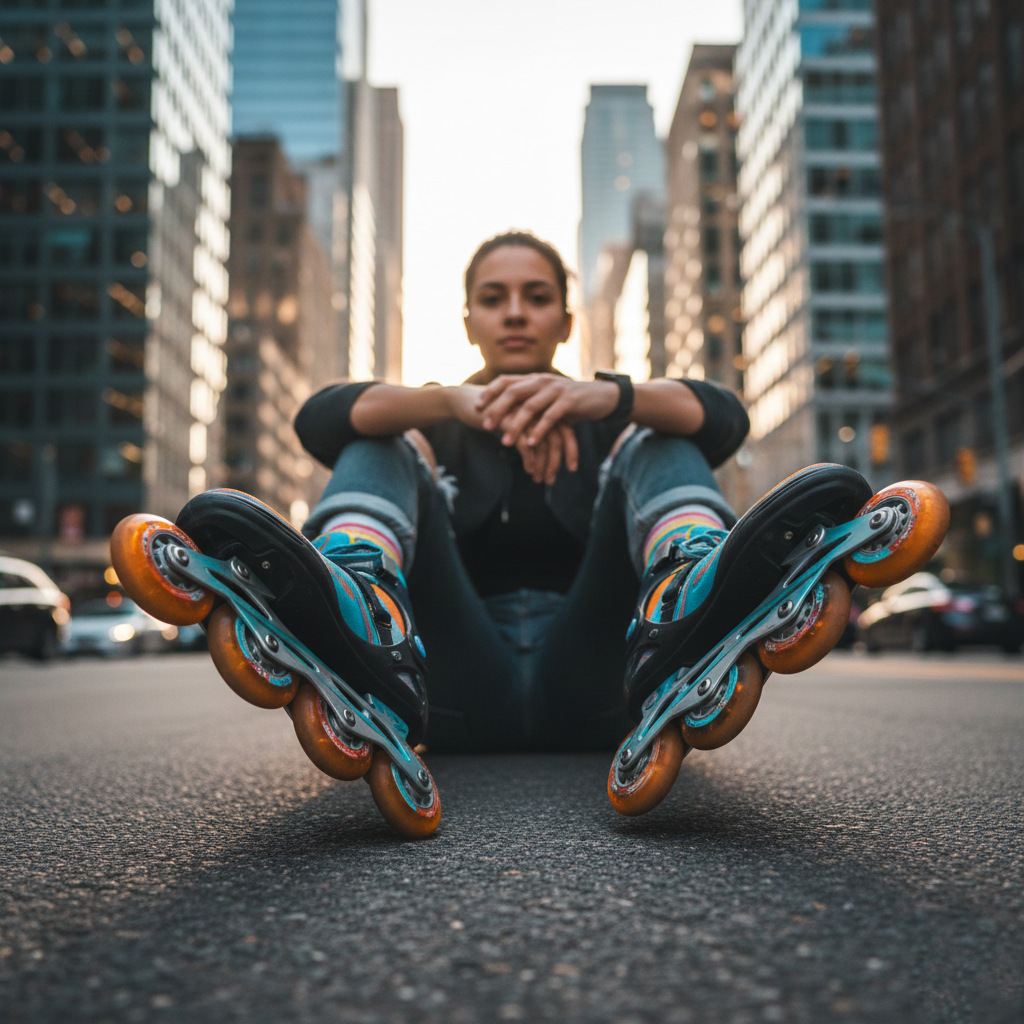
One of the most aesthetically pleasing poses for rollerblading sessions is the seated position on the ground, where the model extends their legs toward the camera, making the skates the focal point of the image. This pose works particularly well because it combines a relaxed attitude with a visually appealing composition. The skates, with their design and color, provide a strong graphic element that helps create a striking and modern photograph. The model can sit naturally, resting their hands on the floor behind their body, or lean slightly forward to create a more intimate and approachable gesture. Ideally, the legs should be at a diagonal or pointed directly at the lens, allowing the wheels, boot details, and colors to stand out clearly.
This pose works well in both urban environments and open spaces like parks or plazas. In urban settings, the contrast between the concrete, the straight lines of the surroundings, and the curved shapes of the skates creates an interesting visual harmony that conveys a modern and youthful style. In quieter spaces, like trails or green areas, the feeling is softer and more casual, perfect for photos with a relaxed and personal vibe. The key is to incorporate the ground into the frame, using textures like asphalt, tiles, or wood, which add an extra design element to the shot.
Furthermore, this pose allows you to play with facial expressions that complement the image: a light smile, a curious look, or even a more serious expression can completely change the tone of the photograph. Lighting also plays a role: side lighting creates soft shadows that accentuate the lines of the skates, while front lighting generates a cleaner and more vibrant look. This pose is ideal for showcasing style, personality, and the details of your skating equipment, making it a favorite for social media and editorial photography.
4. Rotation in motion to capture circular energy and visual fluidity

The spin is one of the most striking poses in rollerblading photography because it combines dynamism, aesthetics, and a sense of energy that seems to expand beyond the frame. Although it may seem like an advanced pose, a fast or technical spin isn’t always necessary; a smooth, controlled spin is enough to create a powerful image. The model’s body adopts a natural posture during the spin: the arms find a point between extension and contraction, the hips align with the twist of the movement, and the wheels generate a circular path that the camera can suggest even if the moment is frozen. The most appealing aspect is how the clothing, hair, or accessories react to the spin, creating a visual effect that conveys spaciousness, rhythm, and personality.
This pose works especially well in wide-open spaces where the model has freedom to move without obstruction. An open esplanade, a plaza, a park, or even a pedestrian street can be ideal settings. The background becomes an important ally: if the photographer chooses to freeze the moment, the surroundings add contrast and context to the circular gesture; If you choose to use a slightly slower shutter speed, you can create a sense of motion that envelops the model in a dynamic halo. In both cases, the spin becomes the narrative focus of the photograph, conveying a vibrant energy that reflects the spirit of skating.
Facial expression also influences the emotional impact of the image. Some models prefer a focused, almost concentrated expression that reinforces their technical mastery of the movement; others opt for a broad, light smile that conveys enjoyment and spontaneity. Natural light complements this type of pose in a special way: side lighting or backlighting accentuates the shadows and creates silhouettes that enhance the feeling of movement. The spin on skates captures not just a pose, but a moment full of rhythm, attitude, and freedom, making it one of the most memorable and striking poses in a photo shoot.
5. Relaxed pose leaning against a railing for a laid-back, urban style
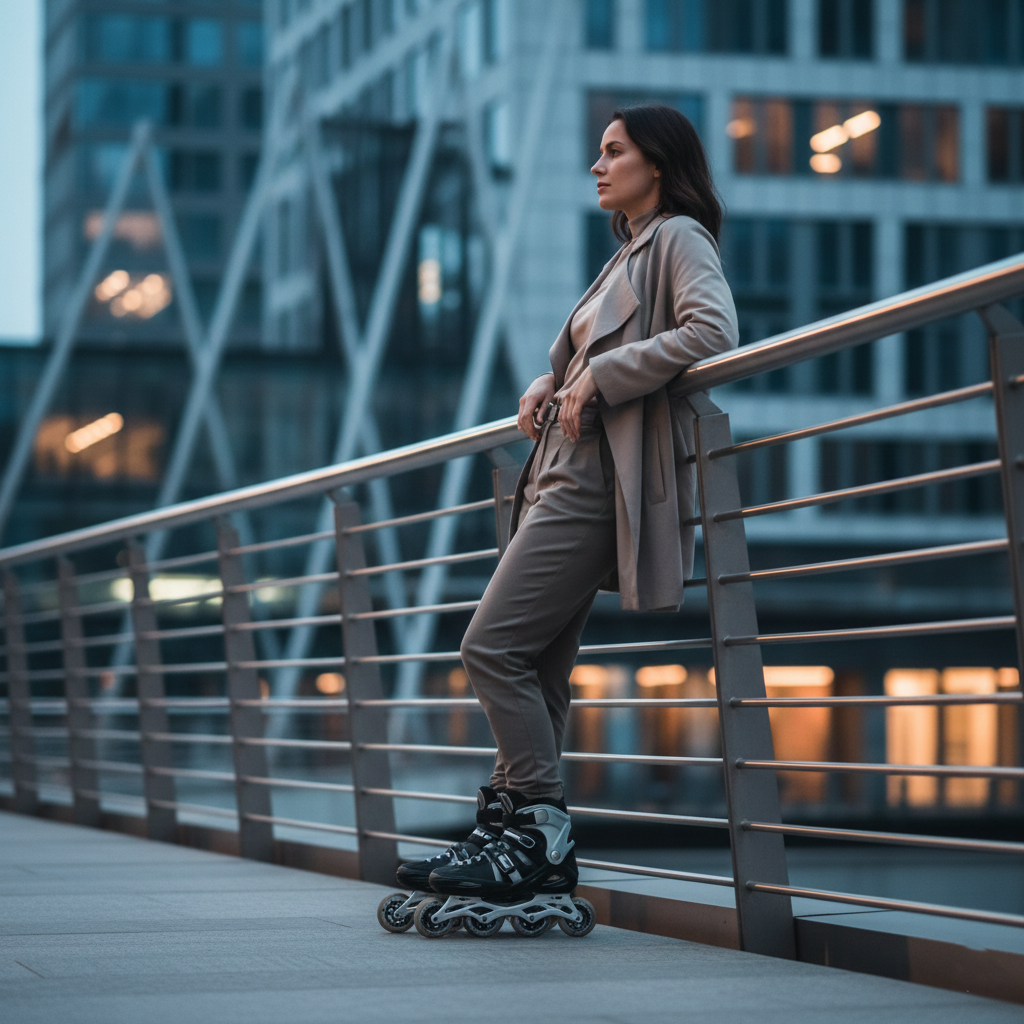
Not all photos of skaters need to showcase movement or technique; there’s also a special charm in poses that convey calm after a skate. One of the most effective is when the model leans against a railing, low wall, or urban structure, keeping their skates on and adopting a soft, relaxed posture. This pose balances the energy of skating with a more introspective gesture, ideal for communicating personal style, attitude, and a sense of natural pause within the environment. The model can lean slightly back, rest an elbow on the surface, or cross one leg over the other, depending on the desired vibe. The key is to maintain a fluid pose, without rigidity, as if it were a spontaneous rest mid-skate.
This type of pose benefits greatly from the urban context, where elements like metal railings, concrete walls, stairs, or modern structures add texture and character to the composition. The contrast between the solidity of the environment and the softness of the model’s gesture creates a balanced aesthetic that works very well in editorial photography or lifestyle portraits. Furthermore, this pose allows you to showcase the skates from a different angle: no longer in motion, but as part of the outfit, integrated into the overall look and visual narrative. This makes it ideal for those who want to highlight fashion, accessories, or a cool and carefree attitude.
Natural lighting can add emotional depth to the scene. The light of sunset, for example, creates long, warm shadows that enhance the texture of the surroundings and lend a cinematic touch. Even on cloudy days, soft light helps maintain an introspective and clean atmosphere that favors this type of composition. This pose is perfect for capturing a moment of pause that, despite the stillness, still conveys the free and urban spirit of skating.
Conclusion
Photographs of people on skates or rollerblades offer a visual universe brimming with possibilities, where every gesture, posture, or movement becomes an opportunity to convey freedom, energy, and personal style. Throughout these ideas, one can appreciate how different poses allow for the telling of distinct stories: from the technical precision of balancing on one leg to the emotional fluidity of a forward glide or the dynamic force of a spin in motion. Even the most tranquil poses, such as sitting on the ground or leaning against a railing, show that skating is not only action but also a way of expressing oneself with calm, introspection, and urban presence. Each pose proposes a different way of relating to the camera, the environment, and oneself.
One of the most valuable aspects of photographing skaters is that movement is never entirely lost, even in the most static images. The skates, the wheels, the body posture, and the model’s style always suggest the possibility of movement, as if the photograph were merely a fleeting moment within a larger journey. This transforms each shot into a living piece, capable of evoking sensations of wind, speed, balance, and spontaneity. Furthermore, the setting—whether an urban street, a wide plaza, or a tranquil park—becomes an essential narrative element that engages with the body and enhances the image’s aesthetic.
These five ideas aim to inspire creative, authentic, and personalized sessions, where the photographer and model find a point of connection that allows them to express both the technique and the essence of skating. It’s not just about capturing poses, but about telling visual stories that reflect attitude, passion, and freedom of movement. With the right light, a well-chosen setting, and clear direction, each photograph with skates can be transformed into a piece full of character and personality, capable of conveying emotions long after it has been taken.


