

Candles possess a visual charm that few elements can match: their soft, warm, and organic light transforms any scene into something intimate, mysterious, and profoundly aesthetic. As photographers, we know that light is everything, and when it comes to candles, the challenge and the reward go hand in hand. Mastering this type of lighting not only tests your technique but also unleashes your creativity to the fullest. Have you ever wondered how to capture a magical atmosphere with a simple flame? This article is for you.
Here, we won’t just give you decorative or conceptual ideas; we’ll go further. We’ll share five creative approaches, tested in real-life sessions, that you can apply to portraits, still life, or personal projects. These ideas are designed for those looking to go beyond the basics and elevate their portfolio with images that convey emotion, warmth, and a unique style. So, get your camera ready, adjust your ISO, and join us as we explore the fascinating world of candle photography. We promise that after reading this, you’ll never look at a candle the same way again
1. Use candles as your only source of light


One of the most effective ways to create an image with emotional impact is to use candles as your sole light source. This approach not only forces you to work with limited light but also trains you to understand how direction, intensity, and color temperature affect the atmosphere of a photograph. Candlelight is warm and soft, which is ideal for conveying feelings of calm, mystery, or intimacy. Furthermore, by eliminating other artificial light sources, you’ll obtain more authentic images with a stronger visual narrative.
On a technical level, using only candles requires mastering exposure control. We recommend working with high ISO values (800 to 1600, or higher if your camera allows it without excessive noise), a wide aperture (f/1.4 to f/2.8), and slow shutter speeds (1/30 or slower, ideally with a tripod). Shooting in RAW is also helpful for recovering detail in shadows or highlights. If you’re photographing moving subjects, such as people, consider asking them to hold a static pose for a few seconds to avoid blurring. Here, patience and planning are key.
This type of photography works very well indoors with little to no ambient light. Look for dark rooms or use black cardboard around the scene to avoid unwanted light reflections. You can also use several candles strategically placed to shape the light on your subject, whether it’s a face, an object, or a wider scene. Play with the distance between the candle and your subject to achieve different intensities and shadows. The closer the candle is, the more dramatic the shadows will be, creating a very appealing cinematic effect.
Finally, don’t forget that smoke, melted wax, and the flame itself can become the protagonists of your image. You can capture the candle as it goes out to create stylized plumes of smoke, or let the wax drip onto a surface to add texture and visual interest. These kinds of details bring realism and depth to your image. Using candles as your sole light source is not only a technical exercise but also a creative opportunity to tell stories with a more intimate and artistic approach.
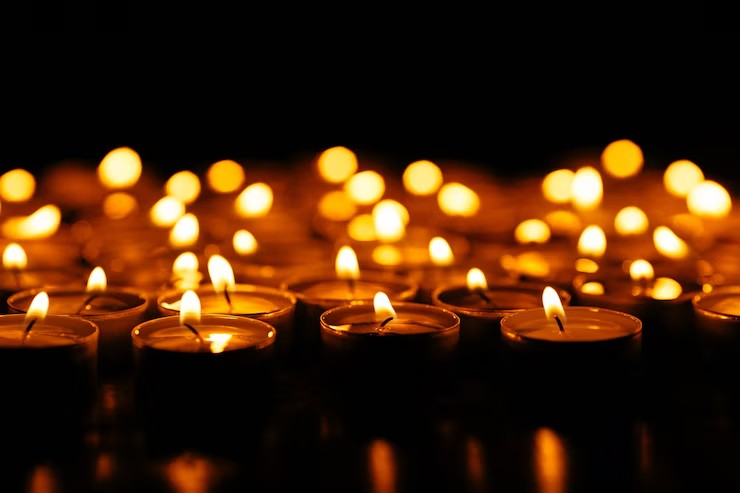
2. Photograph portraits with candles to create intimate atmospheres


Including candles in portraits is a powerful way to evoke deep emotions and create an immersive atmosphere. The warm light they emit naturally highlights skin tones, softens imperfections, and creates a subtle contrast that enhances facial expressiveness. It’s ideal for indoor sessions where a more artistic, intimate, or even romantic style is desired. As the photographer, it’s your responsibility to guide the subject not only in their expression but also in their relationship with the light, so that the result feels authentic.
A good technique is to position the candle to one side of the face, at eye level, to achieve a Rembrandt or chiaroscuro effect. This creates deep shadows on the opposite side and highlights features naturally. You can also place several candles around the model to envelop them in light and create a softer, more enveloping effect. Remember that the direction of the light tells a story: from a melancholic look with harsh side lighting to a cozy atmosphere with diffused front lighting.
Manual focus is your best ally in these situations. Low light can confuse your camera’s autofocus, so take full control of the focus and make sure the eyes are perfectly sharp. You can also use a momentary light source (like a phone flashlight) to focus, then turn it off before shooting. Take advantage of the model’s accessories: a hat, a scarf, or even makeup tears can add emotional dimension to the portrait. Pay attention to composition: a close up shot often works very well to convey intimacy.
Don’t forget to experiment with visual storytelling. A portrait with a candle can have multiple interpretations: hope, nostalgia, introspection, or even mysticism. You can include elements like books, fogged windows, reflections in mirrors, or translucent curtains to enrich the scene. Also, if you’re working with a partner or an experienced model, you can collaborate to create poses that appear spontaneous but are actually carefully constructed. The key is to capture not just a well-lit face, but an emotion at its most genuine point.

3. Minimalist composition with a single candle


Minimalism in photography involves reducing visual elements to their essence, and in this case, working with a single candle can be a powerful way to achieve clean, elegant, and meaningful images. This approach is based on simplicity, but it requires a high level of attention to detail. Every shadow, every reflection, and every negative space counts. Here, less is more, and the key lies in composing with intention, paying attention to geometry, visual balance, and the main point of interest: the candle.
The background plays a fundamental role in this type of photography. Ideally, use neutral backgrounds, preferably dark or with soft textures that don’t compete with the candle. A black background will help isolate the light and focus all attention on the subject. If you’re looking for a more conceptual image, you can work with light or monochromatic surfaces that convey serenity. You can also use cardboard, fabric, or plain walls to achieve this effect. The candle, being the only point of light and interest, must be perfectly positioned in the scene.
Explore different angles: a frontal shot conveys stability and order; a bird’s-eye view can suggest introspection or ritual; backlighting, on the other hand, creates mystery. Take advantage of negative space to direct the viewer’s gaze toward the candle. If you place the candle off-center (rule of thirds), you’ll generate an interesting visual tension that invites contemplation. You can also include a single secondary element, such as a book or a cup, as long as it doesn’t detract from the candle’s prominence.
Technically, work with small apertures (f/5.6 to f/8) if you want to keep everything in focus, or wide apertures (f/1.8 to f/2.8) to create a blurred background that further isolates the subject. The shutter speed can be slow if you’re using a tripod. The important thing is that each technical decision serves a clear aesthetic purpose. The ideal result is an image that conveys peace, depth, or contemplation, and that invites the viewer to linger longer than usual. Minimalism, although simple in appearance, is a demanding discipline that can elevate your portfolio if you master it with sensitivity.

4. Play with reflections and shadows cast by the candles


One of the most fascinating aspects of working with candles is the ability to create reflections and shadows that visually enrich your compositions. The light of a candle, being so focused and warm, creates soft yet defined shadows that change dramatically depending on the distance, angle, and surface they fall on. These shadows are not just part of the image; they are the image. Consciously incorporating them into your work allows you to tell more complex stories, play with symmetries and textures, and even evoke emotions in the viewer.
Start by exploring reflective surfaces such as mirrors, glass tables, metal trays, or even water. A candle reflected in a mirror can create a poetic, almost dreamlike composition. Use the rule of the visual triangle to position the candle, its reflection, and a complementary object, such as a decorative figure or a face in the background. If you decide to work with water, make sure it is completely still to obtain a sharp reflection, or gently swirl it to create distortions that add an artistic touch.
As for shadows, a white wall or light-colored cardboard will help you project them with greater definition. Place the candle near an object with interesting shapes (like a glass, a dry branch, or a human figure) and observe how the shadow changes as you move the light source. You can use this to tell a symbolic story: for example, a real hand casting a shadow that appears monstrous, or a candle casting a silhouette larger than itself. This technique is perfect for conceptual portraits, narrative photography, or personal projects with emotional weight.
Don’t forget that this type of composition can also benefit from movement. You can capture the dance of the flame and shadows in a long exposure, or even work in burst mode to freeze the different shapes the flame takes as it moves with the air. Just be sure to carefully control the amount of light entering the image so the background doesn’t get overexposed or lose detail. Playing with reflections and shadows takes you out of your routine and forces you to see beyond the obvious. It’s an excellent way to explore the expressive potential of candle photography, and an ideal resource for adding depth and dynamism to your compositions.
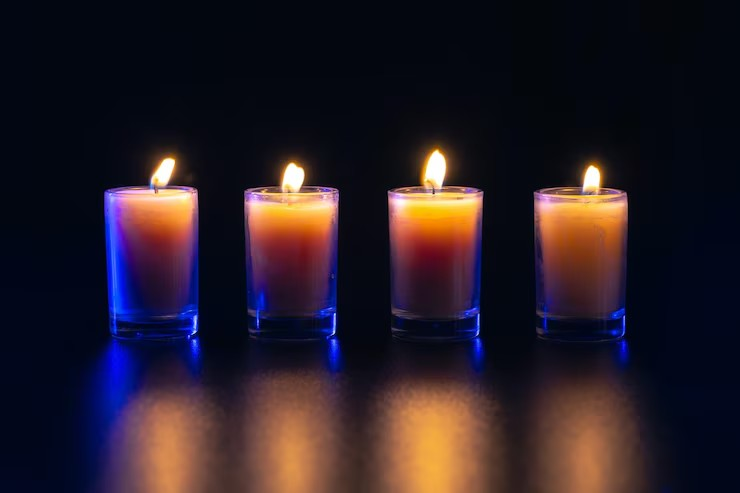
5. Create still lifes with candles and vintage objects
Still lifes, also known as nature morte, are an excellent opportunity to experiment with composition, lighting, and visual symbolism. Incorporating candles into these scenes adds a powerful narrative element: they can suggest the passage of time, nostalgia, spirituality, or even ritual. If you also combine them with vintage objects, such as antique clocks, worn books, crystal glasses, or handwritten letters, you can create images that evoke bygone eras and awaken the viewer’s imagination.
To begin, select a concept or emotion you want to convey: loneliness? Melancholy? Mystery? From there, carefully choose the elements you will include in your still life. The candle shouldn’t just be present; it should be integrated meaningfully. Position it so that the direction of its light appropriately shapes the objects, projecting soft shadows that add depth and texture to the scene. The key is to maintain a balance between what is visually appealing and what is emotionally significant.
The arrangement of the objects should appear natural, yet be strategically thought out. Play with different heights, textures, and colors to guide the viewer’s eye within the frame. You can use a dark fabric as a background, a rustic wooden table as a base, and place the candle slightly off-center to avoid flat compositions. Working with side lighting will create a more dramatic atmosphere; if you prefer something softer, you can use several candles and diffuse the light with parchment paper or a makeshift diffuser box.
This type of photography requires patience and meticulous attention to detail. Each object tells its own story and should contribute something to the scene. Pay attention to dust, clean surfaces, and the precise position of the flame. If you can work with melted wax or candles at different stages of burning, even better: these details add realism and break up any artificial aesthetic. Still lifes with candles and antique objects are an excellent way to practice lighting, composition, and storytelling techniques. Furthermore, they are highly shareable on social media due to their artistic atmosphere and their ability to connect emotionally with the audience.

Conclusion
Illuminate your creativity: what comes after these ideas? Exploring candle photography is much more than a technical exercise; it’s an invitation to connect with the emotion, symbolism, and beauty of natural light in its purest form. Whether you work with portraits, still lifes, or minimalist compositions, each lit flame challenges you to observe, compose, and tell stories with greater intention. These five ideas are just the starting point. What’s truly exciting is how you can combine them, personalize them, and adapt them to your own style to create images that leave a lasting impression.


